Young Lou’s Redemption: Century in Windhoek

The six runs Louis Pretorius left lying in the middle of the Namibia Cricket Ground on Tuesday were waiting for him when he came back on Friday. He picked them up, added one more, and this time walked off with a hundred to his name.
Three days earlier, he had been marooned on 94 against Zimbabwe, bowled around his legs after stepping miles outside off stump, trying to force the issue while partners came and went. It was a brutal way to miss a first senior international century.
Against Namibia, he went hunting for redemption. He found it in 53 balls.
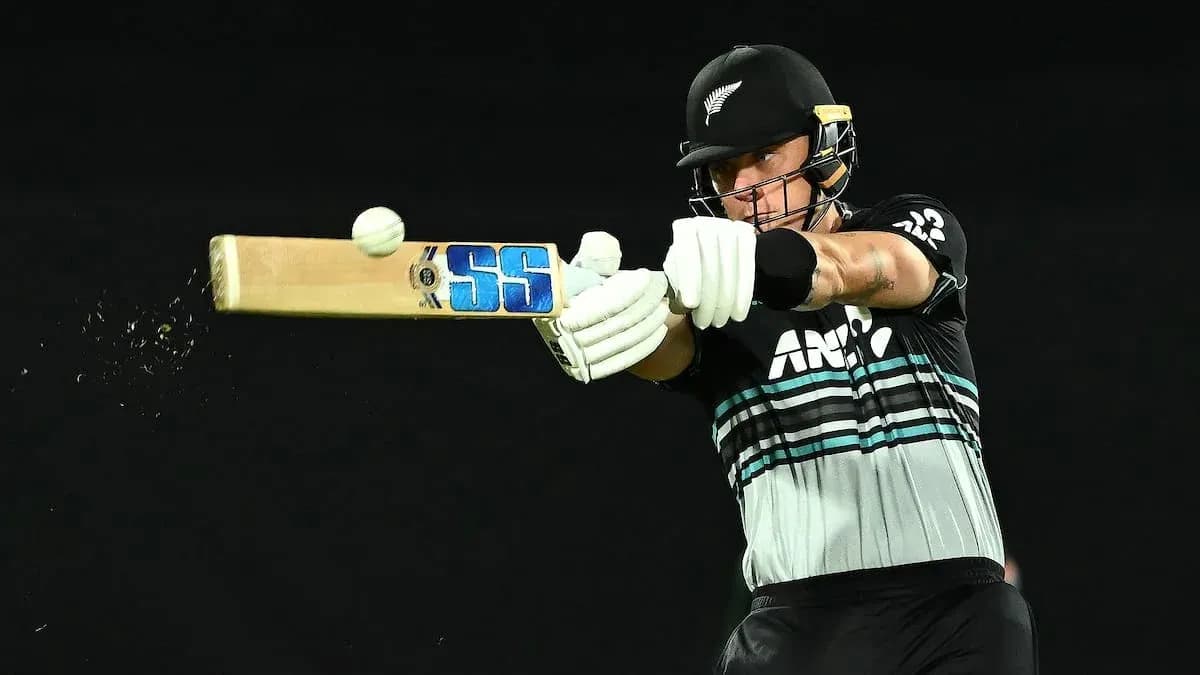
Pretorius’ 101 was not a glide, it was a pounding. More than two-thirds of his runs came in boundaries, with eight sixes and a barrage of fours. Seven of those sixes soared straight and true in the V, where he plundered 60 off just 19 deliveries. When the ball wasn’t disappearing over the bowler’s head, it was being clubbed square of the wicket with the kind of force that leaves fielders as spectators.
The romantic myth says left-handers are all silk and sculpture, the ball caressing the bat like an ice-dancer skimming across a rink. That might have been David Gower. It was often Brian Lara. It was not always Graeme Pollock or Graeme Smith, whose runs arrived with a thud rather than a pirouette.
Pretorius belongs with the blacksmiths, not the butterflies. He looks and moves like a regular club cricketer who wandered into the wrong game, then starts hitting like few mortals ever will. That contrast makes him impossible to ignore.
He’s “Young Lou” now, a nickname Quinton de Kock — another left-hander who prefers leather on willow to look and feel violent — first lobbed into the public domain. The tag fits. There’s a rawness to him, but also a clarity: a batter who knows exactly what he wants to do to a bowling attack.
On Friday, he wasn’t even the most fluent stroke-maker out there.
Connor Esterhuizen, right-handed and self-confessedly more jittery, outpaced him. Esterhuizen blazed 88 off 40 balls at a strike rate of 220.00, nearly 30 points faster than Pretorius. The pair ripped into Namibia from the start, stitching together 156 off 70 balls and leaving the home side’s attack shell-shocked by the 12th over.
Esterhuizen’s end was as abrupt as Pretorius’ dismissal earlier in the week. Having carved Namibia apart, he swung once too many at Jan Balt and heard the death rattle as his leg stump cartwheeled. The stand was broken, the tone had already been set.
At the press conference, Esterhuizen painted a picture of their contrasting temperaments. Pretorius, he said, was “super laser-focused and always looking to get at the opposition”. Himself? “Sometimes a bit of a nervous wreck out there.”
Pretorius didn’t quite buy that imbalance. “Connor made it a lot easier for me, and when he lost his wicket I could take charge as the leader in the middle and try to capitalise,” he told the host broadcaster. That was exactly what he did, carrying South Africa past 200 for the first time in the six matches of this tri-series.
He also laid out the method behind the mayhem: “T20 is a game of fine margins and high-risk cricket shots. So when you’re in form you have to ride that wave as long as you can because it can change very quickly. I came with the same approach [as on Tuesday]: try to get to that 15-balls [faced] mark. I knew the rest would take care of itself.”
For a while, it looked like 228/4 would more than take care of Namibia. On most days, in most places, that total ends the contest before the chase begins.
Not here. Not against this lot.
Namibians know how to operate in hard conditions, on and off the field, and their batters refused to treat the target as a formality. Louren Steenkamp and Jan Frylinck launched a spirited reply, matching South Africa’s aggression with an opening partnership that grew and grew and refused to break.
By the time they had put on 119 off 65 balls, the Windhoek crowd believed. Frylinck, another heavy-hitting left-hander, was the one driving that belief, hammering 72 off 36 and making the chase feel something more than theoretical.
Then the pressure finally cracked. Frylinck pulled Andile Simelane hard to square leg, where Tony de Zorzi tiptoed along the rope, hopped, juggled, and somehow completed the catch without touching the boundary. It was the kind of athletic, nervy moment that swings a T20 chase from probable to precarious.
Namibia kept coming. Gerhard Erasmus took the reins, working his way to 30 not out from 26 balls, while Ruben Trumpelmann chipped in with a brisk 21 off 10 to keep the asking rate within touching distance. They refused to fold, refused to let the game drift into a routine defeat.
Yet the clock, and the total, stayed just beyond them. Namibia closed on 217/3, 11 runs short. South Africa had their win, but not the comfort that usually comes with such a mountainous first-innings score.
“It was a bit closer than we wanted, but we’ve learnt to not take anything for granted in this game,” Bjorn Fortuin said afterwards. “A win’s a win and we did some good things, but there’s a lot to work on going into that last game.”
For South Africa, the scoreboard shows a high-scoring victory and a landmark century for a rising left-hander. The dressing room, though, will know it also shows a warning: in this format, even 228 doesn’t guarantee control.
For Young Lou, those six missing runs from Tuesday are no longer a ghost story. They’re part of a hundred in Windhoek, a statement innings that suggests this won’t be the last time he walks off with a game — and maybe a series — in his hands.