India’s Seamers End New Zealand’s Home ODI Streak
New Zealand’s seven-year unbeaten run in home ODIs is over. Not with a bang, but with a faltering chase that never quite shook off the early damage.
Set 210 at Mount Maunganui to square the series, the hosts were bundled out for 187 in the penultimate over, their innings a stop-start struggle against an Indian seam attack that read the conditions better and held its nerve when it mattered.
Arshdeep leads a ruthless seam unit
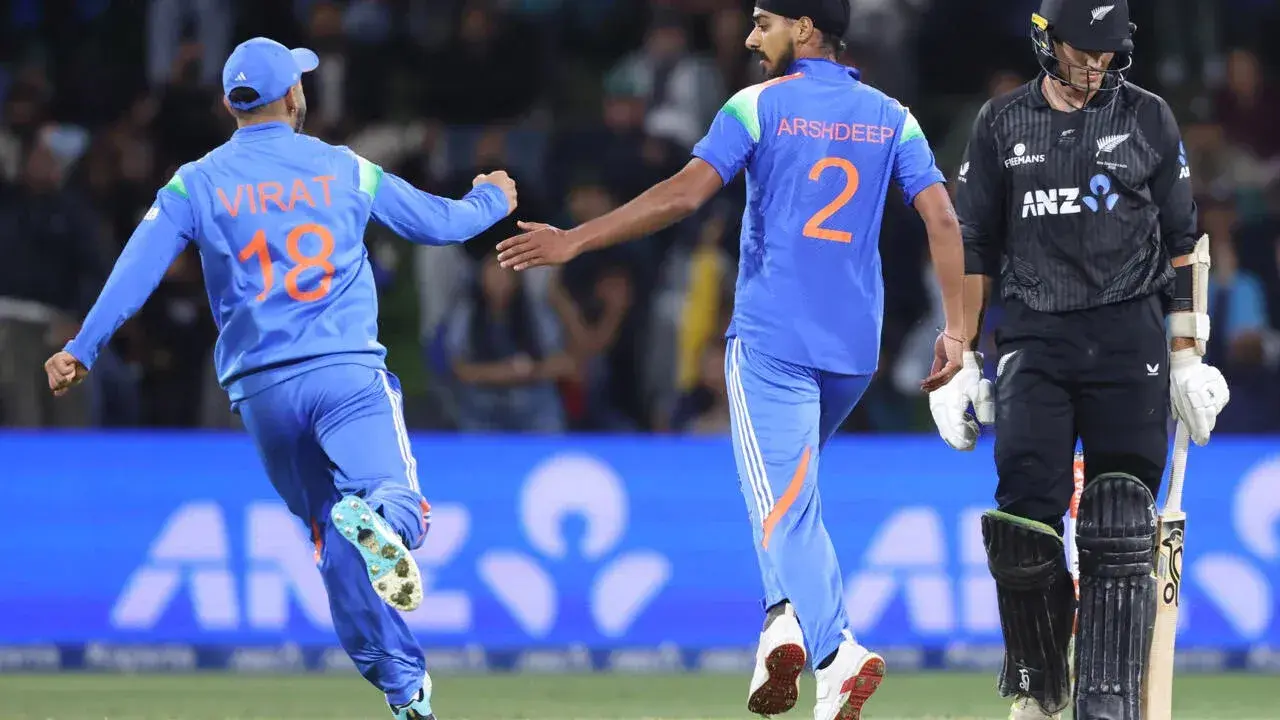
On a surface that kept the ball talking all evening, Arshdeep Singh was the loudest voice. Ten overs, 3 for 30. Eight wickets across a low-scoring series that never allowed batters to settle.
He struck early, and he struck hard. Game-four centurion Will Young, who had monstered India for 89 runs in that demolition a few days earlier, was prised out for 22. Nick Kelly followed for 24. Both dismissals carved into New Zealand’s top order and left the chase listing before it had gathered pace.
The pressure kept tightening. Singles dried up, boundaries came in bursts rather than waves. Every time New Zealand hinted at a rebuild, India’s seamers dragged them back into the grind.
Dean Foxcroft, with 31, offered the most resistance in a stuttering reply, but he never found a partner to tilt the game. When Kristian Clarke tried to spark a late surge, Arshdeep returned and snuffed it out, removing the all-rounder for 16 and with him New Zealand’s last realistic hope.
By the time the tail arrived, the target of 210 felt a long way off.
India scrap to 209 after early shocks
This was never a night for batting numbers to sparkle. India knew that as early as 34 for 3.
Rohit Sharma gone cheaply. Virat Kohli gone cheaply. Two giants back in the dugout, the innings wobbling and New Zealand’s seamers sensing a decisive opening.
Jacob Duffy and Mitchell Santner shared six wickets, three apiece, and kept India on a leash for most of their 42.1 overs. The ball nipped, gripped, and occasionally leapt, and India’s batters had to fight for every run.
Axar Patel and Ishan Kishan did exactly that.
Their twin 46s were not pretty in the classical sense, but they were exactly what the situation demanded. They rebuilt from the rubble of 34 for 3, absorbed the hostility, and dragged India towards something defendable. Not imposing, not safe, but enough to give their bowlers a score to attack.
India were eventually bowled out for 209, a total that looked a fraction light on paper. On this pitch, in this series, it was gold dust.
A bowler’s series, decided by nerve
The pattern had been set long before Mount Maunganui. India surged 2-0 ahead through two rain-affected wins, game three vanished under the weather, and then New Zealand roared back in game four, skittling the tourists for just 89 and cruising to a 244-run victory. That result blew the series wide open and left this decider loaded with tension.
But the batters never truly arrived across these matches. This was a series owned by the seamers.
Shreyas Iyer, who had already guided India to a 3-2 win in the T20s on this tour, framed the ODI triumph through that lens, pointing to his side’s adaptability in fickle New Zealand conditions and the belief that 209 could still be defended.
“We’ve been faced with a lot of challenges. Today we had belief, even though we didn’t get that many runs,” he said, before underlining what everyone watching already knew: “This whole series wasn’t a series for batsmen. The way the bowlers bowled, they stood up to the occasion.”
They did more than stand up. They dictated.
New Zealand captain Santner, who himself bowled smartly and finished with three wickets, admitted the chase never felt as straightforward as the target suggested. He talked of a pitch more “two-paced” than he had expected, a surface India’s quicks exploited by “chipping wickets away through the middle” and using the bouncer with precision.
“I thought they bowled really well again tonight,” Santner said. “All four seamers were able to chip wickets away through the middle… They brought Arshdeep back on at the right time. It was a great bowling performance. I thought they squeezed us really well and there was great use of the bouncer as well.”
Santner’s injury cloud and the Tests ahead
There was another concern for New Zealand beyond the scoreline.
Santner revealed he would need an X-ray on his right hand after being struck while batting, an unwelcome subplot with a two-match Test series against India looming. His availability now hangs in the balance.
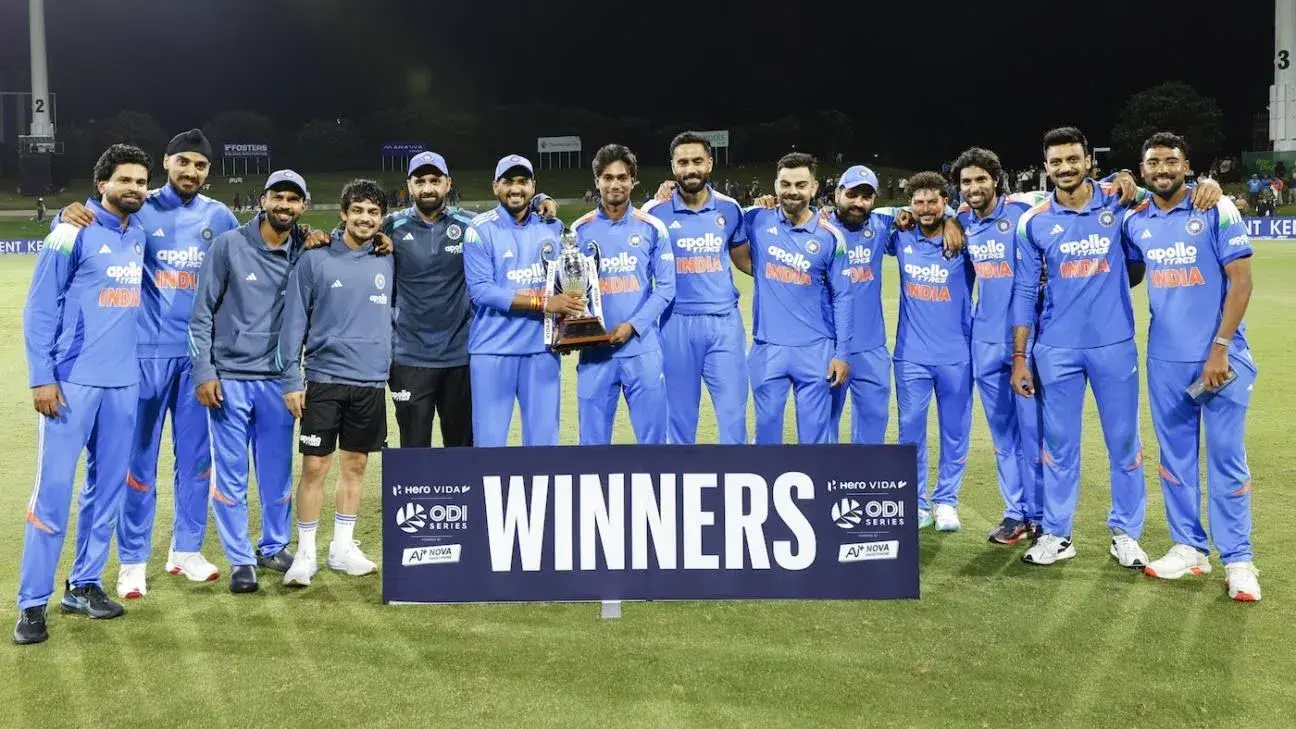
The first Test starts in Wellington on Thursday. India arrive there with back-to-back series wins on this tour and a seam attack humming in conditions that suit them. New Zealand, for the first time in seven years, must regroup at home after losing an ODI series on their own turf.
The question now is simple: can they absorb this punch and respond in whites, or does this Indian pace unit have another statement to make?