India Secures Landmark ODI Series Win as Arshdeep and Siraj Shine
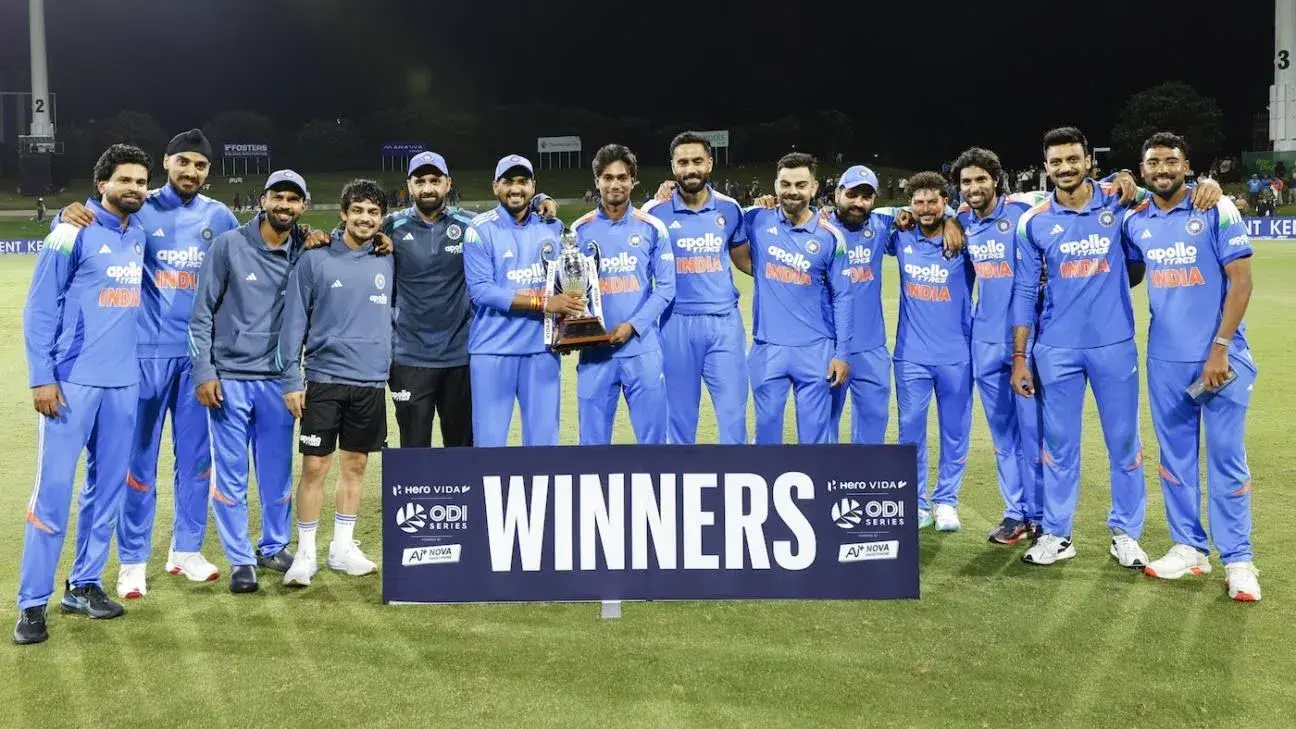
Gautam Gambhir’s first overseas ODI series win as India coach did not arrive on the back of a swaggering batting display or a statement hundred. It came from something far more old‑fashioned: fast bowlers who refused to accept that 187 was enough for the hosts.
India’s 22‑run win in the decider, defending 209, was carved out by Arshdeep Singh and Mohammed Siraj with bat in hand first and then with the new ball, the old ball, and every ounce of skill they possessed.
Tailenders light the fuse
For the third match in a row, India’s top order flinched on a surface that held just enough to keep bowlers interested and batters honest. They were put in after New Zealand, winning the toss for the first time in the series, chose to bat under lights to avoid the dew that had wrecked India’s chase of 89 earlier in the week. It looked a smart call on paper. It didn’t play out that way.
The ball gripped early. Three Indian batters fell to close catchers in front of the wicket, undone not by extravagant seam but by that subtle, maddening hold in the pitch.
Rohit Sharma went first, ending a wretched tour that brought him just 30 runs in four innings, including two ducks. Virat Kohli, the only Indian to pass fifty in the series, misjudged the bounce on a cut shot and top‑edged Matt Fisher for New Zealand’s second strike. Ruturaj Gaikwad’s inside edge to Jacob Duffy left India 34 for 3 in the ninth over.
Shreyas Iyer reached for an old solution. Axar Patel, the fixer India discovered under Rohit and Rahul Dravid, walked in at No. 5.
Axar survived on nerve and luck early – two tough chances on 0 and 3 went down – but then settled into a rhythm that nobody else could quite find. He worked the gaps, waited for width, and began to drag India out of the mire even as Iyer fell to another short ball, India wobbling again at 86 for 4 in the 18th over.
New Zealand turned to Michael Bracewell’s offspin against two left-handers and the surface did the rest. The ball held, Axar’s options narrowed, and when he finally miscued to short straight midwicket, his 46 off 55 had still given India a spine for the innings.
Mitchell Santner, having delayed his own introduction until there was a right-hander to aim at, then picked apart the lower middle order with his changes of pace, removing Naman Dhir and two bowlers. The innings threatened to unravel completely.
Only Ishan Kishan stood in the way. With the tail for company and more than ten overs to go, he resisted the urge to over-farm the strike, chose his bowlers, and went after Duffy with two clean sixes. Kishan’s own 46 was less about fluency, more about survival with bursts of aggression. When he fell, India still looked light. On a pitch like this, 209 felt 20 short.
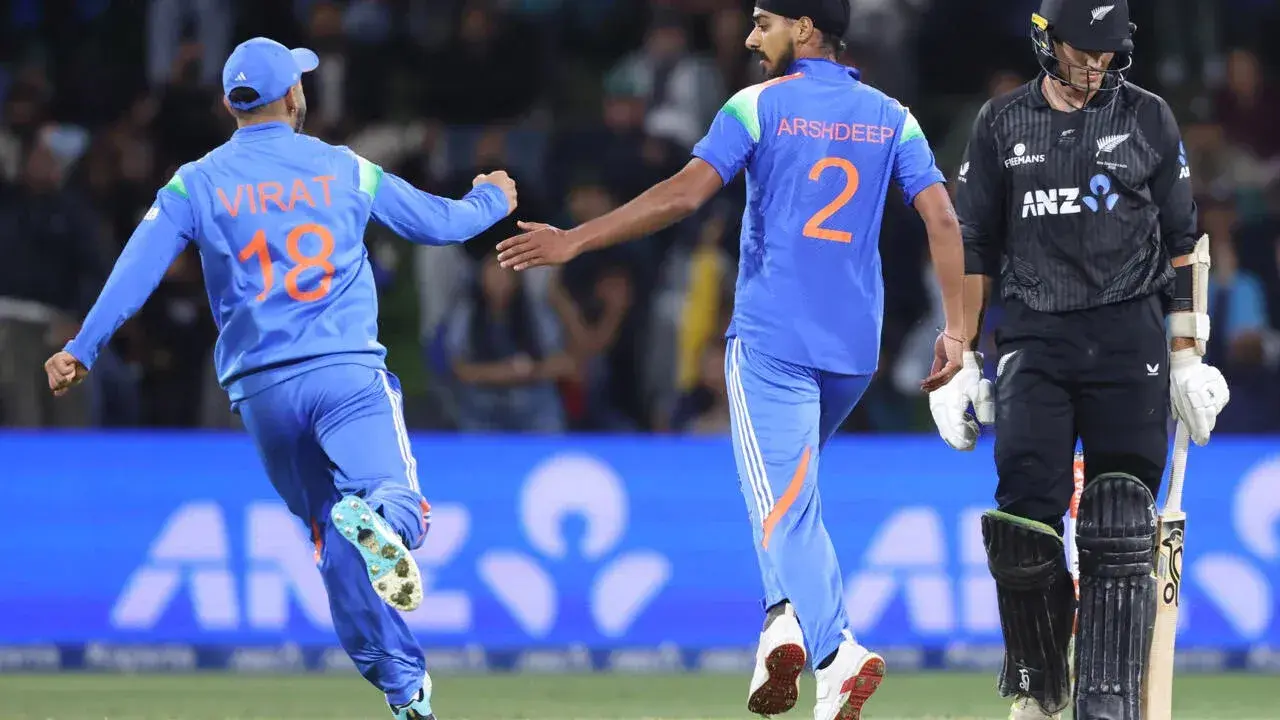
Arshdeep and Siraj changed that equation in 14 balls each.
They swung hard, not wildly. Three sixes and two fours between them shredded the figures of Duffy and Santner, pushed India beyond 200 for the first time in the series, and dragged the mood in the dressing room from resignation to something closer to belief. Duffy eventually clipped Arshdeep’s off stump with a slower ball, but the damage to New Zealand’s chase target was done.
Seam, sweat and a captain’s gamble
The early overs of New Zealand’s reply hinted at a different story. Arshdeep’s second over went for two fours and he was promptly removed. The cameos with the bat seemed destined to be a footnote.
Then the lights took full effect. The ball began to talk.
Siraj struck first, and against the run of play. Tim Seifert, looking to impose himself, slogged a length ball straight to mid-on. It was a soft dismissal, but it cracked open the door. Iyer shoved a boot through it.
Reading the conditions as they tilted further towards seam, India’s captain refused to let his quicks drift through gentle holding spells. He rotated them in short, hostile bursts, keeping New Zealand’s inexperienced middle order in a constant state of adjustment.
Arshdeep returned for a second spell that changed the chase. Six overs, one maiden, 17 runs, two wickets. The numbers only tell part of it.
He bowled mostly good length, but his bouncer became a weapon. Will Young was one of four New Zealand batters to fall to the short ball, gloved and fended and rushed. From around the wicket, Arshdeep’s angle and late movement made life miserable for the right-handers. He had Dean Foxcroft spilled at second slip, but soon drew a bottom edge from Nick Kelly to square things up.
Iyer sensed blood and brought Siraj back. The reward was immediate: Finn Allen’s off stump cartwheeling to a wobble-seam ball that jagged in sharply. At 87 for 4, India had their hands around the game, but there was a cost. Arshdeep and Siraj had already burned through eight overs each inside 24.
Now the support cast had to justify the faith.
Debut nerves, hard yards, and a late twist
Yash Thakur, on debut, and Auqib Nabi, in just his sixth ODI, were suddenly bowling in the most delicate phase of the chase. Foxcroft and Bracewell sensed their chance. The ball started hitting the middle of the bat more often, the scoreboard ticked, and for the first time New Zealand looked like a side that had not lost a home ODI series in seven years.
In the field, Axar refused to let the game drift. Stationed at backward point, he flung himself around to save 11 runs off Foxcroft alone, turning certain boundaries into exasperated singles. Nabi, buoyed by those saves, went short to Bracewell and forced the miscue to deep midwicket. New Zealand 119 for 5.
Thakur, tall and bristling, bowled with the sort of hostility that had earned him Gurnoor Brar’s spot. He found his reward when Foxcroft, set and responsible, dragged a pull back onto his stumps at the same score. The only blot on Thakur’s night was an odd hat-trick of no-balls, each time clipping the bail at the non-striker’s end with his leg. None of the free hits went to the rope. New Zealand never truly cashed in.
Still, they refused to fold. Santner, his top hand bruised by an Arshdeep bouncer, counterpunched. He went after Axar, taking him on down the ground and across the line. Kristian Clarke joined him in a seventh-wicket stand of 39 that shifted the pressure back on India.
This was the longest India had waited to bowl spin in an ODI since Auckland in 2003, a remarkable statistic on its own. For a few overs, it looked like that delay might cost them the series.
Dhir changed that with a single, ruthless intervention. Santner, eyeing another big blow with his sling sweep, found no room and no elevation. He picked out the fielder. The partnership snapped, the air went out of the chase.
Iyer had held one Arshdeep over back for precisely this stage. From around the wicket, angling in and then seaming away, Arshdeep finally produced the dismissal he had been hinting at all evening. Clarke edged behind. The plan, executed to the letter.
From there, the equation was brutal: nine, ten and jack needed 49. To avoid their first home ODI series defeat in seven years, New Zealand now required either extraordinary luck or a complete Indian meltdown with ball and tactics.
They got neither.
Siraj and Thakur squeezed relentlessly at the death, their last three overs building the pressure that Axar would cash in on. The left-arm spinner, already India’s top-scorer, finished the job with two tailend wickets. New Zealand were bowled out for 187, the last wicket fittingly falling to the man who had done as much as anyone to stretch India’s total.
India, the last team to beat New Zealand in an ODI series at home, had done it again. This time with no batter crossing 100 runs for the series, and with a new coach discovering that his side can win ugly, win short of runs, and win on the backs of bowlers who refuse to blink.
For Gambhir, that might be the most valuable result of all.