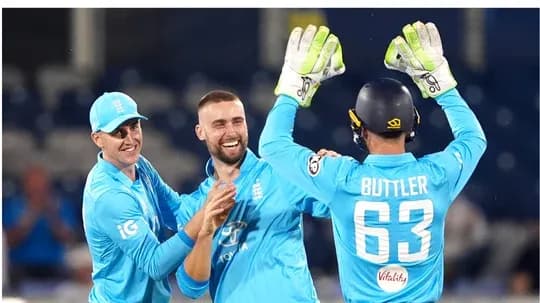
Will Jacks Leads England to Gritty Victory Over Sri Lanka
The Metro Bank one-day series opened not with fireworks, but with a grind. On a slow, sulking pitch at Chester-le-Street, England found a way. Sri Lanka never really tried.
England’s 89‑run victory, built on Harry Brook’s measured 67 and Will Jacks’ increasingly vital all-round game, was as much about discipline as it was about flair. This was a day for patience, not pyrotechnics.
England adapt to a stubborn surface
On a surface that refused to come on, England’s innings never quite broke free. It nudged, it scrapped, it threatened to stall. For the first time since 2019, they batted first in an ODI and did not hit a single six. That statistic alone tells the story.
Brook, captaining and anchoring, played against type. Usually the accelerator, here he became the metronome. His 67 from 69 balls was built on placement and risk management rather than the booming strokes that have defined his rise. He was also the only batter in a middle-order slide of 4-29 to fall playing an attacking shot, slicing a drive to deep cover after earning the right to go.
Around him, Joe Root stitched together 44, working the gaps and trying to impose some order. When Root’s off stump was clipped by debutant leg-spinner Sachindu Colombage, it felt like a significant moment. Colombage, finding just enough turn and guile, then trapped Jos Buttler lbw for 31 and later beat Jamie Overton with a googly for eight. On a day when Sri Lanka’s bowlers needed support from their batters, the young leg-spinner did his part.
England’s innings threatened to unravel at 211-7 in the 39th over. The old pattern would have been a frantic charge and a swift end. Instead, Jacks chose something different.
Jacks shows a new dimension
Jacks walked in with licence to swing. He resisted it. His unbeaten 46 was worth far more than the number suggests, a study in calculation rather than chaos. He farmed the strike, picked off the bad balls, and stretched the innings into the 49th over.
When the time finally came, he went. Eighteen runs came from the 47th over as he shifted gear just when Sri Lanka were eyeing a sub-par total. He looked set to finish the innings with a flourish until Asitha Fernando, who had earlier trimmed Tom Banton’s bails for 10 in the powerplay, found reverse swing to knock over Jofra Archer and Josh Tongue in quick succession.
England were bowled out for 265 in 48.1 overs. On a truer surface, that would have felt light. Here, it was a question mark. Par? Just below? The answer would come quickly.
Sri Lanka blink in the chase
If Sri Lanka’s fielding showed signs of renewal, their batting told a familiar story of hesitation. Chasing 266, they needed intent. They offered caution, then collapse.
England’s bowlers did not need miracles. They just needed discipline. They hit the pitch hard, took pace off when required, and let the surface do the talking. Wickets came steadily, the run rate crept, and Sri Lanka never once looked like dictating terms.
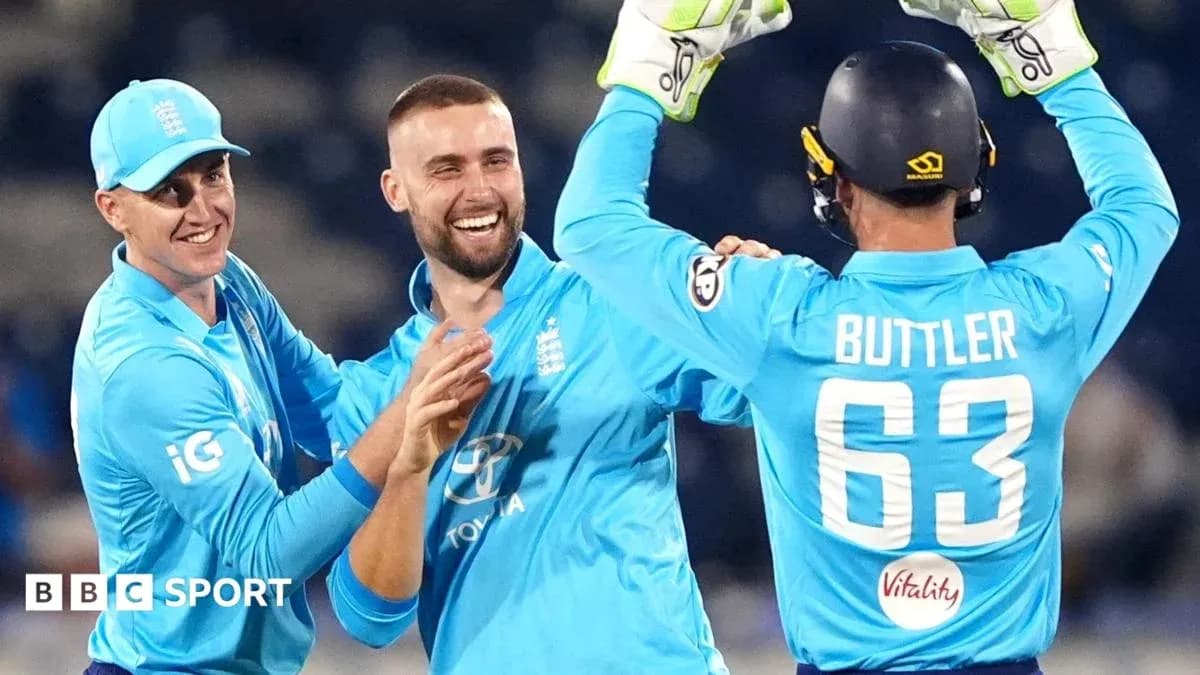
Jacks, already central with the bat, turned the match decisively with the ball. Used as a genuine attacking option rather than a part-time spinner, he struck the key blows. He removed Kusal Mendis, then Charith Asalanka, ripping out the spine of the chase. From there, Sri Lanka retreated into survival mode and paid the price.
The pressure told. Edges, miscues, and soft dismissals followed. Jacks ran through the tail to finish with career-best figures of 5-22, a spell that underlined just how quickly his importance to England’s white-ball plans is growing.
Dunith Wellalage’s 45 from 36 balls offered a glimpse of resistance, a brief flicker of what might have been if others around him had matched his intent. It arrived too late, with too much damage already done. Sri Lanka folded for 176 in the 37th over.
A quieter, smarter England
This was not the swaggering England of peak white-ball years. No avalanche of boundaries, no 350-plus statement. They were bowled out yet again — the 12th time since Brendon McCullum took over the white-ball sides — and the quality of opposition will raise the usual questions.
But there was something different here. England won without needing a freakish score. They adapted to the pitch, absorbed pressure, and trusted their bowling attack to defend a total that once might have felt beneath them.
They have now beaten Sri Lanka 10 times in white-ball matches this year alone. Another win at Headingley on Thursday would seal a third successive ODI series victory and send them into a two‑month overseas white-ball block with momentum and a growing sense of method.
The Oval will host the final match on Sunday, and with it the end of one of the most topsy-turvy English summers in recent memory. If this was a sign that England can win ugly as well as beautifully, how much more dangerous will they be when the runs start flowing again and the World Cup looms a year away?