Wasim Akram's Message on India-Pakistan Cricket Rivalry: Just a Game
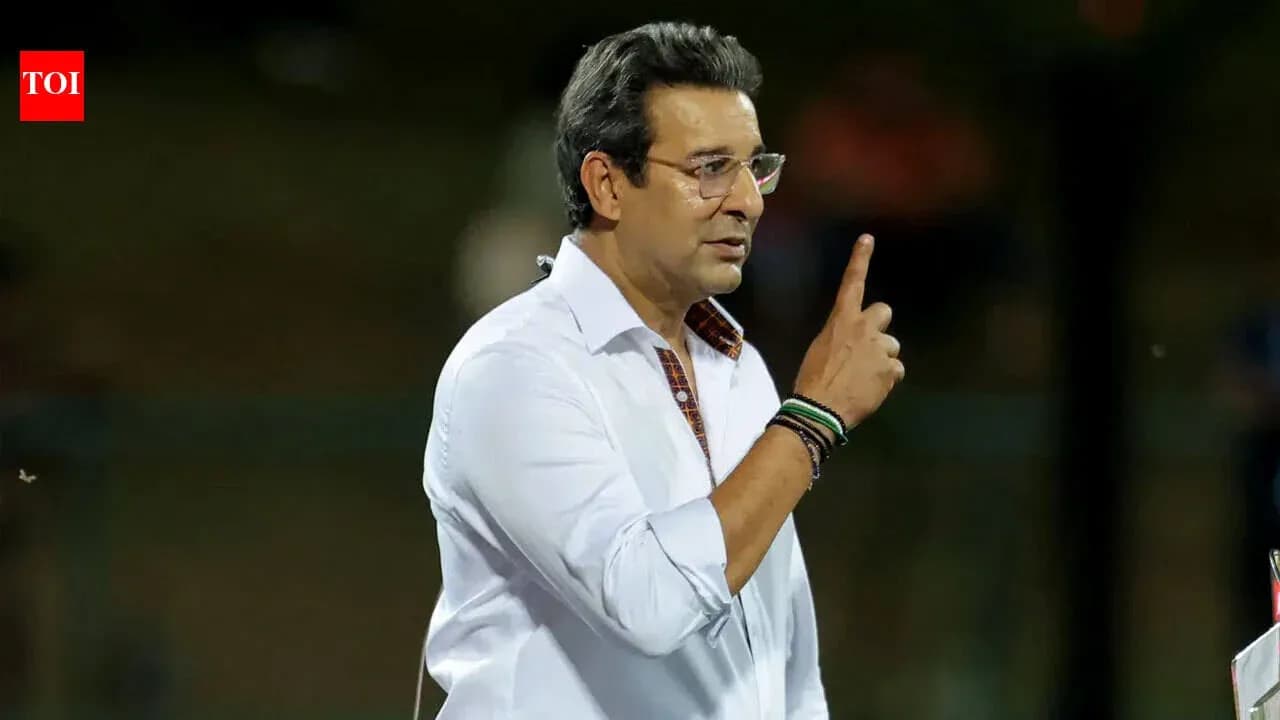
Wasim Akram has lived the full weight of India-Pakistan cricket. The packed stands, the noise that rattles the chest, the scrutiny that never ends. He has seen careers made and broken in a single spell, a single shot.
And yet, the greatest left-arm fast bowler Pakistan has produced now wants everyone to take a step back.
“People have too much time. Why can’t they understand? It’s only a frikkin game,” Akram said on the 1 Mint podcast, cutting straight through the mythology that surrounds the sport’s most emotionally charged rivalry. “At the end of the day, it’s just a match. Somebody has to win, somebody has to lose. And move on to the next one.”
No grand diplomacy. No sugar-coating. Just a simple plea: stop dragging history and politics into every ball bowled between India and Pakistan.
“Revenge and all is so 1970”
Akram played in an era when India-Pakistan contests felt like events that stopped time. Sharjah in the ’80s and ’90s. World Cups. Bilateral tours that carried the weight of two nations’ narratives. He knows exactly how much these games mean.
That’s precisely why his words land harder.
“What happened many moons ago still lingers,” he said, referring to the way old grievances bleed into modern-day cricket arguments. “Revenge and all is so 1970. It’s the classic ‘an empty mind is a devil’s workshop’ thought process.”
The rivalry, once confined to stadiums and living rooms, now lives permanently on timelines and comment sections. Every India-Pakistan fixture turns into a digital battleground, with fans trading insults long after the last ball.
Akram has watched that space grow uglier. He isn’t impressed.
For him, the sport’s basic equation hasn’t changed: one side wins, the other loses, and both teams move on. The fans, he believes, should try doing the same.
A young Irfan Pathan and a chance meeting in Australia
Amid the heavy talk, Akram also drifted into a lighter, more personal memory — his first meeting with Irfan Pathan.
It was 2004. Pathan was on his first tour of Australia with India. Akram had moved into the commentary box by then, but his aura still followed him everywhere.
“Irfan met me in 2004 on his first tour to Australia; I was commentating. He was a big fan. Grew up watching us,” Akram recalled. “I gave him a few tips here and there, but he did well early on in his career.”
Pathan’s action, with its familiar left-arm rhythm and whip, instantly drew comparisons with Akram. The Pakistani great, though, said his role wasn’t to remodel a young bowler’s technique.
“His action was similar to mine from the very beginning. But when players ask you about something, what you tell them is mostly about the mindset,” Akram explained. “Action and all is fine, because at that stage, you have reached that level where you’re representing the country.”
So the conversations went deeper. Wrist position. Reading a batsman. When to show your variations and when to hide them. The chess behind the speed.
“Things like wrist position and how to suss out a batsman. When to use variations, when not to. So yeah, it was good fun. Irfan is a good boy; he still keeps meeting me,” Akram said.
Pathan took those lessons into a career that made him one of India’s most effective left-arm quicks of the 2000s, later morphing into a genuine all-rounder. The comparisons with Akram never really stopped.
From protégé to social media sparring partner
Time has shifted the dynamic between the two men. The admiration remains, but the arena has changed.
Akram laughed as he pointed out that the same Irfan Pathan who once idolised him now often fires up social media with sharp comments aimed at Pakistan or its cricket.
“It’s a different thing that he keeps tweeting some or the other thing against Pakistan,” Akram said with a smile in his voice.
The issue, in his eyes, isn’t just the posts. It’s the reaction they trigger.
“But our fans are ready too. They don’t have the tendency to ignore either. They just have to reply,” he added.
Pathan, since retirement, has become one of the more outspoken Indian voices on television and online. He has not shied away from criticising Pakistan or its players, especially after high-profile India-Pakistan clashes.
Akram, though, treats it as part banter, part modern reality. The problem, he suggests, is not two former cricketers trading views. It’s millions of fans on both sides who refuse to let anything go, feeding off every word and turning it into another front in a never-ending war of emotions.
Pathan’s numbers against Pakistan
On the field, Pathan’s record against Pakistan tells its own story.
He took 67 wickets in 36 internationals against them — 27 in Tests, 34 in ODIs and six in T20Is. Those are not just respectable numbers; they underline how central he was to India’s plans whenever the arch-rivals met.
The standout memory, of course, came in Karachi in 2006. Pathan became only the second Indian to take a Test hat-trick, ripping through Salman Butt, Younis Khan and Mohammad Yousuf in the very first over of the innings.
Moments like that feed the rivalry’s folklore. They live in highlight reels, in arguments, in nostalgia.
Akram doesn’t want those memories erased. He wants them enjoyed — as cricketing moments, not as ammunition.
A rivalry that needs perspective
Every India-Pakistan game still arrives with noise, tension and an almost theatrical buildup. Online, the temperature rises days in advance. Old clips resurface, old wounds reopen, old talking points return.
Akram has seen enough to know that the rivalry will never be ordinary. It isn’t meant to be.
But he is drawing a clear line.
For him, the contest must stay on the field. The emotion must stay within the sport. The rest — the history, the politics, the grudges — belongs elsewhere.
“Somebody has to win, somebody has to lose. And move on to the next one,” he repeated.
The question now is whether the fans, so deeply invested and permanently online, are willing to do what one of the rivalry’s greatest figures is asking: remember the stakes, feel the nerves, celebrate the result — and then, finally, let it go.