Towhid Hridoy's Historic 350* in Potchefstroom
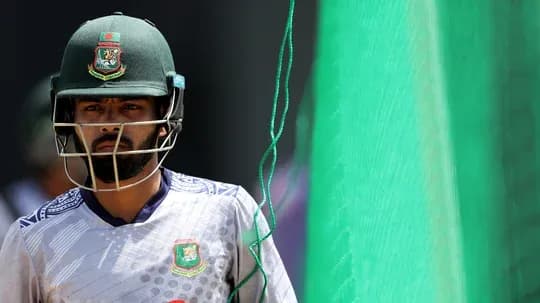
Potchefstroom has always meant something to Towhid Hridoy. In 2020, it was the place where he lifted the ICC Under-19 World Cup trophy. Now, it is where he carved his name into Bangladesh’s first-class record books.
An unbeaten 350 against South Africa A. The highest first-class score by a Bangladeshi batter. Beyond Tamim Iqbal’s 334*. Beyond Raqibul Hasan’s 313*. A statement, delivered in the most emphatic way possible.
A late call, a massive answer
Hridoy was not supposed to be the centrepiece of this tour. He was a late addition, drafted into the Bangladesh A squad alongside Nurul Hasan, Rishad Hossain and Mohammad Saifuddin after injuries and visa issues thinned the original group. The board needed numbers. They sent Hridoy.
At the airport in Dhaka, he did not talk like a man obsessed with a four-day game. He spoke like a white-ball specialist on a mission.
“The preparation is very important and as we have a national team tour and the World Cup (ODI), will try to prepare for it,” he told reporters before boarding, framing the A tour as a chance to understand South African conditions ahead of a white-ball series and next year’s ODI World Cup.
Red-ball cricket? That was not front and centre. Not anymore.
A Test dream put on hold
The caution is understandable. Hridoy waited more than three years to break into the Test side after his white-ball debut. When the chance finally came, it vanished almost as quickly.
He played one Test, in Harare against Zimbabwe, and lasted just three days in whites. A failure in the second Test of that tour, and the door slammed shut. No extended run, no gradual bedding-in. Just in, out, and gone.
Debate followed. Some said he had been pushed into Test cricket too early. Others picked apart his technique and filed him away as a white-ball player. Very few argued strongly for his place in the red-ball set-up.
The selectors have often spoken of a clear policy: breaking into the national side is hard, but once in, a player will get enough chances to prove himself. On paper, that sounds fair. In practice, it did not apply to Hridoy.
That is why, even now, he refuses to look too far ahead when it comes to Test cricket. The scars from Harare have not fully faded.
A record innings, a lingering doubt
His 350* in Potchefstroom changes the conversation, but not his tone. He became only the third Bangladeshi to hit a triple hundred in first-class cricket, and he did it with an authority that made the earlier doubts about his red-ball game look badly dated.
Yet when the question came again — what about Test cricket now? — he stayed measured.
“This is not entirely my call, as a professional player I always want to do well, I have said this on many occasions before, how many matches I will play for the national team will depend on the selectors, if I get the opportunity I will try to do well,” he said after his marathon knock.
No bold declarations. No demands. Just a reminder that, for all his runs, his future still sits in someone else’s hands.
Selectors cannot look away now
They will talk about him before Bangladesh’s next Test series. They have to. A 350* against South Africa A, away from home, is not the kind of performance you quietly file away. It forces its way into selection meetings. It lingers in the room.
The challenge for the panel is no longer just whether to pick him. It is what happens after that.
If Hridoy returns to the Test squad, he cannot be treated as a stop-gap or a one-match experiment. He needs clarity, trust, and a run that reflects his weight of runs, not his one bad week in Harare. Otherwise, the same cycle repeats — and the message to every young batter watching will be painfully clear.
Freedom born from indifference
Ironically, his skepticism about red-ball opportunities may have unlocked this innings.
He walked out in Potchefstroom without the burden of auditioning for a Test recall. No mental arithmetic about averages and strike rates, no fear of a single failure ending a dream again. He simply batted.
The result was a landmark innings, played with freedom but underpinned by discipline, that showcased exactly the red-ball potential so many had doubted.
From a late replacement to a record-breaker, from discarded Test hopeful to unavoidable talking point — Hridoy has dragged his name back into the long-format debate.
Now the question is no longer whether he belongs in whites. It is whether Bangladesh are finally ready to give him the time in them that an innings like this deserves.