Towhid Hridoy Shatters Bangladesh's First-Class Record with Unbeaten 350
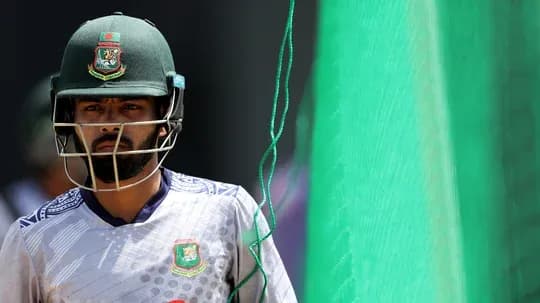
Potchefstroom has been kind to Towhid Hridoy before. In 2020, he walked away from this South African university town with the ICC Under-19 World Cup trophy. Now, he leaves it having rewritten Bangladesh’s first-class record books.
An unbeaten 350 against South Africa A.
The highest first-class score by a Bangladeshi batter.
Past Tamim Iqbal’s 334 not out. Beyond Raqibul Hasan’s 313 not out.
Into territory no Bangladeshi had ever reached.
A late call, a loud answer
Hridoy was never meant to be the headline act of this tour. He was a late addition, flown in with Nurul Hasan, Rishad Hossain and Mohammad Saifuddin after injuries and visa issues thinned the original squad. The board needed numbers. He became the story.
At the airport in Dhaka, he did not talk about four-day cricket or a Test comeback. He talked about preparation. White-ball preparation.
“The preparation is very important and as we have a national team tour and the World Cup (ODI), will try to prepare for it,” he told reporters before boarding. His eyes were on the limited-overs series against South Africa later this year, and the ODI World Cup that follows. The red ball barely featured in the conversation.
There was a reason. He had waited more than three years for another crack at Test cricket after his white-ball debut. When it came, it vanished in three days.
One Test.
One game in whites.
Dropped after the second Test of the Zimbabwe tour in Harare, discarded before any rhythm could form. Some said he had been rushed. Others questioned whether his technique belonged in the long format at all. Very few argued loudly for his return.
The selectors kept repeating the same line: breaking into the national team would be hard, but once in, players would get a fair run. That promise never quite reached Hridoy.
Batting without baggage
So he landed in South Africa with his Test ambitions on mute. No grand declarations. No public push for a recall. Just another assignment, another chance to understand conditions that might matter for white-ball cricket.
That mindset freed him.
Without the weight of selection politics on his shoulders, Hridoy batted like a man unshackled. South Africa A’s attack found themselves dragged through a marathon they could not end. He stayed. Hour after hour. Session after session. The score kept climbing.
Triple hundred.
Then beyond.
The numbers stopped at 350 not out, but the statement will echo far longer.
He became only the third Bangladeshi batter to reach a triple hundred in first-class cricket, and he did not stop there. By going past Tamim and Raqibul, he claimed a record that will now follow him into every Test selection meeting.
Yet even after this, his words carried no sense of entitlement.
“This is not entirely my call, as a professional player I always want to do well, I have said this on many occasions before, how many matches I will play for the national team will depend on the selectors, if I get the opportunity I will try to do well,” he said after the innings, when asked about his red-ball future.
No demands. No veiled criticism. Just a reminder: he has done his part.
A question the selectors can’t dodge
Bangladesh’s next Test series now arrives with a fresh, unavoidable talking point. Can a player who has just produced the highest first-class score in the country’s history be ignored again?
Hridoy’s innings in Potchefstroom has changed the conversation around him. This is no longer about whether his game “suits” red-ball cricket. The scorecard answers that. The real challenge sits with those picking the team.
It is no longer enough to squeeze him into a squad and tick a box. If he returns to the Test fold, he will need more than a token appearance and a quick exit, more than the three-day window he was given last time. He will need a runway, not a revolving door.
For now, he seems strangely untouched by the noise. His focus remains simple: play, score, prepare, whatever the format. That detachment has served him well. It allowed him to walk into a four-day game as a white-ball specialist and walk out as a record-breaking red-ball beacon.
The next move is not his. It belongs to the selectors, and to a system that must decide whether Potchefstroom was an extraordinary one-off – or the start of a Test career that should never have been paused in the first place.