Tamim Iqbal Announces Major Match Fee Increases for Bangladeshi Cricketers
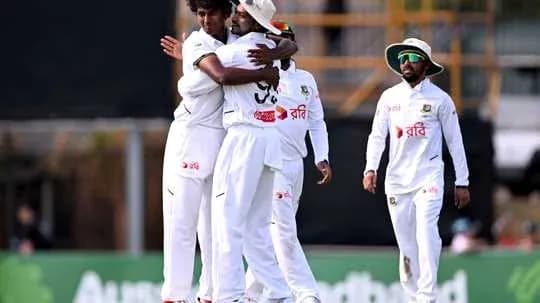
The mood around Bangladesh cricket had been turning uneasy. With the Bangladesh Premier League shelved for the coming season, players privately fretted, agents whispered, and the country’s only franchise T20 tournament vanished from their immediate earning plans.
On Thursday in Mirpur, Tamim Iqbal walked into an impromptu press conference and tried to slam that door of insecurity shut.
At the Sher-e-Bangla National Cricket Stadium, after a working committee meeting, the Bangladesh Cricket Board president announced a sweeping hike in match fees across domestic formats – for both men and women – in what amounts to one of the most aggressive financial resets in the board’s history.
A Landmark Pay Rise
The numbers tell the story.
- Men’s first-class match fees leap from Tk 70,000 to Tk 1.5 lakh. When Tamim first took charge of the BCB ad-hoc committee, he had already nudged that figure up to Tk 1 lakh. Now, he’s gone further, almost doubling it again.
- List A cricketers see their match fee jump from Tk 50,000 to Tk 1 lakh per game.
- Domestic T20 players move from Tk 40,000 to Tk 80,000 per match.
On the women’s side, the increments are just as stark. The four-day match fee rises from Tk 20,000 to Tk 40,000. One-day cricket climbs from Tk 15,000 to Tk 30,000. T20 fees double from Tk 10,000 to Tk 20,000.
“Everything has increased by 100% or more,” Tamim said, framing the decision as a long-term structural change rather than a quick fix to calm a restless dressing room.
Beyond the BPL: A Wider Net
The tension had been building ever since the BCB decided to postpone the next BPL. For many cricketers, especially those on the fringes of the national side, that tournament isn’t just a stage – it’s a crucial paycheque.
Some players had already voiced their displeasure with the Cricketers Welfare Association, questioning how their concerns were being handled in negotiations with the board.
Tamim’s response was to widen the conversation.
“So, what we have all decided together is that, overall, in the BPL, you will see 50, 60, 65, 70 local cricketers play,” he said. “But if you think about Bangladesh cricket, in first-class, List A, T20, there are plus or minus 150 to 200 cricketers involved.”
The message was clear: the board wants to shift the financial centre of gravity away from a single glitzy tournament and back towards the domestic calendar that underpins the national game.
“Now, their well-being, in the Dhaka League, maybe financially, what it was two or three years ago, perhaps that has dropped. Plus, because the BPL will not take place this year, there can be a financial impact,” he admitted.
A Year-Round Livelihood, Not a One-Off Fix
Tamim stressed that he did not want a band-aid solution tied to one missing season.
“I never wanted a one-year solution for the players. I wanted there to be a solution, my board wanted there to be a solution that would benefit them year after year after year,” he said.
His calculations are ambitious. With the new structure, he believes a domestic cricketer who plays a full season can earn Tk 35 lakh to Tk 40 lakh annually, once salaries and match fees are combined.
“If you divide that by 12, a player will have an income of more than Tk 3 lakh per month,” Tamim explained. “To run their family, I don’t think they will need to worry anymore. It is a significant step.”
It is also a pointed answer to those who feared that postponing the BPL would punch a hole in players’ livelihoods. Instead of a single tournament windfall, the board is trying to turn the domestic grind into a stable, respectable profession.
One Side, One Standard
Throughout his address, Tamim pushed a unifying theme.
“So, one or two proposals had come from the players’ side. Eventually, we both side – I don’t consider it two sides at all. There is only one side, that we are all one. Cricketers, the cricket board, directors, president – all are one,” he said.
But unity comes with conditions.
Tamim was blunt about what the board expects in return for this financial uplift: professionalism, starting with fitness.
“We will fully fulfil the demands that came from the players’ side, but they also have to fulfil the demands from our side,” he warned. “There will be no sacrifice when it comes to professionalism in first-class cricket, which is something that is discussed a lot sometimes among us.”
The pre-season fitness test, long a source of quiet lobbying and whispered requests for leniency, is now a hard line.
“When someone fails to pass the fitness test, there will be no requests or anything like that listened to. When the board is providing everything and giving all financial support, the professionalism from the players’ side will now also be monitored very strongly,” he said.
The carrot has arrived. So has the stick.
A Board Rebalancing Its Books
Behind the headline numbers lies another reality: the BCB is reassessing how it spends its money.
Cricbuzz understands the board is no longer keen to shoulder the full financial burden of tournaments such as the National Cricket League (NCL) T20 and the Bangladesh Cricket League (BCL) four-day and one-day competitions.
That shift, combined with the BPL postponement and the domestic pay hike, suggests a broader recalibration. Less dependence on a single tournament. More responsibility on domestic structures. Greater accountability on players to treat domestic cricket as a serious, year-round profession.
For now, the figures will dominate the discussion. Tk 1.5 lakh a first-class match. Tk 1 lakh for List A. Women’s fees doubled across formats. A projected Tk 3 lakh a month for a solid domestic pro.
The money is on the table. The question now is whether Bangladesh’s cricketers can match that investment with the standards their board is demanding.