Suryakumar Yadav's Sudden Exit from T20I Captaincy
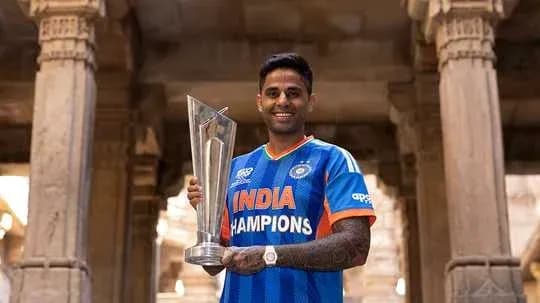
Suryakumar Yadav had mapped it all out in his head.
Lead India through another T20 World Cup. Walk out as captain at the Los Angeles Olympics in 2028. Hand over a settled, winning T20I side after one last tilt at glory.
Instead, the journey stopped in March, on a high, without warning.
The man who lifted the T20 World Cup on home soil, who presided over an unbeaten run in bilateral series for two years, discovered in June that his name was no longer in India’s T20I plans. No Ireland. No England. No captaincy. No place at all.
“I smiled after spotting that my name isn't there,” he said on Aakash Chopra’s Baith and Bol show on YouTube. It sounded almost surreal. But this is how Suryakumar has always dealt with turbulence: a smile, a pause, a look back at what has been, before dealing with what comes next.
A captain cut short
The timing is what jars.
Suryakumar had only just taken over the role full-time after Rohit Sharma stepped away from T20Is following the 2024 T20 World Cup. The promotion felt inevitable. He had already become India’s most devastating T20 batter, rising to No. 1 in the ICC rankings in November 2022. The captaincy, when it came, looked like a natural extension of his influence.
The numbers under his leadership were emphatic. India won 42 of 50 completed T20Is. They became the first men’s team to defend the T20 World Cup and the first to lift it at home. Series after series, they walked away unbeaten.
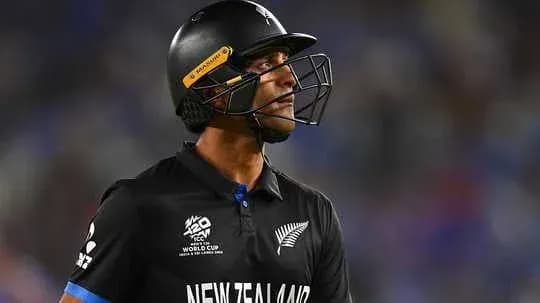
Then came the final against New Zealand in March. A title sealed, a packed home crowd roaring, a captain holding the trophy aloft.
It turned out to be his last game for India.
By June, the selectors had moved on. The T20I captaincy passed to Shreyas Iyer, a player Suryakumar knows well and respects, but whose elevation marked an abrupt end to a dominant era.
“The guy they've picked, I have played a lot of cricket with him,” Suryakumar said. “I know he's a good player, good human being, good captain also. So, I didn't resent the decision but was disappointed because we didn't lose a series for two years, won Asia Cup, T20 World Cup – you want the same thing to go forward. When everything is going well, then why the change?”
That question now hangs over Indian T20 cricket.
The call that changed everything
The selectors did not blindside him entirely. There was a phone call, two or three days before the squad announcement for the Ireland and England tours. The message, though, was blunt.
“They said, ‘I think it's time to move on,’” Suryakumar recalled.
He chose not to argue. That, he said, is “not my forte”. He accepted that those in charge believed they were acting in the best interests of the team. The decision, once communicated, was final.
Yet the shock lingered.
“I didn't think this would happen in 2026,” he admitted. “I was under the impression that I am preparing to take this team forward for another two years – Olympics, another T20 World Cup and then another challenge going forward.”
For a month and a half, he wrestled with it.
“For one-and-a-half months I kept thinking, how can this happen? How is it possible? We just won the World Cup. Yes, IPL wasn't as good as how I wanted.”
Friends and family tried to console him, reminding him this is how sport works, how life works. The noise fades, the visitors leave, and what remains is a player and his thoughts, sitting with the reality that the dream run has been cut short.
“We were thinking, how is it possible?” he said of those conversations at home.
Form, cycles and a ruthless call
The selectors, led by Ajit Agarkar, pointed to a familiar justification in modern white-ball cricket: cycles and form.
“Obviously, it's a tough one... having just won the World Cup,” Agarkar said when the decision was announced. “But as it happens after most World Cups, we try and reassess what the best way forward is.
“Partly his own form, but also looking at the next two-year cycle or a little bit more than two years now till the next World Cup, we thought this was the best way forward.”
On paper, Suryakumar’s World Cup numbers hardly screamed decline. He finished with 242 runs, the third-highest tally for India in the tournament, and produced a crucial unbeaten 84 against USA when the campaign briefly wobbled.
The trouble lay elsewhere. His IPL form, once a barometer of his outrageous consistency, dipped sharply. After a towering 717-run season in IPL 2025, he managed only 270 runs in a forgettable 2026 campaign for Mumbai Indians. For a 35-year-old in a format obsessed with the next big thing, that slump carried weight.
The selectors looked at the next two to three years, not the last two. They chose to reset while the trophy cabinet still gleamed.
Smile, reset, wait
Suryakumar’s public response has been remarkably measured for a man who, not long ago, embodied India’s T20 revolution.
“I didn't react,” he said of the phone call. “Whatever call was taken, the person must have felt it was in the best interest of the team. You took the call, informed me, no harm done.”
Inside, of course, the disappointment ran deep. A captain who had not lost a series in two years, who had lifted Asia Cup and World Cup trophies, suddenly found himself on the outside, wondering what more he could have done.
Yet he has not spoken of retirement. There is no farewell statement, no final lap, no hint that he is ready to close the international chapter himself.
“I am ready, I am still playing, will continue to do so,” he said. “Whenever you feel the time is right, things are right, call me.”
For now, that is where his story stands: a champion captain in limbo, training, waiting, trusting that another door might open.
India, under Shreyas Iyer, will write their own script over the next cycle. The question is whether that future, at some point, still finds room for the man who once redefined their T20 batting and led them to the summit – only to discover, at the peak, that the climb was already over.