Stephen Fleming Takes on England Men’s Test Coaching Challenge
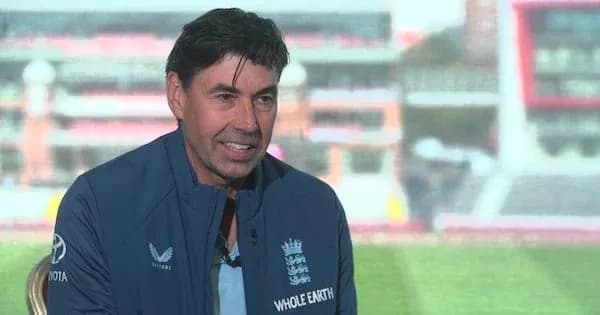
Stephen Fleming has never been afraid of a challenge. Captain at 23, custodian of New Zealand’s golden era, architect of an IPL dynasty. Yet even for him, the England Men’s Test job felt different.
“Too good to refuse,” he called it. You could see why.
Ashes lure and old rivalries
For a New Zealander, the Ashes carries a particular edge. The accent is softer, the rivalry is not.
“New Zealanders love beating Australia so that doesn’t change,” Fleming told 1News, admitting he has to “suppress” his excitement at the thought of walking into that cauldron as England coach. To be in the middle of an Ashes series, not as a pundit or a distant admirer but as the man shaping England’s response, is, in his words, “an absolute highlight”.
The 53-year-old did not leap at the offer. He wrestled with it.
“You go through it and think, ‘Can I make an impact?’”
That question matters to a man whose playing career was defined by influence rather than noise.
From Black Caps statesman to England’s hope
Fleming’s CV still towers over New Zealand cricket. Ten years as Black Caps captain from 1997 to 2007. Twenty-eight Test wins, the most by any New Zealand skipper. One of the most assured batters the country has produced. He retired from international cricket in 2008, but his strategic imprint never really left the game.
Now he steps into what he calls “probably the most prestigious position in world cricket”.
He knows England well. County cricket in the UK shaped him, sharpened him, and left a mark.
“I played a number of years of county cricket which were some of my best cricketing days,” he said. “I’ve always had a deep respect for English cricket.”
Respect will be useful. So will resilience. England’s Test side has been under the microscope all year: a 4–1 Ashes defeat to Australia, a 2–1 series loss to New Zealand in June, and a dressing room culture dragged into the headlines by late-night incidents and alcohol-fuelled controversy.
Brendon McCullum paid the price in July, removed as Test coach but kept on in charge of the T20 and ODI sides. Ben Stokes, the former captain, retired during the third Test against New Zealand and was stood down for the second Test while under investigation for breaking a midnight curfew. A series of off-field lapses has chipped away at the team’s reputation.
That is the landscape Fleming walks into.
A job too big to walk past
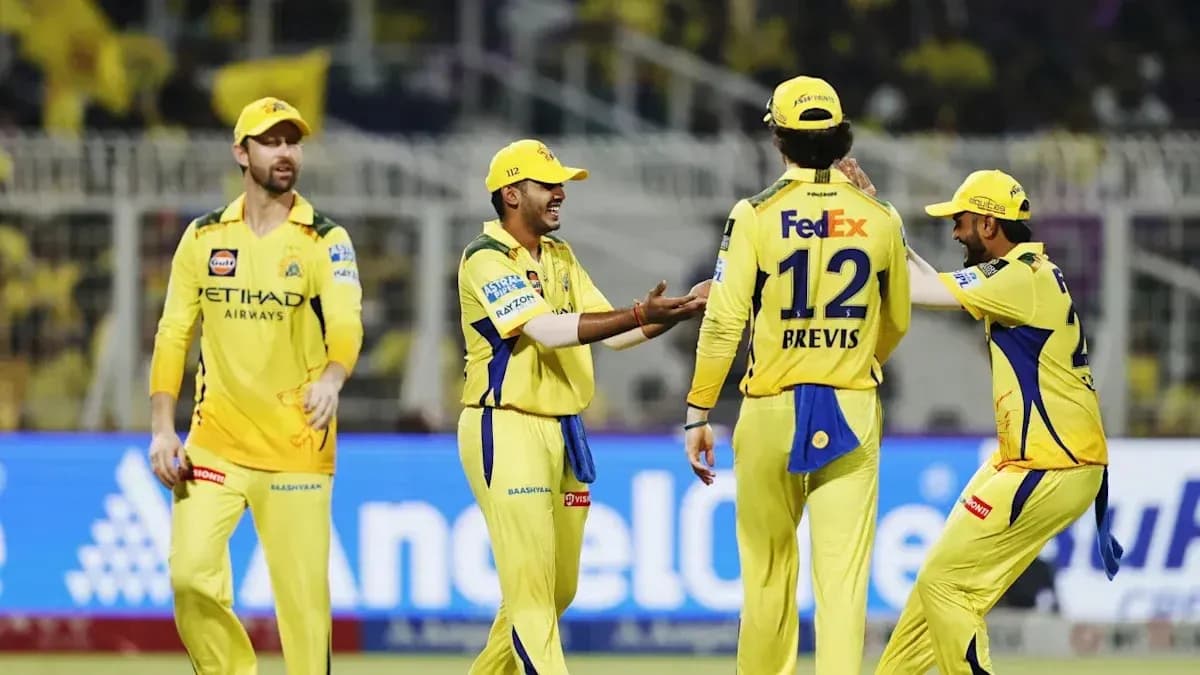
When the England role became vacant, Fleming had just stepped away from an 18-year run in the Indian Premier League, most notably as the mastermind behind Chennai Super Kings’ sustained success in the T20 era.
“The job became vacant and it was probably three, four days which wasn’t a lot of time to process leaving one job after 18 years and look at another one,” he said.
He sat down with his family. They weighed the upheaval against the scale of the opportunity.
“The significance of the role and the respect I have for this role is something that made the family and I sit down and go through it.
“When you soak it all in and get all the information… there was something that started to burn in the stomach and then that just grew the more information I had about the job, the people, talking to Brendon and understanding the challenges and also how good it has been and how much he’s enjoyed it, how tough it is so everything put on the table.”
The pair are close. McCullum debuted for New Zealand under Fleming’s captaincy; now they are also business partners and, intriguingly, fellow England coaches.
“It’s a challenge at times but he’s great,” Fleming said.
McCullum did not sugar-coat his own exit. He was “heartsore” at losing the role, Fleming admitted, but he was also generous in his endorsement of the opportunity now in front of his old captain.
“He couldn’t have spoken more highly and endorsed it,” Fleming said. “He’s loved to bring his flavour to the England team and learning as well, so it’s not just one way traffic.”
Their relationship now has a practical edge. Between them, they must balance resources, players and schedules across Test, ODI and T20 cricket.
“It’s nice to be able to have that friendly face with that professional slant to be able to achieve hopefully some great things.”
Fleming is still finalising his backroom staff and has kept names to himself. He jokes that, despite being older than McCullum, he is now “second fiddle” when it comes to experience.
Test cricket as homecoming
Some have questioned whether 18 years in franchise T20 cricket is the right apprenticeship for the longest format. Fleming shrugs that off. For him, this is not a leap into the unknown. It is a return.
“My DNA was playing in the whites and captaincy and the challenges and the rewards that came through having a great opportunity to captain New Zealand for so long,” he said. “I was brought up in the red ball and learned the white ball.
“Franchise cricket’s been a big part of my life but the deep passion is really test cricket.”
He believes his planning and style are built for the long game. Test cricket, he says, has “more substance and strategy”. It still belongs, in his eyes, to the captain on the field.
“We are one of the only sports still that is captained from the inside out so making sure that Joe Root and the other leaders are well equipped.”
That will be a central plank of his tenure: sharpening England’s cricket “smarts”, building a side that can adapt when conditions turn hostile and plans fall apart.
“That’s strategy, that’s creating an identity piece, a belonging piece, some standards, and making sure that as a team no matter who you represent, that you’re representing it well.”
He learned that as New Zealand captain. He intends to bring it, fully formed, into the England dressing room.
His first Test series in charge comes in December, away in South Africa, stretching into early January. Before that, he will clear his remaining commitments, including commentary duties during India’s T20 tour of New Zealand. After that, he says, he is ready “to give it everything”.
Kiwi edge, English stage
Is a laid-back Kiwi really what England need right now? Fleming bats that away as a question for the ECB, pointing out that English sport is used to foreign coaches, particularly in football.
What he does underline is the mentality New Zealand coaches carry with them.
“We don’t have the resource that other bigger countries have, that’s not just in cricket,” he said. “So what we do is we look outside the square and we squeeze everything we can out of the stone to make sure that we can compete on the world stage, that’s our DNA, that number 8 wire DNA that we pride ourselves on.”
That scarcity shapes how they work. It forces creativity and makes relationships non-negotiable.
“You can’t burn them in New Zealand if you haven’t got much resource,” he said.
So the focus becomes the controllables: culture, standards, and living them every day.
His vision is blunt and ambitious. He wants England to be the best Test side in the world.
“It is a challenge, it’s the pinnacle, there’s a lot of attention on this role in England and media has been talked about and that’s it’s all part and parcel of being in the privileged position of it.
“But yeah, I am confident there is room to move around and the cultural piece and that sense of belonging that these players are wanting to do.”
Inheriting Bazball’s legacy
Fleming will not tear up what came before. He has huge admiration for what McCullum and Stokes did over the past two years with their aggressive, high-risk approach dubbed ‘Bazball’.
“It culturally changed the cricket landscape,” he said. He pointed back to that breakthrough series against New Zealand, when England’s transformation under McCullum and Stokes first demanded attention.
“It was amazing some of the performances… it was really a stand up and take notice moment and the courage that both of those leaders had to do that was immense so I have huge respect towards that.”
In his view, the game has since evolved. Other teams have adjusted, caught up, and begun to challenge the method that once seemed to break all the rules.
Fleming now inherits that legacy at a time when Test cricket itself is under pressure from the shorter, flashier formats that dominate screens and schedules.
“We have a responsibility to entertain and play the game well,” he said.
Culture, curfews and standards
Entertaining is one thing. Behaving like professionals is another.
Fleming did not hide his disappointment at the off-field incidents that have dogged England recently. The late nights, the alcohol, the broken curfews.
He talks about an “education process” to lift standards. He points to Joe Root, 35, former captain from 2017 to 2022, as the example others should study.
“Very similar to Kane Williamson where they epitomise everything great about how you conduct yourself by still being a great player,” Fleming said.
“There’s work to be done.”
He will not, though, be reaching for the easy symbol of discipline.
He won’t be setting any more midnight curfews.
Old loyalties, new battles
At some point, England will meet the Black Caps with Fleming in their corner. He has not dwelled on that yet.
“Thankfully there’s two more years to get some performances under the belt and then we’ll come across that, but it will be a good battle.”
He insists New Zealand were always in his thoughts when he considered his next move. But the England offer was the one on the table.
Asked if he had thought about contributing more directly to New Zealand cricket, he called it “always a consideration” before turning the spotlight back on the current side.
“No, they’re too good. They’re set, they’re doing so well,” he said, stressing his “utmost respect” for what the Black Caps have built and for the players he still knows so well.
Now his focus is England, South Africa in December, and the long climb back to the top of the Test game.
He believes Test cricket still matters. He believes England can lead it. The question now is whether his “burn in the stomach” can ignite a dressing room that has forgotten, too often of late, what it means to represent that badge well.