Sophia Dunkley leads England to ODI clean sweep with stunning century
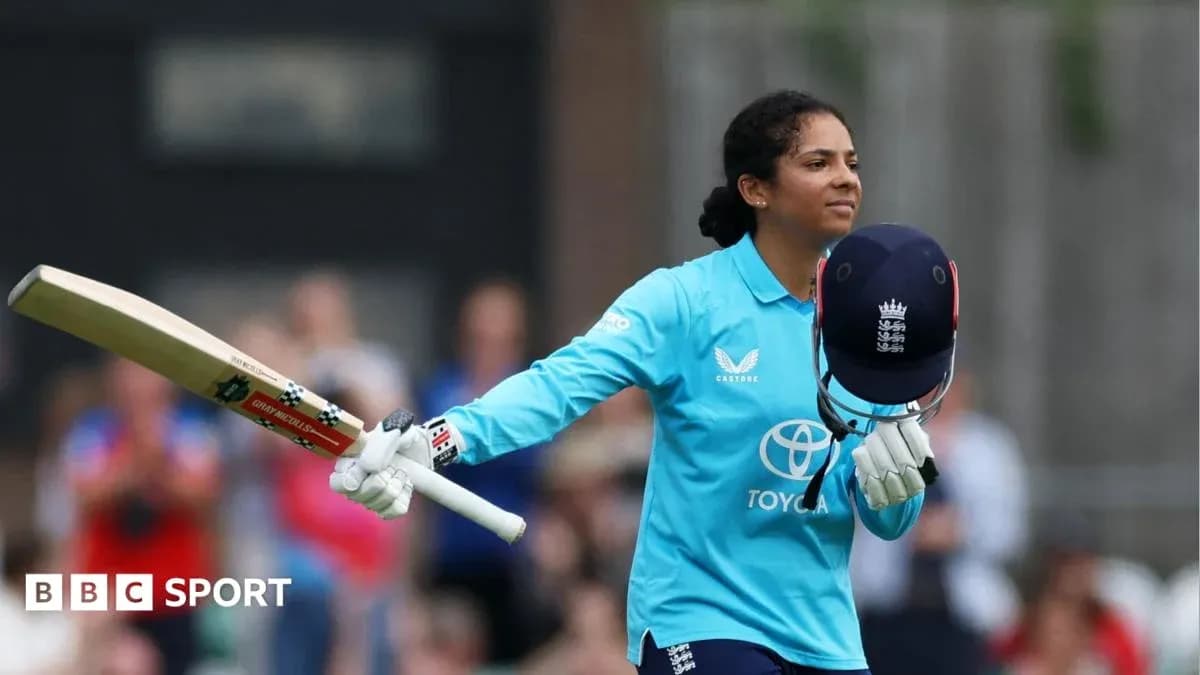
On a grey Worcester afternoon, Sophia Dunkley lit up New Road with the kind of innings that changes conversations, not just scorecards.
Her run-a-ball 119 underpinned England’s 291 all out and set up a thumping 114‑run win over Ireland in the third ODI, sealing a 3-0 clean sweep and closing the international summer with a statement, if not a contest.
By the time Ireland folded for 177 in 44.2 overs, the result felt inevitable. The real intrigue lay in what Dunkley’s hundred – and this series – might mean for England’s future.
Dunkley and Bouchier seize the vacancy
Tammy Beaumont’s retirement had left a vacancy at the top of the order and a nagging question for coach Charlotte Edwards. Across this series, Dunkley and Maia Bouchier have not so much applied for the job as grabbed it.
Here, they set the tone early. Dunkley started in first gear, Bouchier in third. The pair added 73 for the first wicket, Bouchier continuing her rich vein of form with a brisk 39, picking gaps and forcing Ireland’s seamers to adjust.
Dunkley, by contrast, built. She reached fifty from 63 balls, content to let Bouchier dominate the strike, then shifted up. Her next fifty came in 37 deliveries, a surge that turned a solid platform into a commanding one.
What stood out was not just the tempo, but the method. Dunkley, once pigeonholed as a leg-side bully, scored almost evenly on both sides of the wicket. She drove crisply through the off, threaded gaps square, and answered Ireland’s short-ball ploy with control rather than panic, nudging and rolling the ball to sweepers when required.
Eventually, it took brilliance to remove her. On 119, she took on deep square leg and found Orla Prendergast, who clung on to a superb catch. By then, the damage was done.
Middle-order promise, late collapse
England looked on course for something monstrous. At 260-4, with overs in hand and Ireland flagging, 300 felt like the minimum.
Jodi Grewcock had again hinted at more, making 35 before falling to a sharp caught-and-bowled. Alice Capsey was unfortunate, run out backing up for 10. Even so, the platform held.
Freya Kemp and Dani Gibson threatened to turn a strong total into a crushing one. Kemp’s 23 included intent down the ground, and Gibson grew into her work, finishing with an ODI-best 41, busy between the wickets and willing to take on the field.
Then the innings buckled.
Kemp’s miscue to long-on sparked a collapse that stripped away the gloss. From 260-4, England lost their last six wickets for just 31 runs, bowled out with seven balls unused. After Dunkley’s dismissal in the 36th over, they managed only seven boundaries.
Cara Murray led Ireland’s fightback with the ball, her leg-spin bringing 4-56 and a measure of control when everything else seemed to be running away from them. She dragged the total back from the realms of the absurd to something merely daunting.
It still proved far too many.
Filer and Villiers shut the door
If England’s batting ended with a stutter, the ball brought instant clarity.
Ireland never got close to the rate. Amy Hunter top-scored with 39 from 58 balls, but no batter managed to score at better than a run a ball, and the chase never really sparked. As the overs ticked by, the required rate drifted out of reach and stayed there.
Lauren Filer and Mady Villiers shared the spoils, three wickets each, and between them strangled any hint of momentum. Filer hit the pitch hard and hurried Ireland’s middle order. Villiers, with her canny variations, chipped away as the pressure mounted.
By the final ten overs, it was not a chase, but a slow slide. Ireland were all out for 177, well short and well beaten.
Experiment, opportunity, and a thin calendar
This series has sat in an odd pocket of England’s calendar. Key figures Lauren Bell, Sophie Ecclestone and Nat Sciver-Brunt have all been rested, leaving space for auditions and experiments.
Grewcock and Tilly Corteen-Coleman have had a taste of international cricket. Gibson has pushed her case with bat and ball. Capsey has had a chance to keep wicket, raising a genuine question over whether she or Amy Jones wears the gloves when the senior core returns.
Yet the experimentation has been set against a strange reality: England barely play this format. Their international summer ends here. The next confirmed fixtures are at the Champions Trophy in February. A multi-format series against West Indies and three ODIs against Sri Lanka are pencilled into the autumn, but dates remain unconfirmed. Their next home ODI? Not until the Ashes next summer.
So while this whitewash cannot realistically be framed as Ashes preparation – Ireland’s attack simply does not resemble Australia’s – it has at least offered one clear answer.
Dunkley and Bouchier have taken their chance at the top.
Dunkley, in particular, has built across the series. She made 73 in Leicester, then was left stranded by poor running from Bouchier in Derby. Third time, she refused to let the opportunity slip. The hundred here felt less like a breakthrough and more like confirmation.
Sciver-Brunt will walk back in at three. Decisions loom over the gloves, over balance, over which of these fringe players survive once the full-strength XI reforms. But as England pack away their kits at New Road and look towards a stop-start winter, one of Charlotte Edwards’ biggest headaches has eased.
The opening question, for now, has an answer.