Sobhana Mostary: The Journey from Village Cricketer to Bangladesh Star
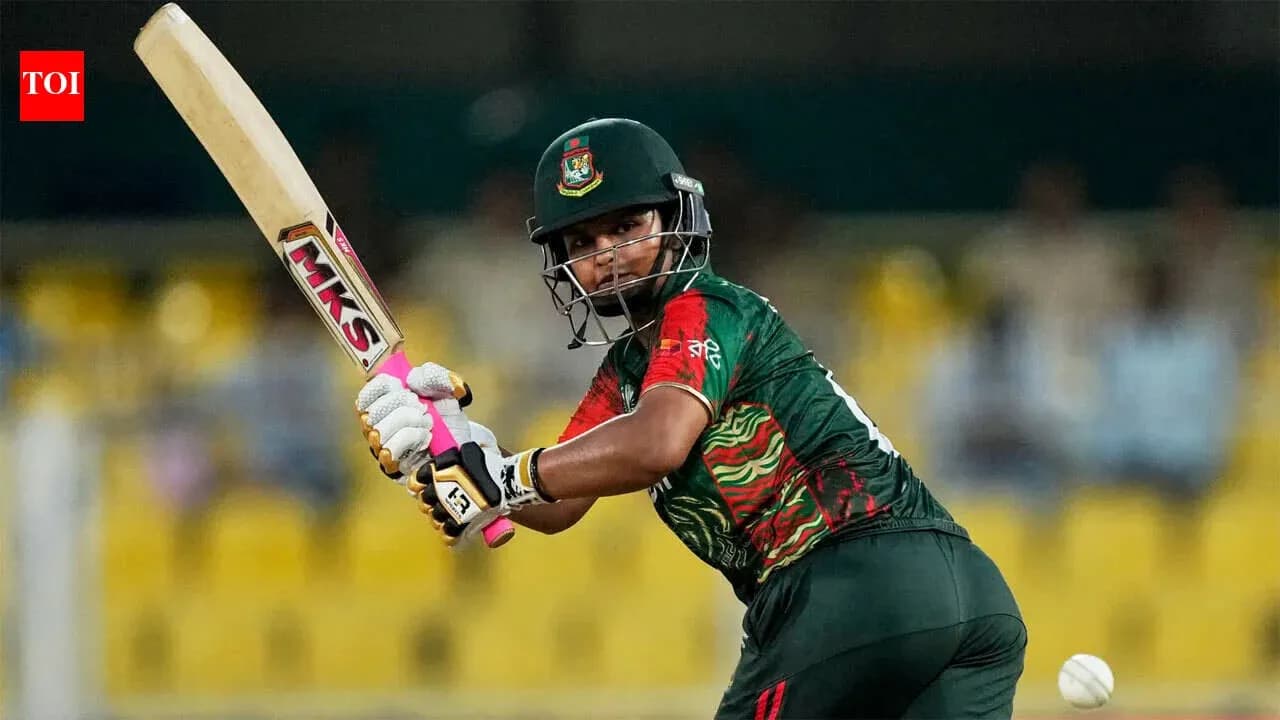
Sobhana Mostary still remembers the noise.
Not the fireworks, not the speeches, not even the cheque that followed. The noise that has stayed with her is the sound of Jahanara Alam’s bat meeting ball in Kuala Lumpur in 2018, the scramble for two runs, and the eruption that told Bangladesh women’s cricket it had just crossed a line it had never dared approach before.
Six years on, as the 2026 Women’s Asia Cup rolls into view, that moment still shapes how Mostary sees everything.
The night that changed everything
Bangladesh did not just win a trophy in 2018. They took down the giant twice.
They beat India by seven wickets in the group stage. Then, in a final that went right to the last ball, they chased 112 to dethrone the defending champions. India finished on 112/9. Bangladesh, nervy, stubborn, fearless, dragged themselves to the target with three wickets in hand. Alam’s two off the final delivery sealed their maiden Women’s Asia Cup title.
The impact back home was immediate and loud. The Bangladesh Cricket Board announced a reward of 2 crore Bangladeshi Taka for the squad. The win did something money alone never could: it shifted how the country looked at its women cricketers.
“After 2018, we beat India and won the Asia Cup, so it was a huge change in Bangladesh women's cricket. Everything changed. They started giving us lots of facilities, money, everything. There was a lot of change,” Sobhana Mostary told TimesofIndia.com ahead of the 2026 edition.
That night in Kuala Lumpur still sits at the heart of her ambition.
“We think this Asia Cup, we fight for the title, because if we beat India, so maybe we own the Asia Cup,” she said.
A new campaign, a familiar target
This time, the path to India is not straightforward.
Bangladesh have been drawn in Group B, alongside Sri Lanka, Indonesia and the UAE. India sit in Group A with Pakistan, Thailand and Hong Kong. Any clash between the two rivals will have to wait for the knockouts.
The stakes, though, feel the same. For Bangladesh, India remain the barometer. Beat them, and the conversation around the team changes. Again.
Mostary understands that better than most. Her own career has grown in the shadow of that 2018 breakthrough, even if her route to the national side began far from any grand stage.
From village academy to the national colours
Before the Asia Cup medals and television interviews, there was a village ground and a 10-year-old who simply loved sport.
Football. Badminton. Cricket. Whatever was available, she played.
Her father eventually took her to a local cricket academy. Six months of training later, she attended a trial for the Bangladesh Krira Shiksha Pratisthan (BKSP), the country’s premier sports institute. She was selected. That one result altered everything.
Mostary left her village for Dhaka, left home for a life that revolved around cricket. No parents, no guarantees. Just a chance.
The rise to the international stage came early. She debuted for Bangladesh at just 16. It sounded like a dream. In reality, the hard part had only just started.
“It was very difficult. I always travelled with the team, but couldn't play. I just waited and thought that someday the opportunity would come and I could show my strength,” she recalled.
Three to three-and-a-half years of carrying drinks, warming up, watching others walk out. Long tours, short opportunities. A teenager learning how to be patient in a sport that rarely waits for anyone.
Building a game, brick by brick
The patience has begun to show returns.
The ICC flagged Sobhana Mostary as a bright future prospect in 2023, a nod to her promise with the bat. She, though, refuses to pretend the job is done.
“I don't think I have fulfilled my dream and that bright future yet, but day by day, I improve,” she said.
Those five words — “day by day, I improve” — sum up her journey as neatly as any stat sheet could. No shortcuts, no overnight transformation. Just repetition, and a stubborn belief that the next innings might finally unlock everything she has been working toward.
Harmanpreet on the wall
For all that Bangladesh’s defining modern moment came at India’s expense, one of Mostary’s biggest influences has always worn blue.
Her childhood idol is Harmanpreet Kaur.
Long before she shared dressing rooms with international stars, a young Sobhana sat and watched Harmanpreet dismantle Australia in the 2017 Women’s World Cup semi-final — that unbeaten 171 that turned Derby into a personal stage.
“That match inspired me a lot, I followed her batting, everything how she controls the match, and now the time how she captains. I just followed everything,” Mostary admitted.
The admiration has never turned into fear. If anything, it fuels her.
“For Bangladeshi fans, playing India is a very good match. They are crazy fans and lots of supporters come to watch. It is a normal match, but normally playing India is very interesting and always very exciting for us,” she said.
The rivalry brings pressure. It also brings a platform. Bangladesh know that whenever they meet India, the eyes of two nations lock onto the same field.
Mostary, a batter by trade, even relishes the challenge of India’s bowling attack. Asked which Indian bowler she would most like to face, she did not hesitate long.
“Deepti Sharma is always the top bowler in the Indian side, she has played consistently for so many years and improved day by day. I love her bowling,” she said, praising the all-rounder’s reliability and variation.
Learning from the best
Harmanpreet may have been the poster on the wall growing up, but there is another name that excites Mostary when she thinks about sharpening her own game: Laura Wolvaardt.
“I want to practise with Laura Wolvaardt, I really like her batting, and she's also a good human being,” she said.
It is an interesting mix of influences — an Indian captain and a South African opener — shaping a Bangladeshi batter who came through a village academy. But that is modern women’s cricket: cross-continental, interconnected, with players borrowing ideas and techniques from wherever they can find them.
Cricket over medicine
None of this was inevitable.
Asked what she might have become if cricket had not taken over, Mostary did not reach for some vague answer. She had another path in mind, one her family understood better.
“Maybe a doctor, because my mother wanted me to be a doctor,” she said.
Instead of medical school, there was BKSP. Instead of a white coat, a Bangladesh jersey. Instead of late nights with textbooks, late nights in nets and on team buses.
“I struggled for three or four years, but now I have improved,” she said, looking back at that decision without regret.
The girl who once left home at 16 to chase a sport now carries a different kind of responsibility. She represents a generation that grew up after 2018, for whom beating India is no longer an impossible dream but a target to be hunted down.
As the 2026 Women’s Asia Cup gathers pace, Bangladesh know the equation well. Group B first. Then, if the results fall into place, a knockout date with the old rivals.
Mostary has already seen what one win over India can do for a country. The question now is simple: what happens if they do it again?