Shubman Gill's Challenge on Day 5 in Colombo
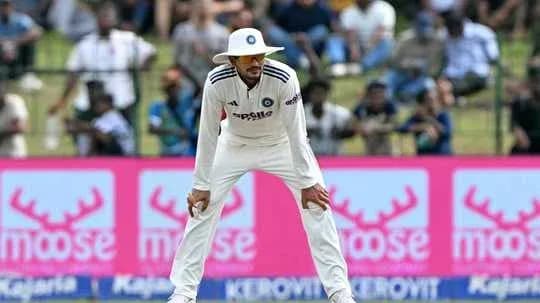
Shubman Gill stood alone at the pitch in Colombo, an hour into Day 5, eyes fixed on the surface as if it might whisper a solution. Drinks had just been called, but he barely touched them. India didn’t need fluids. India needed a wicket.
A stubborn seventh-wicket stand was dragging the game away from him, one leave, one smothered defensive shot at a time. The situation felt familiar, almost cruelly so. Galle had offered a clean equation: take wickets, win the Test. Colombo had turned the same script into something messier: take wickets, then chase, with rain lurking like a late-order batter you couldn’t quite shift.
Attack too hard and the target balloons. Ease off and time slips away. Gill was caught in that tightrope walk only a fifth day can produce.
A different kind of Day 5
Sri Lanka had effectively resumed on 16 for 6, clinging to the idea of survival in tiny, manageable portions: an over here, a passage there, a session if they dared to dream. At the heart of that resistance stood Sonal Dinusha, batting with the intensity of a man who understood exactly what this innings meant for his team, and perhaps for himself.
India knew the equation. They needed more of everything: more bite from the spinners, more hostility from the quicks, more luck from a surface that had misbehaved all match but now seemed oddly negotiable.
Gill emptied his Test-match notebook early. The spinners came on in short bursts, their fingers protected, their revs preserved. The seamers were told to go short, hammering the middle of the pitch, with a short leg and leg gully lurking for the miscued fend. Between deliveries, Gill never stopped moving, never stopped talking. He shifted fields, swapped angles, hunted for that one plan that would crack open the day.
But as the overs ticked by and Sri Lanka refused to fold, his body language began to sag, reflecting the slow erosion of India’s grip. The more Dinusha and the tail blocked and nudged and survived, the more Gill looked like a captain wrestling with a decision he could no longer change.
The opening, then the stalemate
Test cricket rarely lets you declare the battle lost until the very last door is shut. Just after Lunch, a sliver of hope arrived. Manav Suthar found Nuwantha’s edge, and Dhruv Jurel did the rest at second slip. A small crack, but a crack nonetheless.
What followed was not a collapse. It was a siege.
For more than two hours up to Tea, India and Dinusha played a tense, tactical game. India had seen enough of the young No. 6 to understand the real threat. The pitch, the situation, the tempo – all of it suited him. The cleanest route to a result ran not through Dinusha, but around him.
So they went after Prabath Jayasuriya.
Fields swung dramatically the moment the No. 8 took guard. Bowlers adjusted lengths and lines not just ball by ball, but batter by batter. When Dinusha managed to keep strike deep into an over, India’s quicks sometimes went wide of leg stump, denying him scoring options and trying to manufacture a way to get Jayasuriya back on strike for the next set.
It became a delicate contest of strike control, and for long stretches Dinusha got it right.
Suthar tried to break the deadlock with something completely different. The left-arm spinner came over the wicket on a diagonal, running between umpire and stumps before delivering from an awkward angle that looked almost theatrical. It was inventive, brave, and slightly surreal. It also didn’t work.
When plans and angles failed, superstition crept in. Mohammed Siraj walked up to the stumps and performed the now-familiar bail switch, a tiny nod to the modern game’s rituals of desperation. India were searching everywhere for a sign.
Dinusha, the tail, and a fraying resolve
Sri Lanka, though, had the one commodity India craved: fortune. The ball turned big, but it always seemed to miss the edge by a whisker. Jayasuriya’s 28-ball stay was scratchy but vital, his bat just far enough from danger to frustrate the close catchers. Lahiru Kumara went even deeper, digging in across 90 deliveries alongside Dinusha, a partnership that slowly gnawed at India’s belief.
The pitch helped them. The turn was significant but slow, giving Dinusha the confidence to premeditate his sweeps, to get down early and ride the spin. For the tail, that sluggish turn meant they could commit forward with less fear of the ball exploding past the bat. Every over they survived wasn’t just time off the clock; it was pressure piled back on Gill.
“It gets very frustrating,” Gill admitted later, speaking as much about the burden of captaincy as the match itself. “Then you start questioning, was follow-on the best decision? Was it not? But then you kind of have to go back in the moment and see, what can I do? Did I take the best decision in that moment? Yes, I did. Then you can't do anything about it, you have to keep trying your best and I think we did that. We tried all that we could.”
This wasn’t a story of a pitch gone flat or bowlers going soft. Nor was it a tale of an unplayable surface rescuing the fielding side. The truth sat in the uncomfortable middle. India probed, experimented, persisted. Sri Lanka, led by Dinusha, simply handled the conditions better when it mattered most.
For every Oval or Galle, where the script runs to type and the superior side finishes the job, there will be a Colombo. A day when a young batter reads the pitch more astutely than anyone else, when a tail refuses to behave like a tail, when a captain has to live with the choices he made and accept that sometimes, in Test cricket, resolve on the other side is the final, decisive variable.
On this day, Shubman Gill did the one thing great captains must occasionally do: he swallowed his frustration, acknowledged the resistance, and tipped his hat to the man who had kept India at bay.