Saud Shakeel's 90s Agony Saves Pakistan in Rawalpindi Test
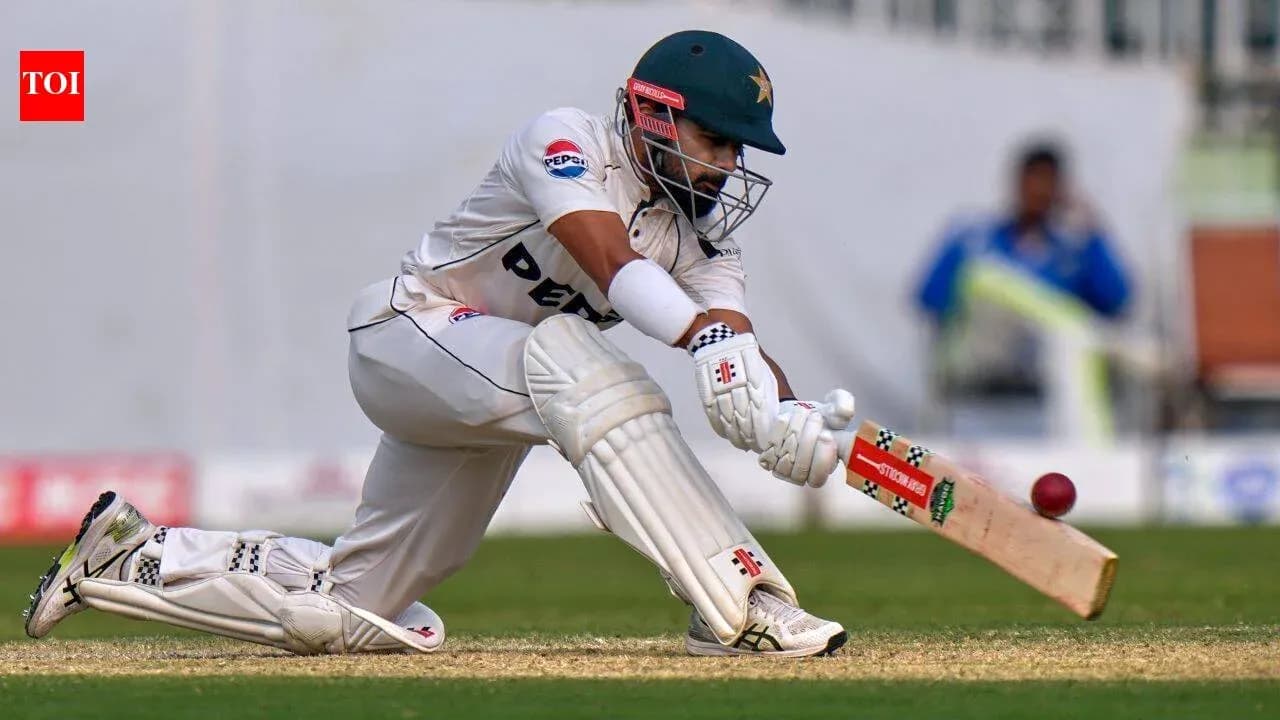
RAWALPINDI – Saud Shakeel walked off to silence first, then applause. Not for a hundred, again, but for something grittier, more complicated. For the second time in the same Test, he had dragged Pakistan to safety. For the second time, he had fallen in the 90s.
On a slow, fading fifth day at the Rawalpindi Cricket Stadium, Shakeel’s 97 anchored Pakistan to 284/8 and a lead of 272 over Sri Lanka, enough for both captains to shake hands on a draw in the opening Test of the series. The result felt inevitable long before the final agreement; the story of the day did not.
Shakeel, who made 93 in Pakistan’s first-innings 434/9 declared, spent almost the entire last day under a kind of private pressure. Not from the scoreboard – the match situation grew safer with every over – but from the number that kept creeping toward three figures and then, cruelly, stopping short.
He batted 210 balls in the second innings, an innings of patience and calculation rather than flourish. Sri Lanka probed, the pitch slowed, time drained away. Pakistan, battered in this World Test Championship cycle with seven defeats and just two wins in their previous nine matches, needed someone to shut the door on another disaster. Shakeel did that with a quiet, stubborn authority.
The end, when it came, was brutal in its simplicity. Lahiru Kumara slipped one through, and the off stump went back. Shakeel stood there on 97, three runs short again, the same Test, the same script. By then, though, the job was done. At 284/8, with a 272-run cushion and little time left, the contest had drifted beyond any realistic result. The draw was signed off soon after.
Yet the scoreline only tells half the tale. The numbers behind Shakeel’s match place him in a strange corner of cricket history.
Twice in the 90s in the same Test. Few have done it. Fewer would want to.
He became just the sixth batter ever to be dismissed between 90 and 99 in both innings of a Test match. The roll call he joins is distinguished, if undeniably bittersweet.
Clem Hill was the first, way back in 1902, when the Australian left-hander scored 98 and 97 against England in Adelaide. Frank Woolley followed in 1921 with 95 and 93 for England against Australia at Lord’s. Then came Gordon Greenidge, and he did it twice – 91 and 96 against Pakistan in Georgetown in 1977, and 91 and 97 against New Zealand in Christchurch in 1980.
Mahela Jayawardene was the last man to suffer this fate before Shakeel, making 92 and 96 against New Zealand at Colombo SSC in 2009. It has taken 17 years for someone to join him. Now it is Saud Shakeel, with 93 and 97 against Sri Lanka in Rawalpindi in 2026.
It is an “unwanted distinction”, as statisticians like to call it, but it sits inside something more valuable: the assurance that Pakistan, under pressure, have found a middle-order batter who can bat time, soak up spells, and carry an innings deep into a final day.
This was Pakistan’s first draw of the current World Test Championship cycle. That alone hints at how turbulent their red-ball journey has been – too many collapses, too many chases gone wrong, too many matches slipping away. Here, finally, they found resistance instead of panic.
The setting added its own layer. Rawalpindi was not meant to host this match; the second Test will also be played here after the venue was shifted from Lahore because of rising smog levels in the city. The air in Pindi was clearer, the cricket not always so, but by day five the picture had settled: Sri Lanka pushing, Pakistan holding, Shakeel at the heart of it.
He will know, as every batter who has lived in the 90s knows, that these numbers will follow him. Two innings, 190 runs, no hundred. The nervous nineties, twice over.
But he will also know this: without those 93 and 97, Pakistan might not have had a series to protect when they return to the same ground next Tuesday.