Sarowar Imran's Departure: A Look at Bangladesh Women's Cricket
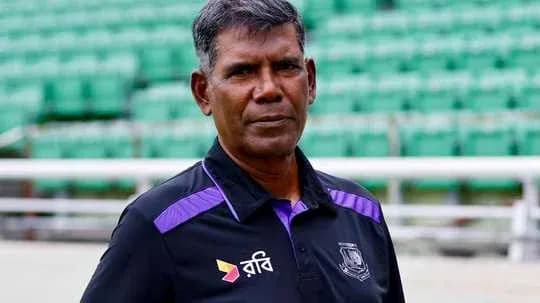
Sarowar Imran sat out the Australia tour with a letter, not a conversation. For a man who has been part of Bangladesh cricket for decades, that is what hurts most.
The former Bangladesh women's team head coach, whose contract was not renewed by the BCB after the Asian Games in October 2026, believes he has been punished for trying to drag players out of what he calls a damaging comfort zone. The board cited concerns over his temperament and moved quickly to appoint David Hemp as his replacement. Behind that official line, senior players had complained about his behaviour and approach, leaving a dressing room split and a coach isolated.
From his perspective, the story is very different.
‘I am not their friend’
Speaking to Ekattur TV, Sarowar painted a picture of a setup he felt had grown too soft, too accommodating, and ultimately stagnant.
"BCB did not communicate with me after the Asian Games and Asia Cup. I got a letter that I am not going to the Australia tour as another coach will go. This is all the communication I had with BCB," he said, underlining the silence that followed the team's exit from the Asian Games, when unrest in the dressing room prompted the board to prepare – and then shelve – a show-cause notice against him.
When he stepped into the women’s team, he says he found an environment where the support staff rarely challenged the players.
"What I saw was that there from bowling coach to spin bowling coach, batting coach, trainer, physio all were very quiet. They listen to whatever the women cricketers say and they cannot improve living in this comfort zone. That is the reason our team is still the same as it was five years back."
The examples he offers are blunt. A spinner bowling just 30 deliveries in practice and then deciding she has had enough. Coaches agreeing. One or two batters monopolising the nets all day. To Sarowar, this was not preparation for international cricket; it was indulgence.
"After seeing all these I started interfering. I also interfered regarding their fitness. When I needed to scold them I did that and if you say this is ill temper in that case I don't feel Bangladesh cricket can improve."
For him, that line between discipline and “ill temper” is clear. Others, clearly, disagreed.
A veteran pushed aside
Sarowar is not a fringe figure in Bangladesh cricket. He guided the men's side as head coach during their inaugural Test against India in 2000 and has been a familiar presence around national teams for years. That history, he says, made the lack of dialogue over his removal from the women’s role even more jarring.
"I felt I could improve them and had seven to eight tours and everything ended just because of failing in one or two tours," he said, arguing that a couple of poor campaigns should not erase the work done across several series.
There is pride, too, in how he sees himself.
"I have my own dignity and I am aware of what I am capable of and I don't work to show off. I don't have any problem and there is no reason to feel that my prestige has gone down because I know my work."
The accusation that he is hot-headed, he rejects outright in a professional context.
"If anyone says that I am ill-tempered that is wrong because in life I can have temper but when I am coaching I am not ill-tempered because I am a professional and I know what needs to be done. A coach cannot be a friend of a player because if I am a friend of a player I cannot drop the player. I am a coach and I am not their friend."
That last line cuts to the heart of his philosophy. In an era where many teams talk about “player empowerment” and collaborative environments, Sarowar is unapologetically old-school. Authority first. Distance maintained. Standards enforced.
Comfort zones and job security
Sarowar’s criticism stretches beyond the players. He points a finger at the broader coaching structure around the women’s side, suggesting that local and foreign staff alike have chosen harmony over hard truths.
"I think whoever worked with them (women cricketers) adjusted with them but the women cricketers won't improve if they are in the comfort zone and I felt foreign coaches also did the same. I feel a coach ensures his job by doing this (adjusting and remaining silent)."
The implication is stark: speak up, risk your position; stay quiet, keep your contract. In his view, too many have chosen the latter.
The BCB, for its part, took into account his “long-standing service to Bangladesh cricket” when it decided not to push ahead with the show-cause notice. But that gesture did not extend to a face-to-face meeting or a detailed hearing of his side before the decision to move on.
Fitness under the microscope
If his comments on attitude sting, his assessment of fitness standards is even more scathing.
"I am telling you more than half of the first XI cricketers do not have the required fitness level. Most of them are below average (in fitness) while some of them are medium while a couple have standard fitness level," he said.
He places the issue squarely in the context of international benchmarks, not local ones.
"Fitness is a big issue and when the fitness test is conducted the trainer can say how many of them match international fitness level. They don't have that (fitness level). If I feel that I will be world champion only by bowling 30 balls, that will never happen."
For a team trying to compete against fitter, faster, more powerful opponents, that warning is not subtle. It is a red flag.
A divided dressing room?
Sarowar stops short of accusing the squad of open factionalism, but he hints at fault lines within the group, particularly around captain Nigar Sultana.
"I cannot say about grouping but some were close to the captain while some others were not close to the captain."
In elite sport, such dynamics can shape everything: selection debates, tactical buy-in, how criticism is received, and, crucially, how a disciplinarian coach is judged by his players.
The BCB has chosen a new voice in David Hemp, a different style and, it seems, a different philosophy. Sarowar Imran, meanwhile, walks away convinced that demanding more – in attitude, in fitness, in accountability – cost him his job.
Whether Bangladesh women rise with a gentler touch or miss the edge of a hard taskmaster will be measured not in meetings or letters, but in results.