Sanju Samson's Journey Amidst Sooryavanshi's Rise
At 14, Sooryavanshi walked into a crisis and never really walked back out.
Rajasthan Royals had just lost their captain late in the IPL 2025 league phase. A season wobbling on a bad ankle suddenly had a teenager at the top of the order. It was supposed to be a stop-gap. It turned into a statement.
A hundred in his third game. Not a cute, promising fifty. A full, proper, grown-up hundred. By the time Sanju Samson’s injury had healed, the team sheet had changed. The kid stayed at the top. The captain moved to No. 3.
That was the start of a curious dynamic: mentor and protégé sharing an opening partnership one year, then eyeing the same slot in India colours the next. The bond stayed. The competition sharpened.
From Royals to India, a partnership turns into a battle
As Sooryavanshi was fast-tracked into the Indian T20I set-up after that breakthrough IPL, the hierarchy blurred. The teenager who once looked up to Samson for guidance was now parked right in front of his path.
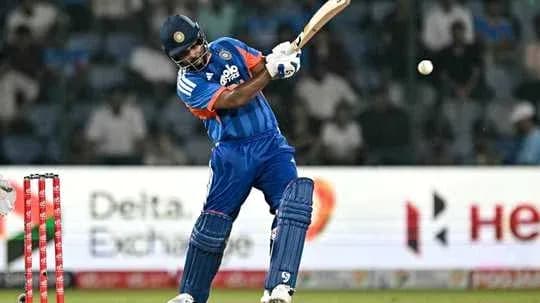
At the Arun Jaitley Stadium against Afghanistan, the selection call went Samson’s way. India chose experience over the flavour of the month. Samson, out cheaply in the series opener, walked in under pressure.
He smashed it to pieces.
A 22-ball 57, all muscle and intent, while Sooryavanshi watched from the dugout for the second game in a row. This, just weeks after the teenager had been Player of the Series in Zimbabwe.
Outside the dressing room, the narrative writes itself: two men, one slot, one winner. Inside, Samson pushed back on that idea.
“We may be competitors to the outside world, but we are a team and we are playing for a country and we want to win the game first,” he said after India wrapped up the series 2-0 with a game to spare.
The words weren’t soft. They were pragmatic. A man who has handed out XI sheets in the IPL knows how brutal they can be.
“It is a very challenging place to be in. For the whole team management and everyone, from the captain, from the coach, from the selectors, it is a very tough choice. I totally understand, myself [having] led an IPL franchise. I know how hard these decisions are when everyone has been performing really well.”
World Cup hero, IPL survivor
Samson isn’t walking into this fight empty-handed.
Earlier this year, at home, he was Player of the Tournament in the T20 World Cup. He didn’t even start that campaign in the XI. When he did get in, he stuttered, then exploded: 97* off 50 in the semifinal, 89 in the final. India defended their T20 crown, and Samson stood at the heart of it.
Then the season turned, as seasons do.
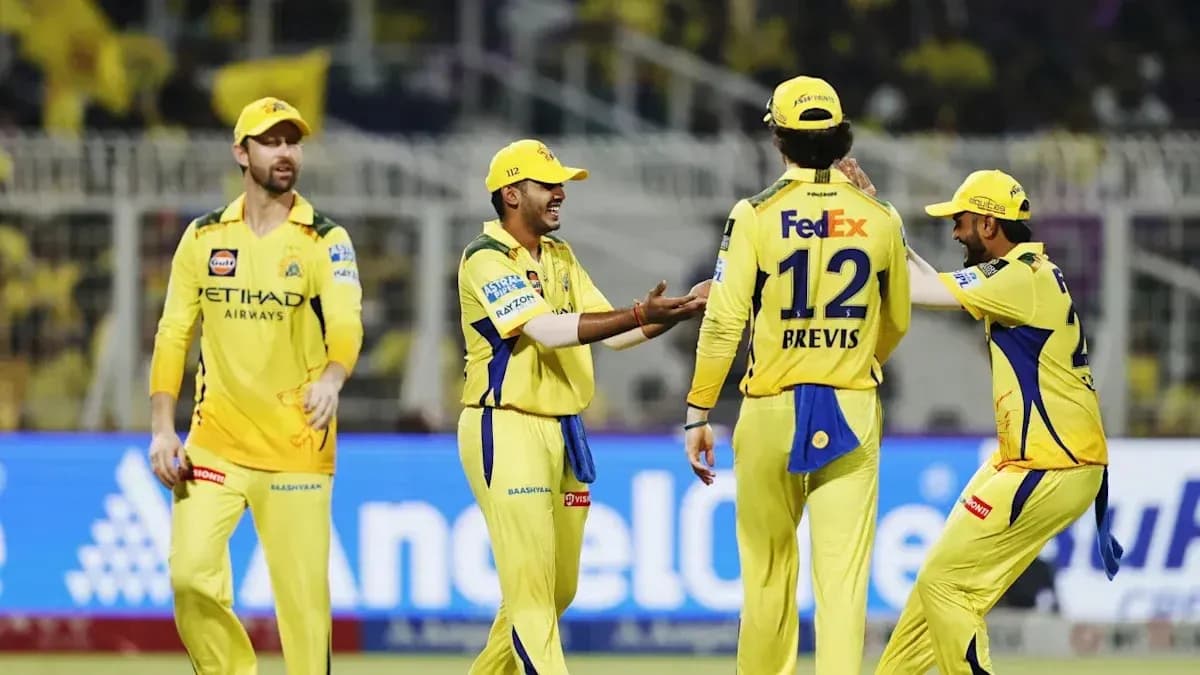
While Sooryavanshi lit up the IPL with a scarcely believable 776 runs at an average of 48.5 and a strike-rate of 237.3, Samson’s year at Chennai Super Kings swung between feast and famine. No steady drumbeat of scores, just spikes and troughs. Enough to remind everyone of his ceiling, not enough to silence questions about his floor.
Those questions grew louder after three failures in a row — twice in Ireland in a series India lost 0-2, and then in the first T20I in England. The teenager’s shadow lengthened. The Sooryavanshi factor could no longer be parked for later.
India handed the youngster three games in England, a rough initiation against a quality attack. Samson returned only for the final match of a series India ended up losing 0-4. Then came another twist: he was rested for the Zimbabwe tour entirely. Sooryavanshi went, thrived, and came back with a Player of the Series award and a louder claim to that top-order spot.
Back in Delhi, the carousel spun again. Samson in. Sooryavanshi out. Another selection call, another public debate.
This time Samson chose not to engage with the noise. Literally.
“I try to turn off the Wi-Fi,” he said, drawing laughter in the room.
Learning to live with the noise
The joke landed because everyone in Indian cricket knows the other side of it.
“At first, it feels bad. I am not a machine. We are not robots that it wouldn’t affect us at all. It definitely matters, and you kind of get a bit affected,” Samson admitted.
He has been around long enough to understand the peculiar demands of being an Indian cricketer, particularly one who bats at the top in T20s. The job description is simple and cruel: take risks, go hard, accept that failure will sit closer to you than comfort.
Consistency in that role rarely looks like a neat row of 40s and 50s. It looks like a graph with violent peaks and sudden dips. Samson has chosen not to fight that.
“I think consistency in my process. I think consistency in my preparation, consistency in how I am practicing, how I am putting my hard yards in. That's where I try to focus on. You can't control the consistency in the result in this format… Consistency has to be in the frame of mind, and then whatever happens, happens. I think that's what fearless mindset is.”
The approach is blunt: don’t tinker with the method every time a scorecard looks ugly. Tinker with the mind that reads it.
Making room for the boy he once backed
What stands out in Samson’s handling of the Sooryavanshi question is the absence of bitterness.
“You see, a 15-year-old boy has scored 700-800 runs. My Man of the Tournament award [at the 2026 World Cup] was before that. After that he’s performed so well. He had to come in [to the Indian set-up] sooner than later. I didn't perform in 2-3 games and he was in-form and we wanted to win games in that [England] series.”
There’s no attempt to downplay the teenager’s numbers, no subtle jab, no clinging to past glories. Just an acknowledgment of how modern cricket works: form talks, age doesn’t.
Behind the scenes, there has been constant dialogue.
“There was a lot of communication in the middle of the England series. He spoke to me a lot before this series as well… It’s very easy to take very popular decisions. But, as a leadership group, we have been taking some really tough calls keeping the team at the front. That’s where we have to give the credit to the leadership group of our team.”
Samson sits in a rare space. He is both affected by those calls and, as a former IPL captain, deeply aware of why they get made. That duality lets him view Sooryavanshi’s rise not as a personal threat but as part of the natural churn of elite sport.
The teenager he once groomed for Rajasthan has not arrived to replace him alone. He has arrived because that is what a system must do when a 15-year-old piles up 700-800 runs in a season at that tempo. The machine keeps moving; the names on the belt change.
On Tuesday in Delhi, Samson made his case again with the bat, clearing the air with the only language that truly matters in selection meetings. It may not be enough to guarantee him the next game, or the next series, or even the next toss of the coin between him and Sooryavanshi.
The next opportunity may still belong to the boy who came for his spot.