Richard Thompson on The Hundred: A Price Worth Paying for English Cricket
Richard Thompson leans into the question, not away from it. The Hundred, he says, is worth the chaos.
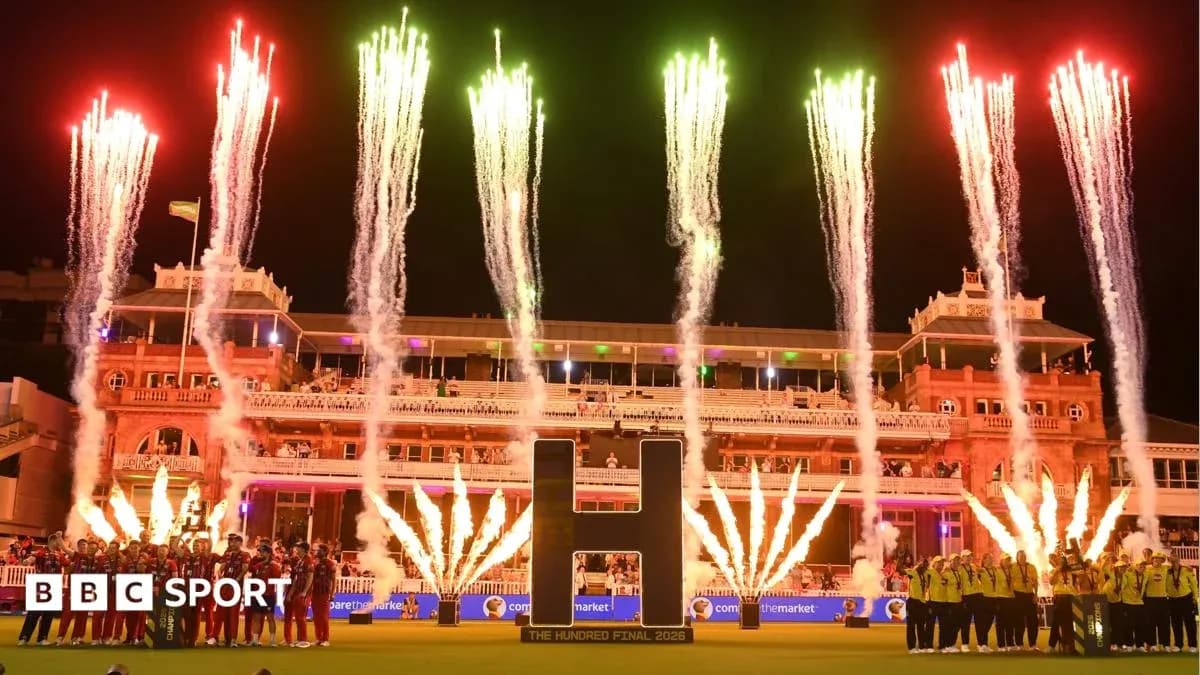
The England and Wales Cricket Board chair knows exactly how the tournament is viewed by its critics: a shiny, made-for-TV product that has squeezed the life out of an already suffocating schedule. This summer, there were just two days between The Hundred final and the first Test against Pakistan at Headingley. Two days to switch from franchise fireworks to the grind of Test cricket.
For many, that was the tipping point. For Thompson, it is the cost of doing business.
A price worth paying
“Sacrifices have got to be made,” he told Sky Sports, standing firmly behind a competition that has reshaped the English game in just a few seasons.
His argument is simple. The Hundred has pulled in money on a scale English cricket has never seen. More than £500m was raised when stakes in the eight franchises were sold last year, cash that has been pushed back into the professional and domestic structure. Some counties have cleared crippling debts. Others have started to rebuild grounds and facilities that had been left behind by the modern game.
“If we can take all of the debt out of the game, which we have, make a generation [of counties] which can reinvent themselves, that is a price worth paying.”
That “price” is clear. A domestic calendar that looks like it has been forced into a suitcase already full. A prime July–August window carved out solely for The Hundred, with international cricket pushed to the edges so that England’s biggest names can play for their franchises.
England can no longer pull players out early to prepare for Test series. Seam bowler Josh Tongue called the turnaround “crazy scheduling”. Thompson doesn’t deny the strain.
“We were criticised that The Hundred finished and two days later we were playing a Test match at Headingley,” he said. “Imagine if that becomes one day – that can’t happen.”
The ECB has accepted new owners and investors into The Hundred and left the door ajar for future teams, but Thompson is drawing a line on one front: the number of days the tournament occupies will not increase. The window is set. Everything else has to bend around it.
A calendar at breaking point
English cricket already staggers under the weight of its own competitions. The County Championship, the T20 Blast, the One-Day Cup and The Hundred all jostle for space in a season that still has to accommodate international tours and global tournaments.
“We are having to crowbar so much cricket in,” Thompson admitted, a rare moment where the language matches the visual. The image is of fixtures being forced into gaps that no longer exist.
Yet he points to the financial reality. Only four countries have carved out a dedicated domestic window that can effectively bankroll their game: England, South Africa, India and Australia. Those leagues, and the money they generate, are now central pillars, not side projects.
The One-Day Cup has already slipped down the pecking order, often reduced to a proving ground for second XIs while first-team squads disappear into The Hundred. Traditionalists bristle at that idea. The ECB, led by Thompson, is betting that short-term discomfort will secure long-term stability.
Standards under scrutiny
While the debate over scheduling rumbles on, Thompson’s frustration lies elsewhere. Questions over the professionalism of England’s men’s players have cut deeper than any fixture list complaint.
He described those concerns as “enormously” disappointing.
The latest flashpoint came with Brydon Carse. The fast bowler was left out of England’s squad for the second Test against Pakistan after being briefly arrested on suspicion of being drunk and disorderly while on duty with Durham. He was de-arrested, and investigations by both the police and the Cricket Regulator are ongoing, but the images of Carse in handcuffs, surrounded by officers, spread quickly across social media.
For Thompson, the optics matter as much as the outcome.
“When you play for your country you are judged by far higher standards,” he said. “What comes with wearing those three lions comes with respect, responsibility and pride.
“Unless you live and breathe those qualities there is a problem.
“Every player has to understand the responsibility that comes with playing for England.”
That is the other balancing act facing English cricket. A game trying to modernise its finances through a tournament like The Hundred while demanding old-fashioned standards from those who represent the national side.
Money has bought breathing space. The schedule has never felt tighter. And as the ECB chair keeps backing the new era, the question lingers: can England’s players match the professionalism he expects while living inside the relentless machine the sport has built around them?