Razaullah's Impact Exposes England's Tactical Failings
Razaullah chaos exposes England’s soft underbelly as Root’s tactics savaged
Edgbaston crackled, then turned on England.
What should have been a routine march towards a 3-0 clean sweep against Pakistan instead lurched into something far more uncomfortable on the third evening: a tactical unravelling, a 21-year-old debutant at number nine swinging with abandon, and a former captain accusing Joe Root’s side of having “no plan” and being “out of control”.
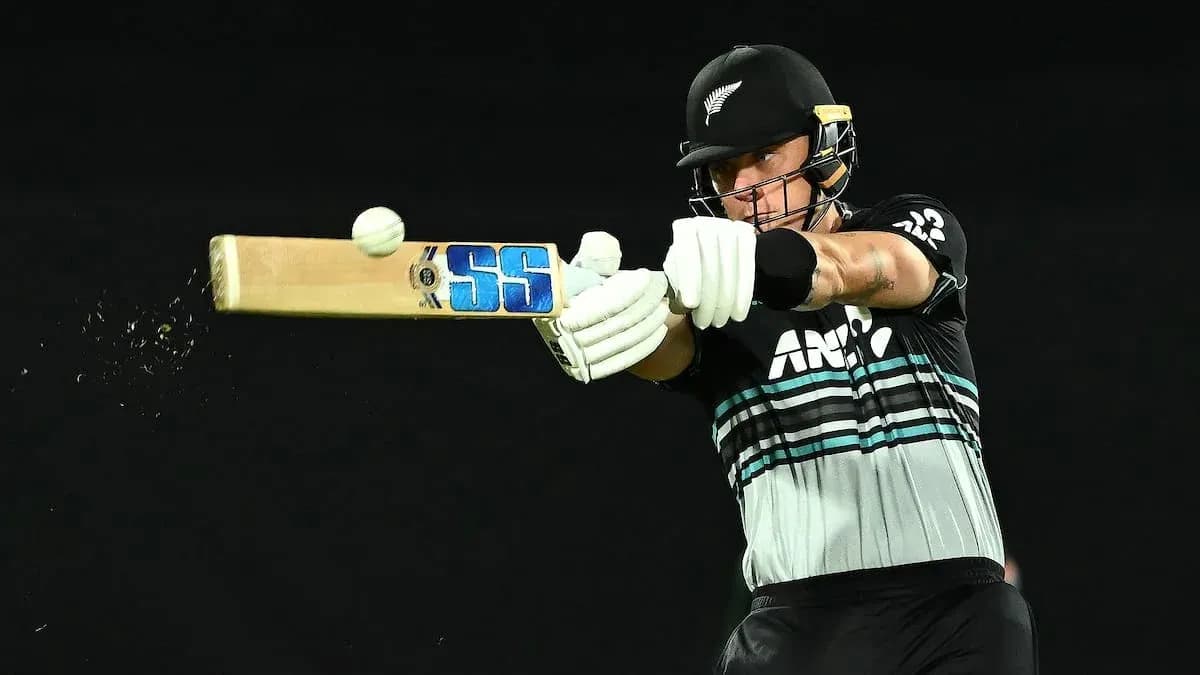
Razaullah, on his first Test appearance and batting in the position usually reserved for survival, played like a man who had never been told to defend. He thrashed 81 from 63 balls, launching nine sixes – a record-equalling assault for a debutant and matching Ben Stokes’ mark for the most sixes in a Test innings in England.
From 332-8, Pakistan were supposed to be tidied up. Instead, Razaullah and Muhammad Abbas added 121 for the ninth wicket, dragging the match into a fourth day and leaving England chasing 130, a small target wrapped in a large warning.
Cook: ‘No plan, out of control’
Alastair Cook has seen enough chaos with the tail to know when it is avoidable. This, he felt, was.
“You can get done by the tail – it's very hard when people have the license and ability to hit sixes,” he told Test Match Special. “What I saw was no plan, it got out of control.
“That's when you need the backroom staff and coaches to step up. I would loved to have seen a message and some real leadership from the coaches.”
His words cut because they chimed with what was unfolding in the middle. England’s fields drifted, the bowlers persisted with methods that weren’t working, and Root’s second stint as captain absorbed its first serious tactical inquest.
An interim set-up under scrutiny
The spotlight did not fall on Root alone. England are currently in a holding pattern off the field, led by interim head coach Marcus Trescothick, with Stephen Fleming not arriving until December’s tour of South Africa. Bowling coach Tim Southee hovered on the boundary rope during the onslaught, relaying ideas that never quite translated into control.
Trescothick admitted his frustration afterwards.
“We were in a position where they were eight down and the scores were level. We were hoping to go through them pretty quickly,” he said.
“We tried many different things. You have variations of plans. We bowled the short ball for a period of time, then length for a period of time, then a bit of spin. You're always chopping and changing, with various ideas.
“You'd always like to think you can do it better and you analyse it afterwards… You hope in those situations when you bowl it in the right place, which we did on many occasions, that you get the nick or bowl them. Fair play, they played pretty well.”
Fair play, yes. But the pattern was harder to excuse.
Short balls, scattered fields, and a “bonkers” new ball call
England’s tactics against Razaullah and Abbas veered from stubborn to baffling. The seamers clung to a short-ball plan, with fielders pushed back on the rope as if defending 130, not building towards it. When they finally tried to pitch the ball up and attack the stumps, the radar went missing.
The most jarring moment came with the second new ball. Root handed it not to his in-form seamer Ollie Robinson, the attack leader of the summer, but to Dan Lawrence – a part-time off-spinner who had barely bowled all series.
Jonathan Agnew, watching on, did not hold back.
“You cannot and should not bowl like that to tailenders as soon as they come in,” the former England fast bowler said.
“You have to set the tone when you're bowling against tailenders. Yes, you bowl aggressively, but in a controlled way. They are numbers nine and 10 for a reason. It was bitterly disappointing.
“Dan Lawrence is a part-time off-spinner and he took the second new-ball. If you're looking for any aspect of the day that is utterly bonkers, that is it.”
The images matched the criticism. Jofra Archer, nailed for successive straight sixes by Razaullah, wore the look of a man trapped in a plan he did not believe in. Gus Atkinson at one point pounded in to bowl bouncers with eight fielders on the boundary, a field that screamed damage limitation rather than dominance.
Vaughan’s warning: “They can’t keep making mistakes like that”
Michael Vaughan has long argued that England’s boldness with the bat needs a matching clarity with the ball. This display only hardened his stance.
“We shouldn't be surprised by England, they've delivered tactically like this on a regular basis,” the former captain said.
“I think they'll win this game but they can't keep making mistakes like that. The basics of Test cricket generally work and that's to hit the top of the stumps. It's a bit of a warning sign that this attack is very good but they aren't the finished article just yet.
“Who are the characters in the team who are going to grab a hold of everyone and say, 'right, I'm going to make a moment'. I didn't see it from anyone today.”
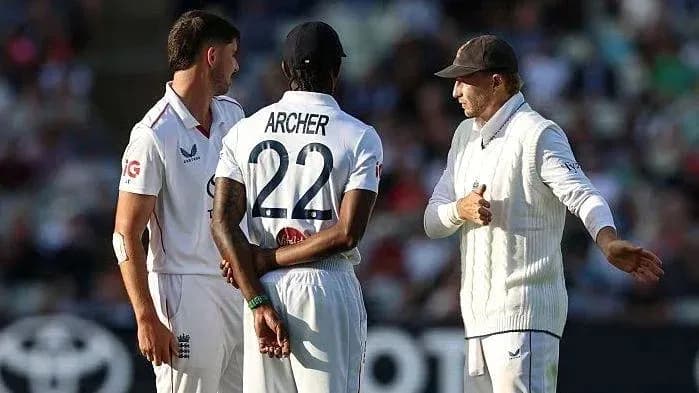
That absence of an on-field enforcer, someone to reset fields and insist on ruthless lines, felt stark as the evening wore on. Root even left the field at one point to consult with the backroom staff. The conversation changed little.
Pakistan thrive in the storm
Razaullah, by contrast, seemed to grow with every blow. He swung hard but not blindly, picking his areas, feeding off the disorder in front of him. Nine times he cleared the ropes, each hit deepening the sense that Pakistan, so often accused of living on chaos, were suddenly thriving in it.
Abbas played his part, nudging, blocking, and then capitalising when England lost their discipline. Their 121-run stand did more than swell the total to 453 all out; it shifted the mood entirely.
When the end finally came, it felt almost accidental. Abbas steered Josh Tongue tamely to point, before Razaullah, still searching for one last statement stroke, charged Lawrence and was stumped off the final ball of the day.
Edgbaston exhaled. Pakistan walked off with their chests out.
England will almost certainly knock off 130 on the fourth day. The series scoreline still points to authority, to control, to a team on top. But the third evening at Edgbaston told a different story: of muddled thinking, of a tail allowed to run riot, and of a captain and coaching team who let a game they owned slip into someone else’s hands.
If this is what happens with a dead rubber and a modest chase on the line, what does it look like when the stakes are far higher?