Razaullah's Stunning Debut Disrupts England's Control
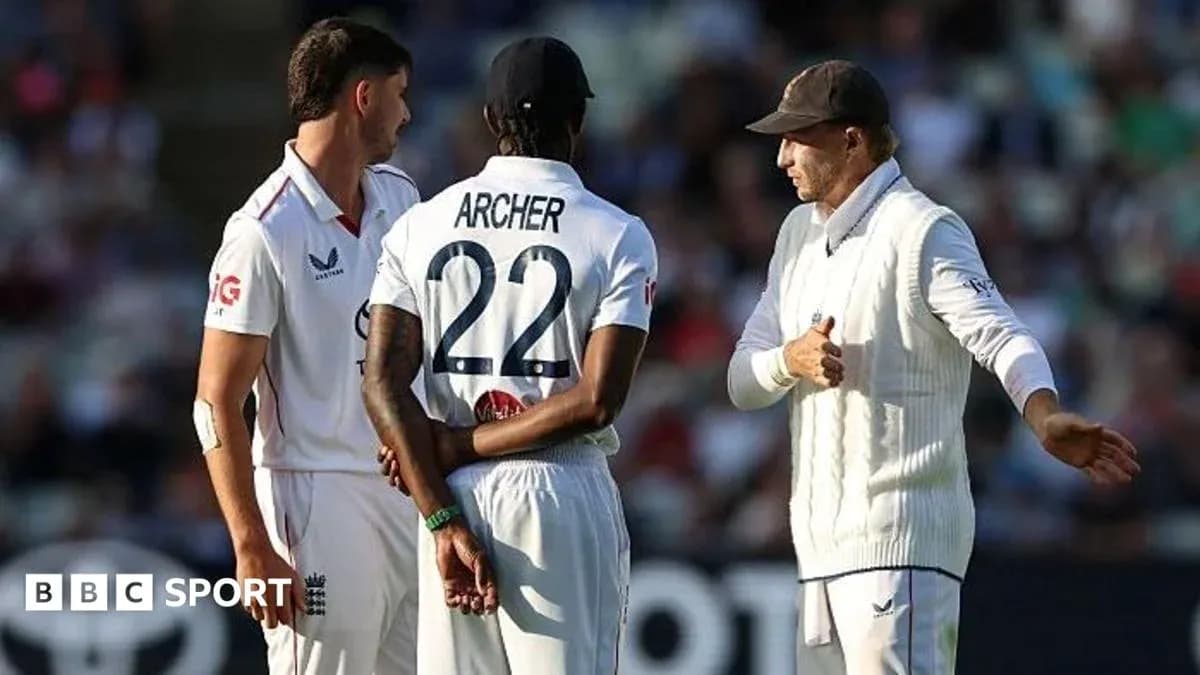
England will almost certainly win this Test. That was still the feeling at stumps. But for an hour and a half at Edgbaston, they looked anything but a side in control of a 3-0 clean sweep.
Pakistan’s number nine, on debut, tore up the script.
Razaullah, 21 years old and batting as if he had never been told what a tailender is supposed to do, launched 81 from 63 balls to drag this final Test into a fourth day and drag England’s composure into question. His assault, stitched together with Muhammad Abbas in a ninth‑wicket stand of 121, turned a routine closing act into chaos and left England chasing 130 instead of a stroll.
Alastair Cook watched it unfold and did not bother to sugar-coat what he saw.
“No plan… out of control,” the former captain said on Test Match Special, words that will sting Joe Root as he settles back into the job for a second spell. Root’s captaincy, previously criticised for muddled thinking, came under the spotlight again as Pakistan’s tail ripped into an attack that had dominated the series.
A tail that refused to behave
This was supposed to be the clean-up operation. Pakistan eight down, the scores level, the game there for England to close out with a professional flourish.
Instead, Razaullah walked in and detonated the script.
He hit nine sixes – nine – equalling the record for the most maximums in an innings on Test debut and matching Ben Stokes’ mark for the most sixes in a Test in England. These weren’t edges over third man or mishits that just cleared the rope. He drove Jofra Archer straight back over his head twice in succession, forcing England’s premier quick into visible frustration. At one stage Gus Atkinson was reduced to banging in bouncers with eight men on the boundary, a field that screamed panic more than strategy.
England’s seamers persisted with the short-ball ploy, fielders scattered to the rope, waiting for a mistake that never quite came. When they did try to go full and attack the stumps, they missed. Repeatedly.
From the boundary, Tim Southee, the bowling coach, paced and gestured. Marcus Trescothick, the interim head coach, could only watch as the plan – if there was one – unravelled.
“You can get done by the tail – it’s very hard when people have the license and ability to hit sixes,” Cook said. “What I saw was no plan, it got out of control. That’s when you need the backroom staff and coaches to step up. I would loved to have seen a message and some real leadership from the coaches.”
The message, if it came, never landed.
“Utterly bonkers”: Root’s new-ball gamble
The most baffling moment arrived with the second new ball. Normally, this is the fast bowler’s cue, the moment the leader of the attack takes charge and stamps authority on the innings.
Root handed it to Dan Lawrence.
A part-time off-spinner, barely used with the ball all series, was preferred to Ollie Robinson, the man who has led England’s attack all summer. The decision left the commentary box and many in the ground stunned.
Jonathan Agnew, the former England fast bowler and BBC’s chief cricket voice, did not hold back.
“Appalling,” he called the tactics. “You cannot and should not bowl like that to tailenders as soon as they come in. You have to set the tone when you’re bowling against tailenders. Yes, you bowl aggressively, but in a controlled way. They are numbers nine and 10 for a reason. It was bitterly disappointing.
“Dan Lawrence is a part-time off-spinner and he took the second new-ball. If you’re looking for any aspect of the day that is utterly bonkers, that is it.”
The pressure finally told, but not before the damage had been done. Abbas eventually feathered Josh Tongue to point, and Razaullah, still swinging, was stumped off Lawrence from the final ball of the day, Pakistan all out for 453.
The crowd rose for Razaullah. England’s players walked off knowing they had let a position of absolute dominance slip into something far more uncomfortable.
Questions for Root, and for England’s leaders
This was Root’s first real stress test in his second stint as captain. He did not pass it with distinction.
There were long spells when he looked short of ideas, fielders drifting, energy draining from the side as Razaullah and Abbas swung freely. At one point Root even left the field to consult the backroom staff, a rare and telling move for a captain under pressure. The response on the pitch barely changed.
Michael Vaughan, another former England captain, saw a pattern rather than a one-off.
“We shouldn’t be surprised by England, they’ve delivered tactically like this on a regular basis,” he said. “I think they’ll win this game but they can’t keep making mistakes like that. The basics of Test cricket generally work and that’s to hit the top of the stumps. It’s a bit of a warning sign that this attack is very good but they aren’t the finished article just yet.
“Who are the characters in the team who are going to grab a hold of everyone and say, ‘right, I’m going to make a moment’? I didn’t see it from anyone today.”
That absence of on-field authority – someone to seize the ball, reset the fields, simplify the plan – hung over England’s late-evening efforts.
Trescothick, fronting up afterwards, admitted his disappointment without disowning the approach.
“We were in a position where they were eight down and the scores were level. We were hoping to go through them pretty quickly,” he said. “We tried many different things. You have variations of plans. We bowled the short ball for a period of time, then length for a period of time, then a bit of spin. You’re always chopping and changing, with various ideas.
“You’d always like to think you can do it better and you analyse it afterwards saying, ‘right, was there an area or tactic we missed to get it right?’ You hope in those situations when you bowl it in the right place, which we did on many occasions, that you get the nick or bowl them. Fair play, they played pretty well.”
Fleming’s inheritance
England still hold all the cards: 130 to win, ten wickets in hand, a series whitewash in sight. On the scoreboard, the wobble may soon be forgotten.
But for Stephen Fleming, due to take over as head coach on the December tour of South Africa, this chaotic evening in Birmingham will sit on the briefing notes in bold ink.
He will inherit a talented, aggressive attack that can blow teams away. He will also inherit the tendency that reappeared here: to drift, to overcomplicate, to get dragged into the opponent’s game instead of imposing their own.
Razaullah exposed that fault line in brutal, exhilarating fashion. The result of the match may not suffer. England’s long-term ambitions might, unless this warning shot is taken seriously.