Rashid Latif Criticizes PCB After Lord’s Defeat: ‘Worst Board in 70 Years’
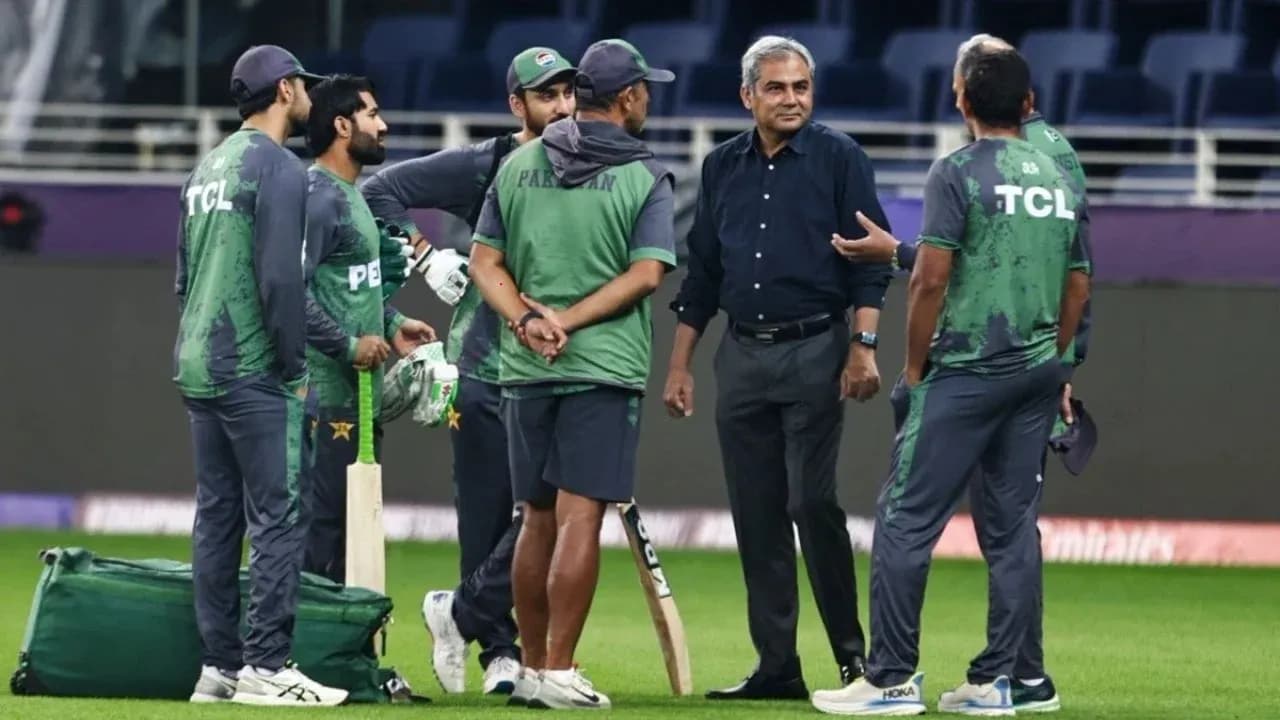
Pakistan’s tour of England has unravelled into something far more serious than a bad series. In the wake of a 194-run thrashing at Lord’s on Sunday, former wicketkeeper-batter Rashid Latif has turned the spotlight away from the players and straight onto the Pakistan Cricket Board.
England’s win at the home of cricket sealed the series 2-0 with a Test to play, underlining a gulf in class that has grown wider with every innings. Pakistan have not managed 200 once in the series. Their batting has disintegrated, their confidence with it.
Latif, never one to pull punches, called the current set-up among the worst the country has seen in decades.
“Everyone is talking about the Pakistan team, and how it is the worst touring team in the last 50 years. But nobody is speaking about how the current board is the worst in the last 70 years. Nobody is talking about the worst selection committee and coaches,” he said on Geo News.
Then he went further.
“If you combine these issues, you will get the answer to your question. You will know who has ruined this team. Now you are losing consistently. This is the worst cricket board, that's a fact.”
A batting order in freefall
The numbers are brutal. Across four innings in this series, Pakistan have not once crossed 200. For a side built on flair and strokeplay, the scorecards have made grim reading.
Babar Azam’s return at Lord’s was supposed to steady the ship. He missed the opening Test, and his comeback was framed as Pakistan’s best hope of standing up to an England attack that has hunted as a pack.
Instead, it only underlined the depth of the crisis.
Babar scratched to eight in the first innings and six in the second. No rhythm, no authority, no statement from the captain-in-waiting. His second-innings dismissal captured the mood of the tour: Jofra Archer bending his back, a sharp short ball climbing awkwardly, Babar fending rather than fighting, and the catch taken with ease. Another wicket, another collapse.
Pakistan’s batting has not just failed; it has folded. The top order has looked unsure, the middle order timid, the tail exposed far too early and far too often. The British press have been scathing, labelling this one of the weakest Pakistan sides to visit England in half a century. Latif, while agreeing with the description, refuses to lay the blame solely at the players’ feet.
His target is higher up the chain — the boardroom, the selectors, the coaches. In his view, the rot starts there.
Storm off the field at Lord’s
As if the performance with bat and ball were not enough, Lord’s carried its own off-field controversy.
During the Test, Sky Sports aired an 18-minute interview with the sons of Imran Khan, focusing on the former Pakistan captain and prime minister’s imprisonment. The broadcast immediately sent ripples through the touring camp and back home.
Reports quickly emerged that the PCB had threatened to pull Pakistan out of the Lord’s Test over the interview. The suggestion of such a drastic step, in the middle of a marquee series, hinted at a tour on the brink.
Both Babar Azam and head coach Sarfaraz Ahmed later denied that Pakistan had considered abandoning the match. The team stayed on the field, but the noise around them only grew louder.
On the pitch, England were ruthless. Off it, Pakistan looked distracted, defensive, and increasingly cornered. Latif’s broadside on national television added another layer of pressure on an administration already under heavy scrutiny.
Edgbaston or oblivion?
The series is gone. England lead 2-0 with one to play, and Pakistan now head to Edgbaston for the third and final Test starting September 9 with a single, stark objective: avoid a 3-0 whitewash.
Regrouping will not be easy. The batting is brittle, the dressing room bruised, and the criticism relentless. Yet this is the only window they have to salvage something — pride, if not points.
For Latif, the reckoning must come off the field as much as on it. His words cut through the usual post-match platitudes and pointed directly at the system he believes has “ruined this team”.
Edgbaston will show whether Pakistan can still summon a response on the field. The bigger question is whether anyone in power is willing to answer the questions now being asked off it.