Rashid Khan on Afghanistan's Cricket Evolution and Future Aspirations
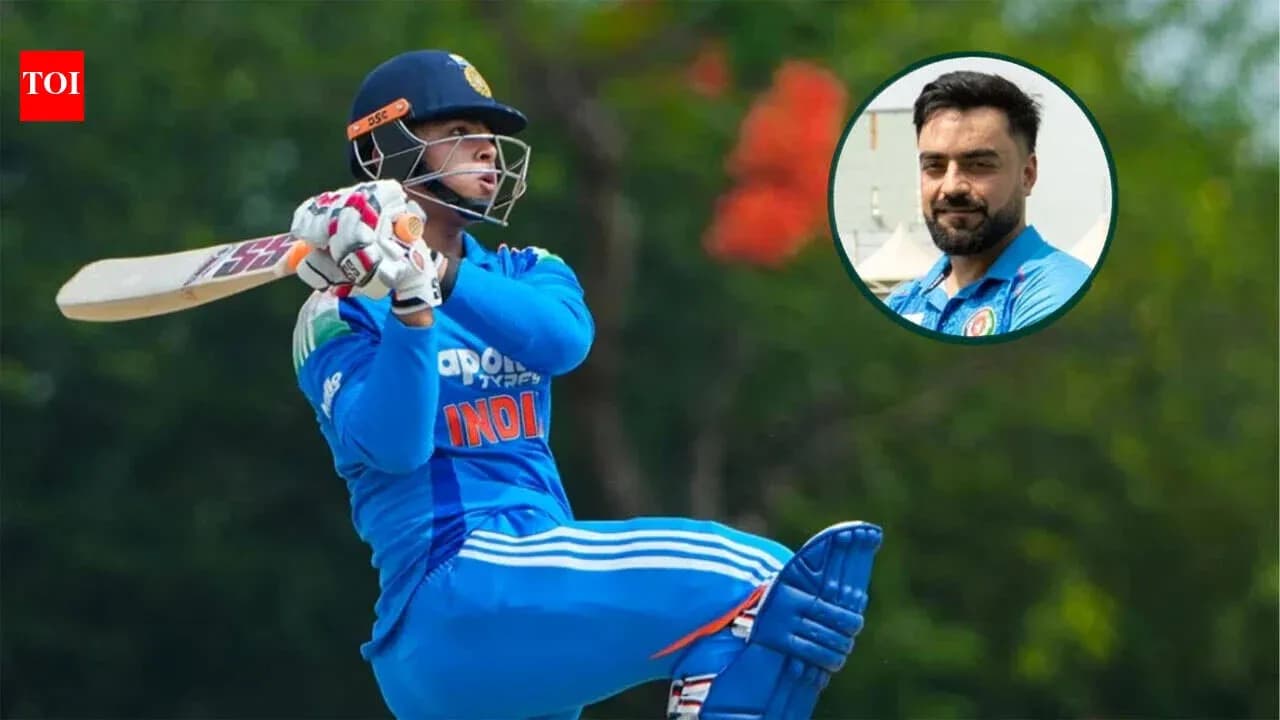
Rashid Khan has lived every beat of the India–Afghanistan story. From the days when Afghanistan turned up hoping to compete, to now, when they arrive expecting to win. The rivalry has grown. So has his gaze. It is sharper, more demanding, especially of his own team.
On the eve of the third and final ODI against India, Rashid cut through the noise and went straight to the fault lines.
Powerplay problem, mindset gap
Afghanistan’s rise has been built on grit, spin, and belief. But Rashid is clear: the next leap needs brains in the first ten overs.
With the bat, he sees a team still learning how to live in high-scoring games, not just visit them. Delhi’s flat pitches have exposed a familiar issue: Afghanistan don’t yet own the powerplay the way the best sides do.
They watch India pile on runs early. They see how India’s top order shapes an innings. The question Rashid keeps asking is simple: can Afghanistan do the same, against anyone, in any conditions?
He believes the answer lies in mentality as much as skill. The willingness to think big. To see 200 as a target to attack, not fear. To build a batting unit that doesn’t stop at cameos but stretches 20s and 30s into match-defining scores.
With the ball, the concern is just as stark. If Afghanistan leak 70 or 80 in the powerplay, Rashid knows the game is slipping, no matter what total they’re defending. For him, the solution isn’t tactical tinkering alone; it’s a collective responsibility. A group problem that needs a group answer.
A “dangerous” India, led by fearlessness
Rashid has seen multiple versions of India’s T20 side. This one, under Shreyas Iyer, unsettles him in a different way.
He calls it “dangerous” and “destructive” for a reason. The batting line-up is stacked with players who don’t just hit hard, they go big. Hundreds in T20 cricket are no longer outliers in this group; they’re part of the identity.
What strikes Rashid is not just the aggression, but the depth of it. One batter falls, the next walks in with the same intent. They play without fear, but it’s not reckless. There is skill behind the swagger, a clarity of method that, in his eyes, separates them from most other teams.
Abhishek Sharma: India’s next all-format package?
Among the new wave, one name lights up Rashid’s face: Abhishek Sharma.
Their bond goes back to their days together at Sunrisers Hyderabad. Rashid remembers a young player with obvious talent and a quiet steel. The rest of the world is now seeing what he saw in dressing rooms and nets.
Abhishek’s hitting has grabbed the headlines, but Rashid insists the story is incomplete without his bowling. In his view, Abhishek isn’t just a part-time option; he’s a genuine middle-overs bowler who can change games with the ball as well as the bat. A “big package” in the making for India, as he puts it, someone who can shape matches across phases and formats.
Vaibhav Sooryavanshi: the prodigy who already knows
Then there is the phenomenon: Vaibhav Sooryavanshi.
Rashid has bowled to him. He has watched the 15-year-old step into international cricket with a composure players twice his age struggle to find. Talent is obvious; what fascinates Rashid is everything around it.
Fearless cricket, yes. But more than that, an understanding of his own game that feels advanced for his years. Rashid talks about shot selection, game plans, how Vaibhav seems to know exactly which options to back against any bowler, any attack, any situation.
Those are traits that usually arrive with experience. Vaibhav, Rashid says, already has them. Add in raw power, hand-eye coordination that jumps off the screen, and you get a player he calls “god-gifted”.
Does Vaibhav remind him of a young Rashid? He laughs that off. The skill, maybe. But those towering sixes at that age? He’s not sure he had that in his locker. What he is sure of: this is a unique talent who has already shown his range in both the IPL and for India. Someone “very special”.
From underdogs to contenders – and the unfinished climb
Afghanistan’s transformation from plucky underdogs to genuine threats has not been an overnight tale. Rashid can trace the turning points.
Beating Pakistan in a bilateral T20 series. Toppling England at the 2023 ODI World Cup in India. Following that with wins over Sri Lanka and Pakistan on the global stage. Then the T20 World Cup in 2024, where Afghanistan surged all the way to the semi-finals in Australia and New Zealand.
Those results did more than fill highlight reels. They changed the way Afghanistan looked at themselves. The dressing room stopped asking, “Can we compete?” and started asking, “How often can we beat them?”
Now, the challenge is different. It’s about sustaining that level, managing expectations, and proving that Afghanistan belong in the circle of teams that can hurt anyone, anywhere.
Ibrahim Zadran and the next leadership chapter
Into that environment steps Ibrahim Zadran, now leading the T20I side. Rashid likes what he sees.
Hard work is the first thing he mentions. Ibrahim, in his eyes, is a captain who wants to lead from the front, not from the balcony. Consistent, straightforward, and determined to set standards for the younger players.
Rashid values that honesty. He sees a leader intent on growth, not just for himself but for those around him. And while Rashid has stepped back from the captaincy, he hasn’t stepped away from responsibility. He remains close, a senior voice in Ibrahim’s ear, ready with advice drawn from his own scars.
One lesson stands out from his time as captain: the danger of carrying too much on your shoulders. Rashid remembers moments where he tried to own every problem, every result, and how that strain bled into his own game.
His message to Ibrahim is clear: trust the process, not the outcome. Focus on skills, on plans, on execution. Let the result follow.
New names, same ambition
For all the talk of India’s young stars, Rashid is just as excited about the pipeline at home.
Noor Ahmad is already on the radar, a left-arm wrist-spinner who has begun to make an impact and, in Rashid’s view, can climb to another level entirely. Then there’s Abdollah Ahmadzai, a fast bowler whose pace has caught the eye.
Rashid doesn’t hide that fast bowling remains an area Afghanistan must strengthen. But with careful management, he believes Abdollah can become genuinely quick and a central figure in the country’s future attacks.
A body rebuilt, a dream that hasn’t shifted
Rashid’s own journey has taken him from teenage prodigy to global superstar, with a body now carrying the miles of constant travel and non-stop cricket.
He once played everywhere, all year, chasing experience and knowledge. Those years, he feels, shaped him. They taught him conditions, batters, pressures. Then came surgery, and with it, a reckoning.
He has cut back on his schedule, listened more closely to what his body can and cannot handle. A recent stint at the Red Bull Athletic Performance Centre in Austria gave him a scientific map of himself – tests, data, and a clear picture of which areas need work, what to avoid, and how much cricket he can realistically play.
The superstar has become the manager of his own longevity.
Yet amid all the leagues, all the accolades, one thing remains unfinished in his mind.
Rashid wants a World Cup for Afghanistan. Not a near-miss, not a fairytale run that stops in the semi-finals, like in 2024. An ICC trophy in Afghan hands, whether in T20 or 50-over cricket.
He wants that line in his story. Not as a dream, but as a fact.