Race for Australia's No.3 Spot Heats Up in Sheffield Shield
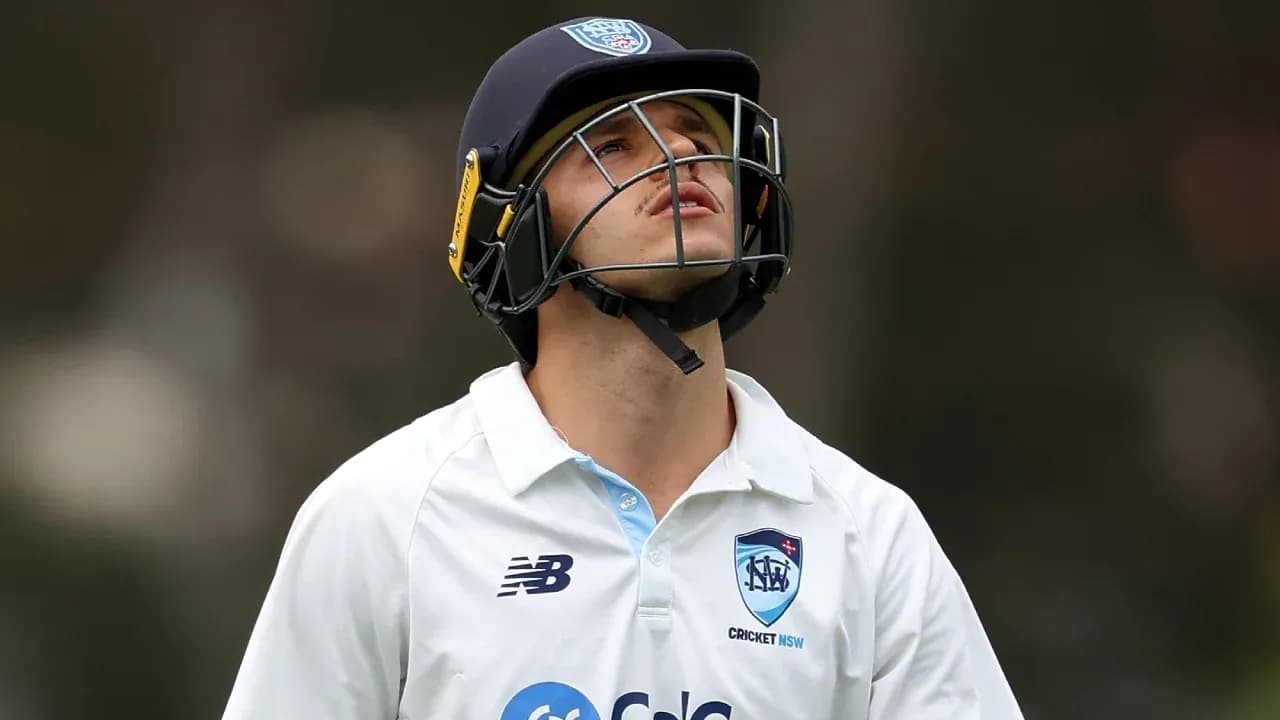
Kurtis Patterson and Sam Konstas walked into Cricket Central on Wednesday with a window open and the summer light pouring through it. By stumps, that window had slammed a little more firmly shut.
This was supposed to be the day the New South Wales pair made a statement, the day they pushed to the front of the queue to replace Marnus Labuschagne at No.3. Instead, a blistering start dissolved into another missed opportunity, and a familiar name from Victoria strode back into the Test conversation.
Konstas flies, then falls; Patterson’s chance slips again
New South Wales did the brave thing in Sydney: they won the toss and batted. For nine overs, it looked inspired.
Ollie Davies and Sam Konstas tore into South Australia’s attack, shredding any early-morning caution. Wes Agar’s opening over disappeared for 17, Davies swinging freely, Konstas matching him stroke for stroke. Konstas’ first two balls of the morning were lashed through the covers for four. The tempo was frantic, almost reckless, and South Australia had no answers.
Davies raced to a half-century from just 36 balls. The visitors were rattled. Fields were shuffled, plans rewritten on the fly. NSW sat at 0-81 after nine overs and the match felt one-sided.
Then came the moment that turned the day.
First ball of the 10th over, Konstas charged. He skipped down the wicket, aiming to lift over mid-off, only to miscue and pick out Nathan McSweeney, the South Australian captain and, tellingly, another contender for Labuschagne’s Test spot. From a position of dominance, Konstas was gone for 24 off 19, and the door opened for Kurtis Patterson.
It barely creaked.
Jordan Buckingham, into his first Shield match of the season, struck again almost immediately. Patterson, the 33-year-old with two Tests and a growing reputation as the logical Labuschagne replacement, flicked innocently off his pads. Jake Lehmann waited at backward square leg, and Patterson’s innings ended on the third ball he faced. A duck, and a brutal one for his ambitions.
Given his recent scores of 14 and nine against Tasmania, this was a day he needed to own. Instead, his case for an international recall now looks as fragile as it has since his brief Test stint in 2019.
Davies kept swinging, but his counterattack ended before lunch. Ben Manenti found the breakthrough, removing the NSW dasher for 70. Nic Maddinson, freshly axed from the national set-up but recalled to the state side, briefly lit up the afternoon with a brisk 47 after being dropped first ball. It felt like classic Maddinson: high risk, high tempo, always on the edge.
The rest of the NSW innings never recovered its early rhythm. Wickets tumbled, momentum drained away, and the Blues were bundled out for 204 before tea. Buckingham, relentless and precise, walked off with his fifth five-wicket haul at first-class level, underlining his own credentials on a day supposedly about others.
Weatherald responds; McSweeney misses his moment
If the morning belonged to NSW’s hopefuls, the evening belonged to a man with a point to prove in red.
Jake Weatherald, recently dropped from Test contention, answered in the most convincing language available: runs. He steered South Australia’s reply with an unbeaten century, a calm, controlled innings that contrasted sharply with the chaos of NSW’s top order.
McSweeney, though, could not cash in on his own audition. After claiming the catch to remove Konstas, he nicked off for 16, edging outside off and wasting the sort of platform selectors notice. On a day when the national No.3 spot felt up for grabs, he left the stage earlier than he would have liked.
South Australia closed at 5-162, trailing but very much in control of the contest, with Weatherald’s hundred anchoring their position.
Handscomb roars back into the frame
While NSW’s contenders faltered in Sydney, Peter Handscomb was quietly – and decisively – changing the narrative in Melbourne.
At the MCG, the Victorian right-hander carved out an unbeaten 131 against Western Australia, a chanceless innings that thrust his name firmly back into Test calculations. This was not a scratchy return to form; it was the work of a player who still believes his story in the Baggy Green is unfinished.
Handscomb, who recently toured India with Australia A, has been short of his usual Sheffield Shield output this season and returned modest numbers on that India trip. He admitted the frustration of feeling in good touch but without the runs to show for it.
“It’s been weird, I’ve felt good and it’s such a shame when you feel good and don’t make runs because you’re just kicking yourself the whole time,” he said. “Sometimes you’re just out of luck, you’re not out of form.”
He went back to basics between games. On Wednesday, it showed.
Handscomb combined smoothly with Ashley Chandrasinghe (53) and Blake Macdonald (74 not out), guiding Victoria to 3-292 at stumps. It was the sort of authoritative, controlled knock that selectors remember when they sit down to debate the future of the Test batting order.
His hunger remains obvious. Handscomb still sees consistent Shield runs as the backbone of any push for a recall, even if he did not agree with the message sent by Nic Maddinson’s surprise national call-up earlier this season.
“They had their reasons and that’s perfectly fine,” he said of the selectors. “I can disagree with it but you’ve sort of got to commit and move on, then just try and make some runs.”
On a day when his bat finally aligned with his belief, that is exactly what he did.
Pressed on the lingering sandpaper scandal and the latest flare-ups, Handscomb refused to be drawn in.
“I had a nice day today and it’s not really something I want to comment on right now,” he said. His focus, clearly, is on runs, not headlines.
Labuschagne’s lean return, Clayton’s opening
While others jostled for his spot, Marnus Labuschagne’s own return to Shield cricket in Queensland was subdued.
The Bulls captain, whom Australian chair of selectors George Bailey has all but ruled out of the New Zealand series this summer, began with a flourish. Facing Beau Webster, an international teammate, he crunched the first ball of the innings through cover for four. It looked like the start of a statement.
It never became one.
Across 36 balls, that first boundary remained his only visit to the rope. Labuschagne eventually edged on a sixth-stump line through to the keeper for 12, a dismissal that will do little to shift the selectors’ stance or silence the debate over his immediate Test future.
His exit, though, opened the door for another name in the No.3 conversation.
Jack Clayton walked in knowing that a big score in this match could propel him into genuine contention to replace Labuschagne at first drop. He and opener Hugo Burdon steadied Queensland, taking the side to 2-131 after 50 overs. Burdon, composed and compact, reached his second first-class fifty and pushed on to 64 not out at that stage, with Clayton alongside him on 36 not out.
Both men eventually fell after passing milestones – Burdon for 70, Clayton for 52 – but their contributions underlined why Clayton, in particular, is now being discussed as a live option for a Test debut. Queensland closed at 5-195, their innings still in the balance, their No.3 very much in the spotlight.
Across three states, the same question lingered: who truly wants that vacant place in Australia’s top order?
On Wednesday, Patterson and Konstas blinked. Handscomb and Weatherald advanced. Clayton kept his name on the whiteboard. Labuschagne, for once, did not have the loudest say.
The race for No.3 is open. The next innings might decide who steps through it.