R Ashwin Challenges Rishabh Pant: Decision-Making Is Key
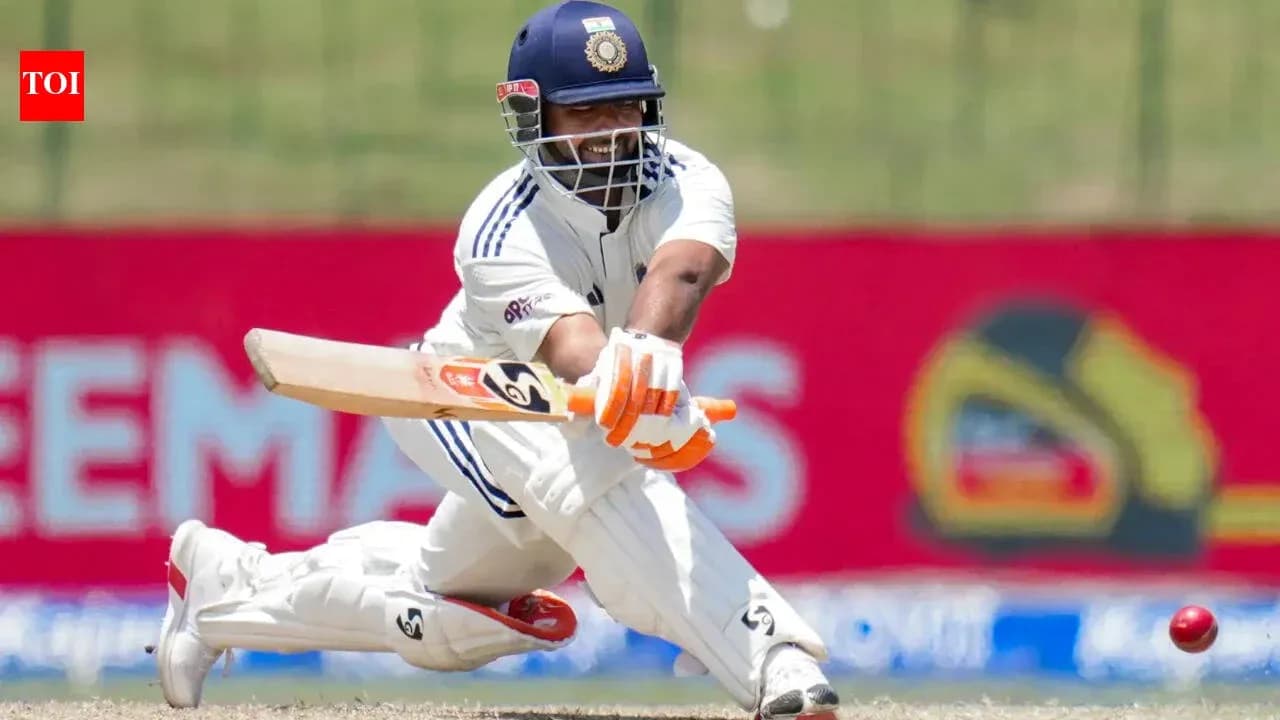
Rishabh Pant has just come off a decent Test series against Sri Lanka. On paper, it reads well enough: 168 runs, two half-centuries, flashes of the old swagger.
Ravichandran Ashwin is not impressed by the numbers.
Speaking on his show ‘Ash Ki Baat’, the former India off-spinner cut through the glow of Pant’s stats and went straight for the one area he believes still lets the wicketkeeper-batter – and India – down: decision-making.
“My expectation from Rishabh Pant hasn't been fulfilled till now. I am very sorry,” Ashwin said, making it clear this was not going to be a soft appraisal.
He pointed out that while Sri Lanka’s Sonal Dinusha also scored at a brisk rate, the crucial difference lay in how and when high-risk options were taken.
For Ashwin, the issue is not Pant’s aggression. It is when he chooses to unleash it.
Numbers vs moments
Pant’s attacking style has long divided opinion. The match-winning epics in Sydney and Brisbane are now part of Indian cricket folklore, and those innings often form the core of the argument that he should be allowed to “play his natural game”.
Ashwin isn’t buying that as a blanket excuse.
“Rishabh played a class knock in Sydney and Brisbane, but you couldn't have won that match without Washington Sundar and Shardul Thakur,” he reminded.
One player can light up a chase, but a Test match is built over days, spells and partnerships. “It takes 11 cricketers to build a Test and win it in the last session of the game, but it takes only 1 moment of foolishness to lose a Test.”
That “one moment of foolishness” is what Ashwin keeps circling back to.
He referenced Pant’s dismissal against South Africa in Guwahati last year, when Pant, captaining India in Shubman Gill’s absence, charged down the track to Marco Jansen and edged behind. India were already under pressure. The shot, to Ashwin, summed up the gap between talent and responsibility.
“Sehwag and Gilchrist played high brand of cricket,” Ashwin said, invoking two of the game’s most explosive batters. “But these two don't get edged out while dancing down to Marco Jansen when your team is trailing by 500 runs. Don't place these marketing lines in front of me ever again.”
The message was sharp: greatness is not a licence to ignore the scoreboard.
No free passes for a ‘special’ player
The debate on the show turned to Pant’s uniqueness – the idea that a once-in-a-generation player must be given more freedom than most. The host argued that Pant’s X-factor, his ability to change a game in a session, warranted a longer rope.
Ashwin pushed back hard.
He stressed that even the most gifted player cannot operate outside the demands of the situation. He was careful to separate Pant the talent from Pant the decision-maker.
“I love Rishabh the player,” Ashwin said. “It is about playing situations in this format.”
The criticism, he insisted, was not about curbing Pant’s natural flair, but about recognising when the game is “on the line” and adjusting accordingly.
For Ashwin, Test cricket is unforgiving. The wrong shot at the wrong time can undo three days of hard work. That is where he wants Pant to grow.
Fifty Tests, bigger responsibility
Pant is now a Test-only cricketer for India, out of favour in both ODI and T20I squads. That reality, Ashwin believes, is directly linked to the same decision-making he is questioning.
“Don't give one player special treatment. This once-in-a-generation player backing, then give it to everyone. Jaiswal is also such a player,” he said, widening the lens to the broader dressing-room culture.
If the tag of “once-in-a-generation” is used to protect one player from honest feedback, what message does that send to others?
Ashwin then underlined the experience Pant already carries.
“All I'm saying, Rishabh, is that he is experienced; he has played 50 Tests. He needs to take responsibility. Don't come up with this ‘once-in-a-generation’ argument. It is because of his decision-making that he's not playing the other two formats. The day you tell him the truth, he will be an all-format player for India.”
That last line cut to the heart of his argument. Pant’s path back into white-ball cricket, in Ashwin’s eyes, does not lie in more hype or more indulgence. It lies in a hard conversation and a shift in how he reads the game.
For now, Pant remains central to India’s Test plans. The question is whether he can turn Ashwin’s blunt challenge into the next phase of his career – from thrilling match-winner in bursts to the all-format pillar his talent has always promised.