Pakistan Cricket Board Launches Inquiry Amid Tour Turmoil
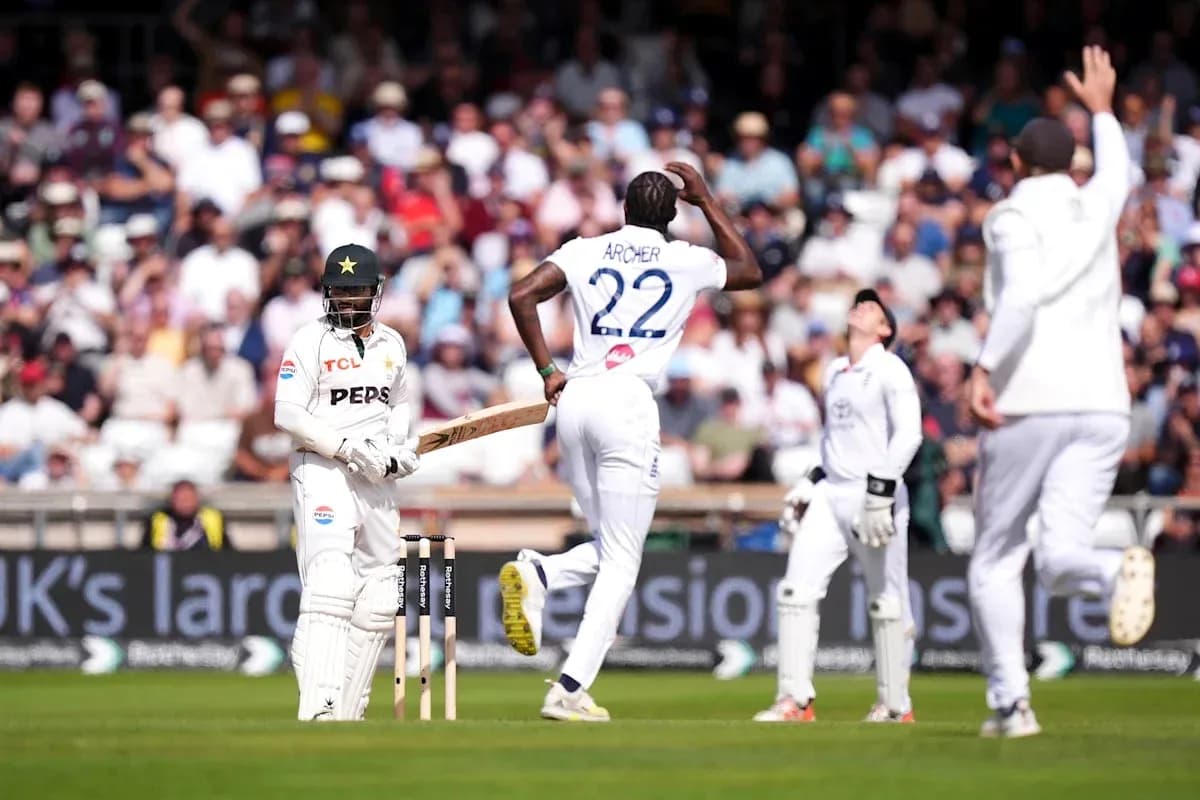
ISLAMABAD — Pakistan’s turbulent tour of England has taken another sharp turn, with the Pakistan Cricket Board launching an internal disciplinary inquiry after dramatically recalling seven players and two coaches midway through the series.
The move, already viewed as a knee-jerk reaction to two heavy defeats, has now spilled beyond selection into questions of discipline, conduct and control behind the scenes.
PCB opens inquiry as turmoil deepens
PCB media director Amir Mir confirmed on Monday that the board had begun an internal process, though he stopped short of naming any players or detailing the allegations.
“The PCB has initiated an internal disciplinary inquiry following media reports concerning discipline and conduct, which are currently being reviewed internally,” Mir said on X, stressing that the matter would be handled under the board’s standard procedures and regulations.
The board’s public stance is clear: it wants to be seen as methodical, not chaotic, even as the tour narrative suggests the opposite.
Local media, though, has rushed into the vacuum. Reports in Pakistan suggested that data from the mobile phones of Imam-ul-Haq and Mohammad Rizwan was obtained by team officials before both men flew home. Geo News reported that the team’s security officer took possession of the phones after Pakistan’s 194-run defeat in the second Test at Lord’s, returning them only hours before the players left the UK.
Mir pushed back strongly at the swirl of claims.
“At this stage, any speculative reports or unverified claims circulating on certain platforms, particularly those originating from hostile external sources, should not be regarded as credible,” he said. He urged fans and stakeholders to rely solely on official PCB communication.
The message was firm. The speculation, however, will not disappear so easily.
Sweeping changes mid-series
The disciplinary angle arrives on top of a selection earthquake. After brutal losses at Lord’s and Headingley in the first two Tests of the three-match series, Pakistan ripped up their plans.
Seven players were sent home. The Test coach, Sarfaraz Ahmed, was removed and replaced by Mike Hesson. Bowling coach Umar Gul made way for Ashley Noffke.
It was a drastic reset with one Test still to play.
Wicketkeeper-batter Rizwan, opening batter Imam and Salman Ali Agha — who had captained the side in the first Test — were among the first to leave before Hesson had even linked up with the squad in the UK.
Fast bowler Khurram Shahzad and left-arm spinner Ali Usman, both involved in the first two Tests, were also released. All-rounder Aamir Jamal and Mohammad Awais departed without playing a single match at Lord’s or Headingley.
The message to the dressing room was unmistakable: no one is safe.
Noffke keeps distance, players told to focus
Caught in the middle of the storm is Ashley Noffke, freshly installed as bowling coach and trying to prepare a shaken squad for the third Test at Edgbaston, starting Wednesday.
Noffke said he had no role in the disciplinary process and made it clear he was not privy to the details.
“I sit outside of that decision-making model,” he told reporters after a training session in Birmingham.
What he has learned in his time with Pakistan, though, is that noise off the field is almost guaranteed.
“There’s one thing that I’ve learnt about being in Pakistan and coaching for a period of time — nearly 15 months now with the white ball team — is there’s always something going on in the background,” Noffke said.
His instruction to the players is simple: block it out.
“Whether or not it’s in or out of our control, most of the time it’s out of the player’s control, they need to focus on the cricket that they have in front of them because there’s some really great opportunities here for young cricketers that are highly skilled.”
The subtext is obvious. Careers are on the line, but so is the chance to stake a claim in a side being reshaped on the fly.
Defiant board, divided opinion
Inside the PCB, the changes have been defended robustly. Selector Aaqib Javed and PCB chairman Mohsin Naqvi have both backed the decision to overhaul the squad mid-series, even as criticism has poured in from some of Pakistan’s most recognisable former players.
Shahid Afridi and Shoaib Malik have been among those to question the timing and wisdom of such sweeping moves with the series still alive.
The split is stark: a board insisting it is acting decisively to arrest decline, and a chorus of ex-cricketers warning that constant upheaval only deepens instability.
As Pakistan head to Edgbaston for the final Test, the scoreboard tells one story, the selection sheet another, and the disciplinary inquiry a third. The cricket, for now, has to compete with all three.