Pat Cummins Addresses Sandpapergate Scandal as Cricket Australia Faces Old Wounds
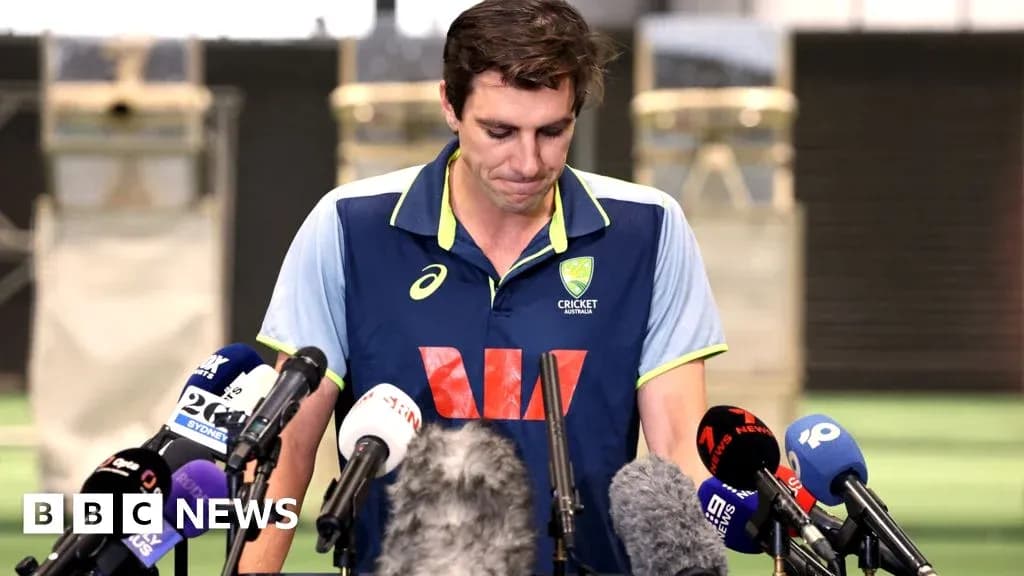
Pat Cummins wanted to talk about cricket. Real cricket. The kind being played a few metres away as New South Wales and South Australia opened a crucial Sheffield Shield clash.
Instead, he walked into a hall lined with cameras and tripods, sat down under the harsh lights at Cricket Central in Sydney, and spent more than an hour being dragged back to Cape Town, 2018.
Outside, there were muffled cheers. Inside, there were only questions.
“I don’t want to talk about this again after today,” he said. “Even if it takes all day... I’ll stay here until we have no more questions.”
He almost had to make good on that promise.
A scandal that refuses to die
Sandpapergate was supposed to belong to another era. A stain, yes, but one that had been processed, punished and packed away.
Usman Khawaja’s new memoir has torn the lid off again.
In the book, the former Test opener writes that the entire Australian team knew about the plan to use sandpaper on the ball during the third Test against South Africa in Cape Town. Not just the infamous trio of Steve Smith, David Warner and Cameron Bancroft, who admitted involvement and copped heavy bans. The team.
“I said: ‘Take this as a team. We did this as a team. We knew what was going on, and we have to take it as a team’,” Khawaja recalls.
That line has detonated across Australian cricket.
It has dragged Cummins, now captain and the public face of the men’s team, into the blast zone. It has reignited suspicions about who knew what, and when. It has split opinion in dressing rooms past and present. And it has reopened wounds among supporters who thought they had already done their grieving.
Josh, 28, watching the Shield game, voiced what many felt: “It’s just a bit crazy that it’s all blown up again... I think it is a bit ridiculous, after eight years.”
Another fan was more blunt: “I’m a bit bored of it.”
The timing stings. A fresh summer, a big year ahead, and once again the national side is dragged back to the ugliest chapter in its modern history.
Cummins in the firing line
So Cummins fronted up.
Over what one reporter suggested might be the longest press conference in Australian sporting history, the captain walked a tightrope. He paused often, weighing each word, making sure his answers matched the exact shape of the questions. But he didn’t hide behind platitudes.
He dismissed Khawaja’s allegations as “vague”, pushed back against the idea of a wider conspiracy, and admitted his disappointment that a close friend had put him in this position.
“Friends aren’t casual with each other’s lives and reputations... That’s something I’ve been grappling with the last couple of days,” he said.
He refused to be the one to call for a new inquiry, batting that responsibility back to Cricket Australia. On a fresh investigation, he was clear: that’s “a matter for Cricket Australia”.
His frustration was obvious. Not just with the claims, but with the fact that, eight years on, sandpapergate is still the story.
“It’s been eight years... Hopefully today we put a line through it and we’re done and we can all move on to much more fun topics, like actual cricket.”
The problem for Cummins is that not everyone is ready to move on.
Old teammates, old tensions
Khawaja, who retired from international cricket in January, has since tried to cool the temperature, insisting he doesn’t want a “witch hunt” and refusing to spell out exactly who he believes knew about the sandpaper plan, or how much they knew.
The gaps in his account have only fuelled the fire.
Warner, the man hit hardest by the original sanctions, has backed Khawaja’s version. He said the book told the truth and accused Cummins’ denial of having “thrown him under the bus”.
Smith, captain at the time and also banned, is overseas and has stayed silent so far. Bancroft, who was caught with the sandpaper in his pocket on the field and has previously hinted the bowlers knew what was going on, is also keeping his counsel.
Around them, the old guard has stirred. Former coaches, ex-players, some with their own reputations bruised by 2018, have re-entered the debate. So has a familiar demand: reopen the investigation.
Cricket Australia chief executive Todd Greenberg has already ruled that out. No fresh probe, no new inquiry, no second trial for Cape Town.
But that stance is under pressure.
Prof David Rowe, from the University of Western Sydney, believes the governing body cannot simply declare the matter closed and expect everyone to fall into line.
“One of the best ways to fuel conspiracy theories and keep sandpapergate going is to essentially say ‘there’s no more to see here’ – especially when that comes from the authorities,” he told the BBC.
A hit to the national self-image
Part of why this saga still bites so hard has nothing to do with reverse swing or abrasive paper. It cuts into how Australia sees itself.
Rowe calls it “collective shame” – a lingering sense of national embarrassment that clashes with a cherished myth: that Australia is “a nation of good sports”.
“The idea of being a good sport is two things. One is being good at sport, so you actually win. But the other side is that you do it honourably and fairly,” he said.
“Many Australians would see themselves as above all that. That is: cheating is what other teams get up to... not the nation of good sports.”
Cape Town shattered that illusion. The sight of Bancroft fumbling with a piece of sandpaper, Smith and Warner brought to tears in televised apologies, and players returning from bans into a sceptical public – all of it left scars.
For many, the lingering anger is sharpened by a sense of double standards. Ball tampering, players insist, was hardly a uniquely Australian sin.
“It’s a bit of a stitch up,” said James, 21, another fan at the Shield game. “Every country has done it... if it wasn’t us, it was probably going to be someone else.”
Yet it was Australia that was held up as the global cautionary tale.
A team under a cloud, again
The timing of this renewed storm is far from ideal for a side already searching for rhythm.
Australia’s men are coming off a flat Test series in South Africa – their first in the country since the scandal – and now face a home summer with old questions swirling around new leaders.
Cummins, who has been praised for reshaping the team’s image and tone since taking over the captaincy, suddenly finds his integrity under scrutiny. The captaincy in Australian cricket has long been called the second-most important job in the country. Now, that job description includes revisiting the darkest days of the sport’s recent past.
As he spoke, he gestured towards the Shield match outside, and to Friday’s one-day international against England in Perth, from which he and other key players are being rested. That, in his mind, is where attention should be.
But attention is stubborn. It clings to controversy. It drifts back to Cape Town.
No easy way out
Khawaja’s book has left Australian cricket in a familiar place: split between those who want the truth laid out in full, and those who believe the truth – or enough of it – has already been told.
There are calls for clarity, demands for closure, and a governing body determined not to reopen the file. There is a captain insisting he has nothing to hide, and a former teammate insisting more people knew. There is a fan base tired of reliving the same nightmare but unable to escape it.
“It’s going to be hard to move on, given that there’s two sides of the story and it doesn’t look like either side is going to back down,” James said.
The ball is back in Cricket Australia’s hands now. How they choose to play it will decide whether sandpapergate finally starts to fade, or whether this scandal keeps swinging back into the heart of the Australian summer.