Pat Cummins Names Cheteshwar Pujara as Toughest Indian Opponent

Pat Cummins has pounded away at the world’s best for more than a decade, but when he’s asked to name the toughest Indian he’s bowled to, the answer comes back without hesitation: Cheteshwar Pujara.
Not Virat Kohli. Not Rohit Sharma. Pujara.
The memories write themselves. Adelaide, Melbourne, Sydney, Brisbane. The Border-Gavaskar epics of 2018-19 and 2020-21, when Pujara turned survival into an art form and Australia’s vaunted pace cartel into weary, shoulder-dropping figures trudging back to their marks. Ball after ball, session after session, he just refused to go away.
In a recent promotional video for Prime Video Sport, Cummins was asked to pick the single toughest opponent he’d faced from seven major cricketing nations: India, Pakistan, New Zealand, England, Sri Lanka, South Africa and West Indies. No current players. Only men whose international careers are done.
For India, there was only one choice.
“India, I'm going to say, Pujara. Really hard to get out. Just like death by a thousand papercuts. Happy to face 100 dot balls if he wanted to. Not going to give you a chance,” Cummins said in the clip shared on social media.
It’s not empty praise. Pujara’s record against Australia backs every word. Across 25 Tests against them, he piled up 2,074 runs at 49.38. Nearly half of those – 993 runs – came in Australia, where visiting batters are supposed to be found out, not immortalised. Three centuries, five fifties, a highest score of 193, and countless overs absorbed while fast bowlers fumed.
Those long, stubborn stays helped shape two historic away series wins for India. For Australian quicks, they also left scars.
Pujara walked away from international cricket last year with 7,195 runs in 103 Tests at an average of 43.6, including 19 hundreds and 35 fifties. He played five ODIs as well, though his legend lives almost entirely in whites, in the grind of Test cricket where his appetite for “100 dot balls” became his calling card.
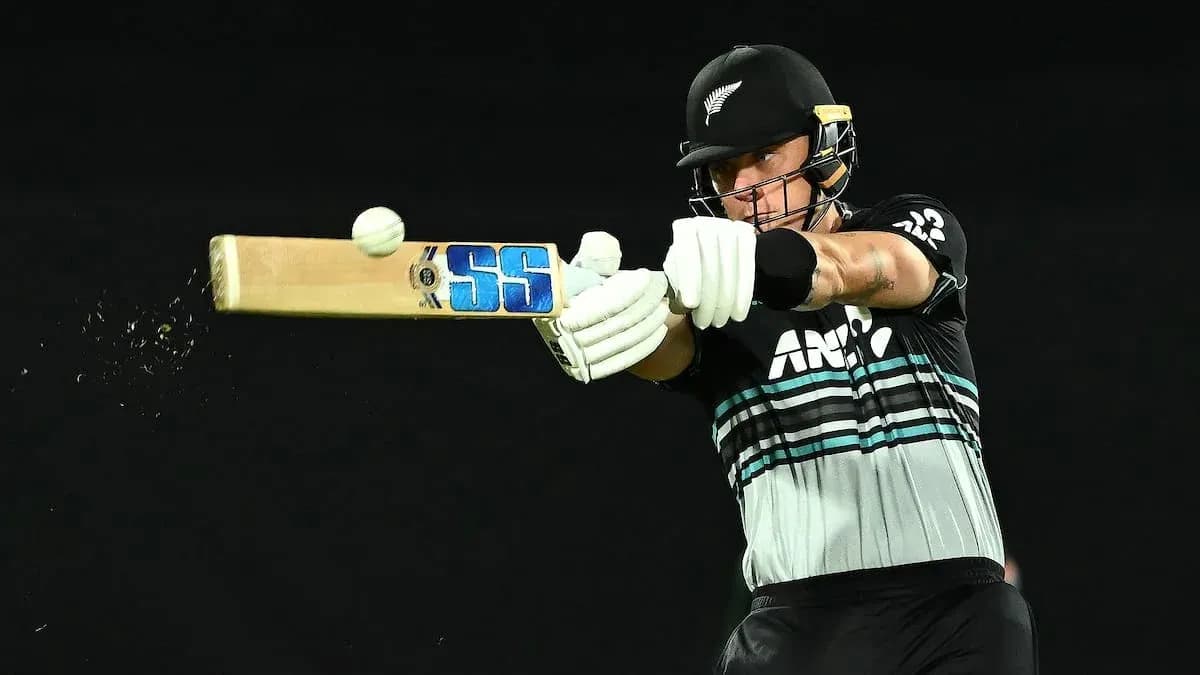
Cummins’ list did not stop with India. For New Zealand, he reached back to the days when Brendon McCullum opened and attacked from ball one.
“From New Zealand, I played Brendon McCullum a couple of times when he was really going hard at the top of the order,” Cummins recalled. It was the kind of batting that could rip a game away before bowlers had even found their length.
The Pakistan pick carried a very different flavour. Cummins has faced modern stars like Babar Azam, Shaheen Shah Afridi and Haris Rauf, but the name that stuck in his mind was that of off-spinner Saeed Ajmal.
“Pakistan, Saeed Ajmal. It was like the last ball of the over; I walked in, Saeed Ajmal just goes, and I went, what? Clean bowled. I have never seen anything like that,” Cummins said, describing the bewilderment that defined so many batters’ early encounters with Ajmal at his peak.
From England, Cummins went with Sir Alastair Cook, the tireless left-hander who built mountains of runs at the top of the order and defined a generation of English batting. South Africa’s slot went to AB de Villiers, the genius who could turn any field into a scoring map and any length into a scoring option.
Sri Lanka’s representative was Tillakaratne Dilshan, the audacious opener and inventor of the “Dilscoop”, who dragged white-ball batting into a new age with his aggression and improvisation. For West Indies, Cummins chose Chris Gayle, the hulking left-hander whose presence alone could change the mood in a stadium and whose power left bowlers clinging to their plans.
One thread runs through Cummins’ selections. Every name he mentioned – Pujara, McCullum, Ajmal, Cook, de Villiers, Dilshan, Gayle – belongs to a player who has already stepped away from international cricket. A roll call of men who, in very different ways, pushed bowlers to their limits.
And at the heart of it, from an Australian fast bowler who has seen almost everything, sits Pujara: the man who didn’t blast attacks apart, but slowly, relentlessly, wore them down.