Pakistan’s Top-Order Crisis Exposed in England Series
For a country that once treated opening batters as a point of pride, this was a series that cut deep. Across three Tests in England, Pakistan’s openers scraped together just 20 runs in six partnerships – their joint-worst return in 35 years and a stark symbol of a top order in disarray.
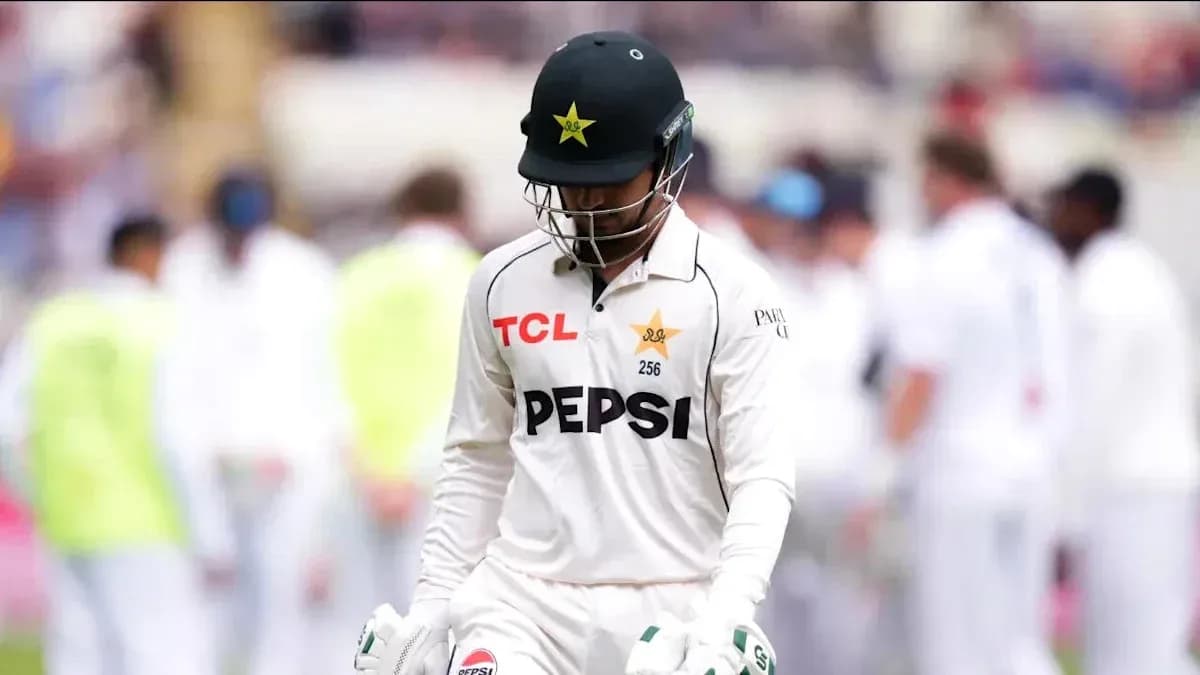
The nadir arrived at Edgbaston. Chasing the game in the second innings of the third Test, Pakistan’s latest opening pair walked out under grey skies and heavy pressure. They didn’t last long enough to disturb the scoreboard. Another stand gone. Another door kicked open for England’s bowlers.
That 20-run aggregate across the series was Pakistan’s lowest for an opening partnership since their home campaign against West Indies in 1990-91. Three and a half decades on, they have found themselves back at the bottom of the same statistical well.
Three Partners, No Platform
Selection meetings were busy. The scoreboard barely flickered.
Pakistan cycled through three different opening combinations in the hope that something, anything, might stick. Nothing did. Across six innings, not one stand reached double figures. The best they could muster was eight.
In an era defined by data and planning, this was chaos at the very top of the order. Each new pair walked out with a fresh chance to reset the tone of the innings. Each time, England’s new-ball attack tore that script to shreds.
Awais Stands Alone
Amid the rubble, one young batter kept trying to hold the line.
Azan Awais, thrust into a brutal examination, was the only Pakistan opener to show any semblance of consistency. Across six innings he scored 129 runs at 21.50 – not the kind of number that wins series, but in this context, it looked almost defiant.
He rarely had company.
Imam-ul-Haq flickered once with 42, then vanished with a duck. Shan Masood scratched 1 in one innings, 26 in another, never quite settling into the authority Pakistan needed at the top. Saim Ayub’s introduction brought only more pain: two innings as opener, two ducks.
Every early wicket dragged the middle order into the contest far too soon. Plans for long, layered innings were abandoned as Pakistan’s No. 3 and No. 4 repeatedly walked out to face a hard new ball and bowlers on the charge. The openers weren’t just failing to score; they were handing the initiative away before the game had even begun.
Edgbaston Embarrassment
The problems at the top reached their most brutal expression in the third Test.
At Edgbaston, Pakistan’s first innings unraveled in a way that will live in the record books for all the wrong reasons. Bowled out for 133, their top five batters all fell for single-digit scores. Not one of them reached 10.
It wasn’t just another collapse; it was unprecedented. Never before had a team in the first innings of a Test in England lost all of its top five wickets without a single player reaching double figures.
The new-ball spell turned ruthless, the pressure suffocating. Pakistan’s batters kept following one another back through the pavilion, leaving behind a scorecard that read more like a warning sign than a contest.
A Question Pakistan Can’t Avoid
This wasn’t a one-off bad day or an unlucky session. It was a full series in which the opening partnerships never once gave Pakistan a foothold.
Three combinations tried. Six innings played. Twenty runs in total.
For a side that has built so many of its great Test wins on grit and resilience at the top, the numbers from this tour tell a harsher story. The next time Pakistan pick a Test XI, the debate around their openers won’t just be about form or potential.
It will be about how long a team with this much history can afford to keep starting its innings on the back foot.