Pakistan's Test Tour of England: Royal Audience Amid Political Tension
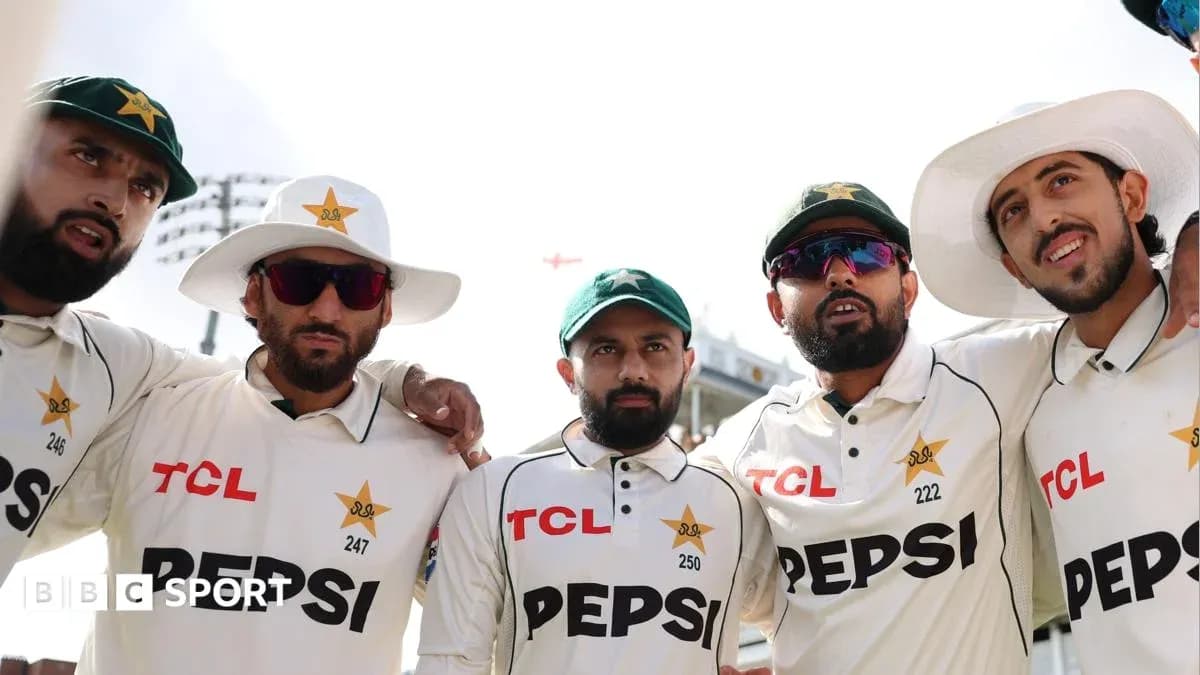
Pakistan’s Test tour of England, already carrying the usual weight of history and expectation, now finds itself brushing the highest levels of British power.
Later this week, King Charles III will host the Pakistan men’s Test side for an audience in the gardens of Clarence House, a long-planned engagement that suddenly sits in the glare of an unexpected political storm.
Royal audience amid tour tension
The meeting, confirmed by Buckingham Palace, was arranged before a ball had been bowled in the three-match series. Yet its timing could hardly be more sensitive.
“His Majesty the King, as Head of the Commonwealth, will receive the Pakistan Men's Test Cricket Team for an audience in the gardens of Clarence House, in the break between the second and third Test matches hosted in England over the summer,” read the Palace statement.
The audience is expected to last around 15 minutes. Short, formal, symbolic. But the backdrop is anything but simple.
Just days earlier, Pakistan’s tour briefly hung in the balance after Sky Sports decided to broadcast an interview with Suleiman and Kasim Khan, sons of former Pakistan captain and prime minister Imran Khan, during lunch on day one of the second Test at Lord’s.
Threat to abandon the Lord’s Test
Before that interview went to air, the Pakistan Cricket Board (PCB) raised the possibility of not resuming the second Test and even cancelling the rest of the series. The threat was serious enough for the England and Wales Cricket Board (ECB) to seek guidance from the UK government, with advice coming from the Foreign, Commonwealth and Development Office.
The match continued. The series survived. But the warning underlined how quickly cricket can be pulled into the slipstream of Pakistan’s turbulent politics.
Imran Khan, 73, remains in prison on corruption charges he denies, three years into his incarceration. A national icon who led Pakistan to the 1992 World Cup and later served as prime minister from 2018 to 2022, he was jailed a year after leaving office.
His story now shadows this tour.
Imran’s family, the Commonwealth and the King
The interview with Suleiman and Kasim, conducted by former England captain Michael Atherton, went ahead despite a complaint received by Sky before broadcast. On air, the brothers voiced concerns over their father’s treatment and security, and criticised the UK government’s response to his situation.
Their words did not land in a vacuum.
In December last year, Imran Khan’s sister, Aleema Khanum, publicly appealed to King Charles in his role as Head of the Commonwealth. Speaking to The Times, she framed her plea around the organisation’s founding principles.
“Pakistan is a member of the Commonwealth of Nations,” she said. “Its key principles in the charter are rule of law, democracy, and human rights. A member nation is busy destroying all three fundamental principles.
“Member states, especially where King Charles is the head of the Commonwealth organisation, don't speak out against fascism or military dictatorship? What is the point of just organisations then?”
Those comments now echo around a tour where the King is about to meet the very team representing that same member nation.
PCB under scrutiny
The political cross-currents do not stop with Imran Khan. PCB chairman Mohsin Naqvi also serves as interior minister in Pakistan’s current government, a dual role that inevitably invites scrutiny when cricket and politics collide.
The PCB has been contacted to confirm whether Naqvi will attend the audience with the King. His presence, or absence, would be noticed.
On the field, Pakistan’s players did return after lunch on that fractious opening day at Lord’s, resuming the second Test as scheduled. By the close of the second day, head coach Sarfaraz Ahmed insisted the dressing room had been insulated from the row.
“I don't know anything. I'm just focusing on the match,” he said when asked about the interview with Imran’s sons. “You're talking about the interview? We don't know about the interview.”
Whether that is strictly true or simply a coach’s attempt to keep the spotlight on cricket, the message was clear: Pakistan want this tour judged by what happens between bat and ball.
A fragile but vital relationship
England’s visit to Pakistan in October for a one-day tri-series involving the hosts and Sri Lanka will mark their fourth separate tour of the country in four years. That burst of engagement followed a 17-year absence driven by security concerns and political instability.
The relationship between the two boards has been rebuilt carefully, series by series, tour by tour. Trust has taken years to restore. The events at Lord’s showed how quickly that trust can be tested.
Now comes a different kind of encounter. Not at Lord’s or Headingley, but in the manicured calm of Clarence House, where King Charles will greet a squad that briefly considered walking away from his country’s most famous ground.
Fifteen minutes with the monarch will not settle Pakistan’s political turmoil, nor resolve the questions swirling around Imran Khan’s fate. It will, though, place this team—and this tour—squarely at the intersection of sport, diplomacy and power.
As England prepare to visit Pakistan yet again later this year, the question lingers: can cricket keep the peace in a relationship where politics never stays far from the crease?