Pakistan's Middle Order Faces Sri Lanka's Tactical Challenge
RAWALPINDI, Pakistan — A low, grey sky, a new-ball nip, and Kusal Mendis with a plan. Pakistan’s top order walked straight into it.
By lunch on the fifth and final day of the first Test, the hosts had crawled to 151-5 at Rawalpindi Cricket Stadium, a lead of 139, their early optimism steadily stripped away by sharp seam bowling and a shrewd, aggressive field from the Sri Lankan captain.
Mendis’ trap springs shut
Pakistan began on 57-1, with Azan Awais and Mohammad Taha looking like they had done the hard work the previous evening. That illusion disappeared in the space of two overs.
First ball of the morning, Awais flashed at Lahiru Kumara. Hard hands, no feet. The edge flew to the slips and Sri Lanka were up. From the other end, Asitha Fernando found just enough movement to kiss the outside edge of Taha’s bat. Two set batters gone, no runs added. Pakistan’s platform smashed before the day had even settled.
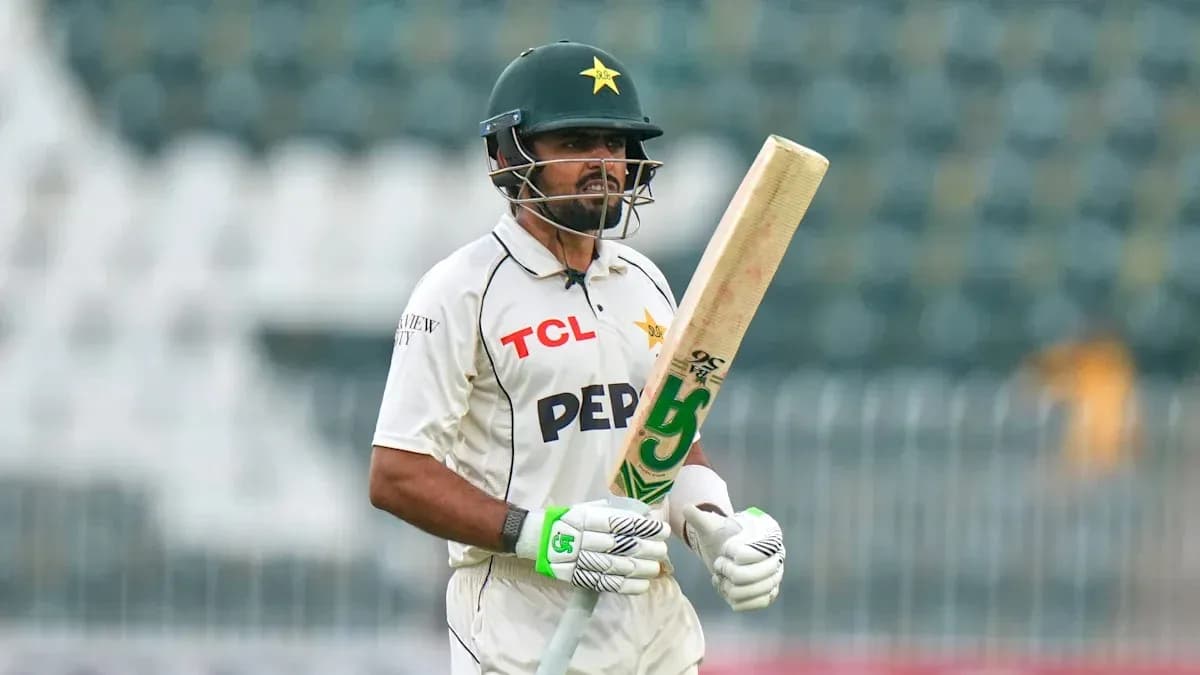
Into the chaos walked Babar Azam.
He looked, for a while, like Babar Azam again. Six boundaries, those familiar, flowing cover drives punching through the off side and briefly changing the mood in the stands. With Saud Shakeel digging in at the other end, the pair stitched together 50 vital runs, trying to drag the game back towards Pakistan.
But the pressure never really eased. Babar survived on 22 when Kamindu Mendis shelled a straightforward chance at second slip. He then edged an lbw shout on umpire’s call. Both let-offs felt significant. They weren’t.
Mendis, sensing Babar’s urge to score, pushed his pieces into place. Short backward square leg came into play, the field tightening around Pakistan’s captain. The trap was clear. Babar still went for the shot. He miscued and picked out Lahiru Udara, walking off for 34 and stretching his century drought in Test cricket to 42 innings. Another promising start, another unfinished story.
Short ball, sharp minds
If Babar’s dismissal was the big moment, Salman Ali Agha’s exit underlined how completely Sri Lanka had seized the tactical high ground.
After a brief stoppage for bad light — 20 minutes where Pakistan might have hoped the tension would lift — Milan Rathnayake returned with a clear brief. Bang in the short ball, trust the plan. Agha took it on, and Pasindu Sooriyabandara produced a spectacular catch to finish the job, again at that lurking short backward square leg.
Two batters, same trap, same region. Mendis’ field had turned into a magnet.
At the other end, the pitch continued to offer just enough for the seamers under the heavy clouds. Fernando’s 2-20 and Kumara’s 1-42 told part of the story; the rest was written in plays-and-misses, defensive prods and anxious looks back at the stumps.
Shakeel holds firm
Through it all, Saud Shakeel refused to budge.
He took a nasty blow on the shoulder from a Dilshan Madushanka short ball, the kind that can rattle even the most settled player. Shakeel simply reset, dug in, and batted almost the entire session. By lunch, he was 23 not out from 85 balls, a study in patience on a surface that kept asking questions.
He had needed help from technology too, overturning an lbw decision early in his innings. Once reprieved, he settled into a grim, necessary resistance.
Alongside him, wicketkeeper-batter Ghazi Ghori survived a tense half-hour, scratching his way to 7 not out. The pair may not have scored quickly, but they did something more important: they stayed there. With two sessions left in the match, their partnership is now the thin line between Pakistan and a collapse that could hand Sri Lanka a path to a remarkable final-day chase.
Series on a knife-edge
Pakistan’s bowlers, led by debutant fast bowler Saqib Khan and his inspiring seven-wicket haul in Sri Lanka’s first innings, had done the hard work earlier to trim the visitors’ lead to just 12. That effort set up this final-day scrap, but the batters have not yet cashed in.
At 151-5, with a lead of 139, the Test sits delicately poised. One solid partnership after lunch could drag the game out of Sri Lanka’s reach. One burst with the second new ball, or a rush of nerves, and Mendis’ side could be chasing a target that suddenly looks very real.
Rawalpindi has seen its share of drawn-out fifth days. This one, under low clouds and high tension, is shaping into something far more pointed: a question of nerve, of patience, and of whether Pakistan’s middle order can finally break free from the traps laid so cleverly around them.