Pakistan Faces Crisis After Disastrous Collapse at Lord's
Pakistan walked into Lord’s searching for a response. They walked off staring at a crisis.
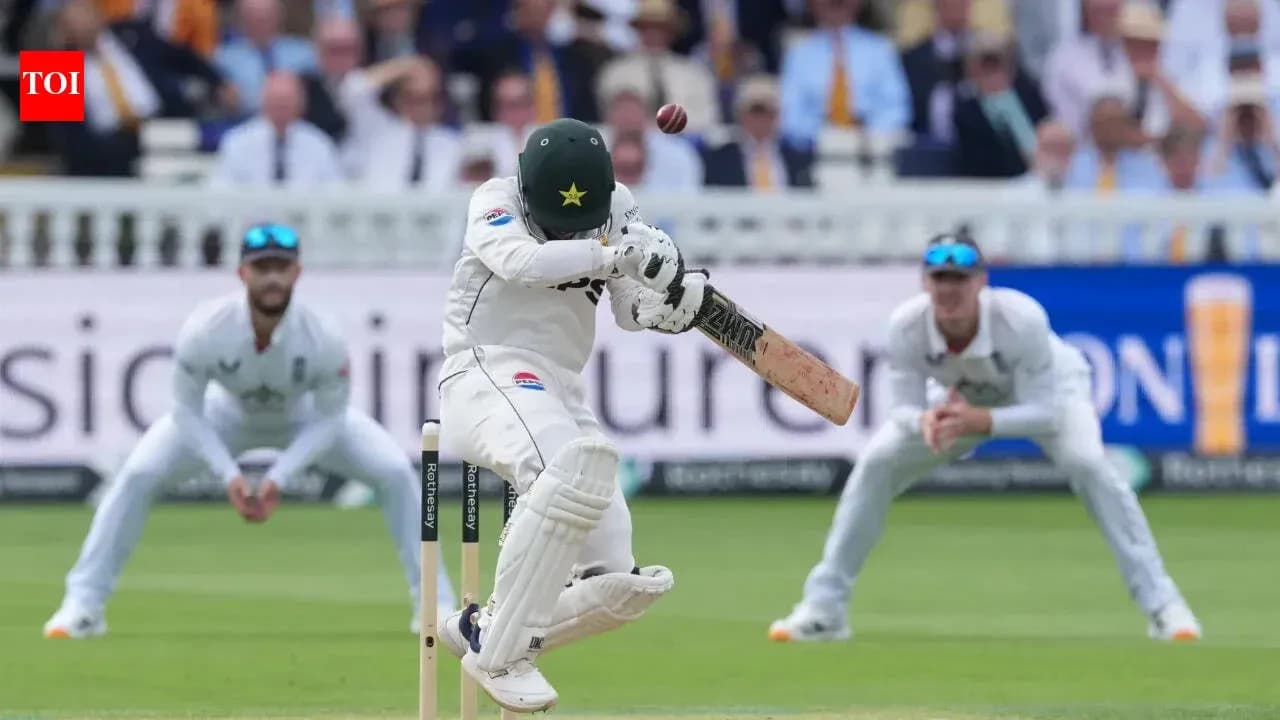
Bowled out for 110 on a surface that demanded discipline rather than miracles, Pakistan’s batting folded inside 38 overs, inviting a savage verdict from former England captain Michael Vaughan and leaving England in complete control of the second Test.
Collapse under the Lord’s gaze
The script was supposed to change with Babar Azam’s return. Instead, it felt painfully familiar.
Abdullah Shafique went for 5. Shan Masood for 1. Mohammad Rizwan for 7. Babar himself scratched his way to 8 before departing, the brief flicker of optimism extinguished almost as soon as it appeared.
Only Azan Awais, opening in just his second Test, offered anything resembling resistance. His 46 was compact, brave, and at times defiant, including a few crisp strokes that briefly quietened the murmurs in the Lord’s stands. But he watched partners disappear in a steady procession, and once he fell, Pakistan’s innings unraveled with brutal speed.
All out for 110. No rearguard, no sting in the tail. Just a line-up stripped of confidence and method, exposed against an England attack that never needed to leave third gear.
Vaughan’s brutal verdict
From the commentary box, Vaughan did not bother with diplomacy.
"I'll be brutally honest. The England bowlers aren't being challenged at all," he said on BBC Test Match Special, summing up what many in the ground could see. To him, this was not just a bad day; it was a batting unit out of its depth.
"This Pakistan batting lineup is possibly the easiest batting lineup I've seen in a long time to bowl to," he continued. "I think as a bowler, I think they're all queuing up to bowl because they know there are wickets out there."
That was the sting. Not just that Pakistan were struggling, but that England’s seamers could operate without any fear of punishment, without a single batter capable of denting their figures or forcing them off their preferred lengths.
"You're not going to get hurt. There's no batter that's going to hurt them. No one's going to damage their figures, and it's really, 'roll up, roll up, who wants to get the wickets?'" Vaughan added, painting a picture of a bowling unit almost spoilt for opportunity.
He then went a step further, questioning whether this batting order even belonged at Test level.
"I think they all know that Pakistan aren't going to get big scores. So you're only going to be out there for 40 to 50 overs, so you give everything in every spell, you keep going to Joe Root saying, 'Err, I'll bowl another one.' There are so many wickets out there."
The most cutting line came last.
"Is it second division county cricket? There's no way that they are batting in any standard to say that, that is a Test match batting lineup."
For a proud cricketing nation, those words will burn.
England tighten the grip
England, ruthless and efficient, did exactly what strong sides do when handed control at Lord’s. They pressed down.
By stumps on the second day, the hosts were 81 for 3 in their second innings, the lead stretched to 261. The scoreboard did not scream dominance, but the match situation did. Pakistan, already battered by an innings defeat in the opening Test, now stare at another mountain with little evidence they can climb it.
The bowlers, to their credit, kept at it. They chipped out three wickets and tried to drag the contest back to something resembling a fight. But when your batters last fewer than 40 overs and barely cross three figures, every run in the opposition’s second innings feels like a nail in the coffin.
Missing steel, missing Imam
Pakistan’s problems ran deeper than form alone. Imam-ul-Haq, a regular at the top of the order, did not bat in the first innings after suffering a calf strain while fielding. His absence forced a reshuffle and exposed a line-up already light on experience and authority in English conditions.
Imam’s injury does not excuse the collapse, but it adds another layer to a tour that is unravelling quickly. Without him, the top order looked fragile. With Babar short of runs and the middle order unable to absorb pressure, England’s bowlers sensed weakness and attacked it relentlessly.
The result was a day that felt less like a contest and more like an examination Pakistan were never prepared for.
A test of character, not just technique
England’s attack deserves credit. They were disciplined, probing, and relentless. Vaughan himself acknowledged that this group, bowling this way, will trouble far stronger line-ups.
But that is precisely why his criticism will sting in the Pakistan dressing room. He was not simply praising England; he was accusing Pakistan of lowering the standard of the contest.
A proud Test side has been spoken about like a second-division county outfit. A batting order that once produced giants is being dismissed as easy pickings. The numbers on the board at Lord’s back up the charge.
From here, the equation is stark. England hold a 261-run lead and all the momentum. Pakistan need not just runs, but a show of backbone that has been missing across two Tests.
The technical flaws are obvious. The real question now is whether this batting group can find the fight to prove Vaughan wrong, or whether this tour becomes the moment their Test credentials are ripped apart in public.