Pakistan Cricket Team's Turmoil: Hesson's Challenge Amid Chaos
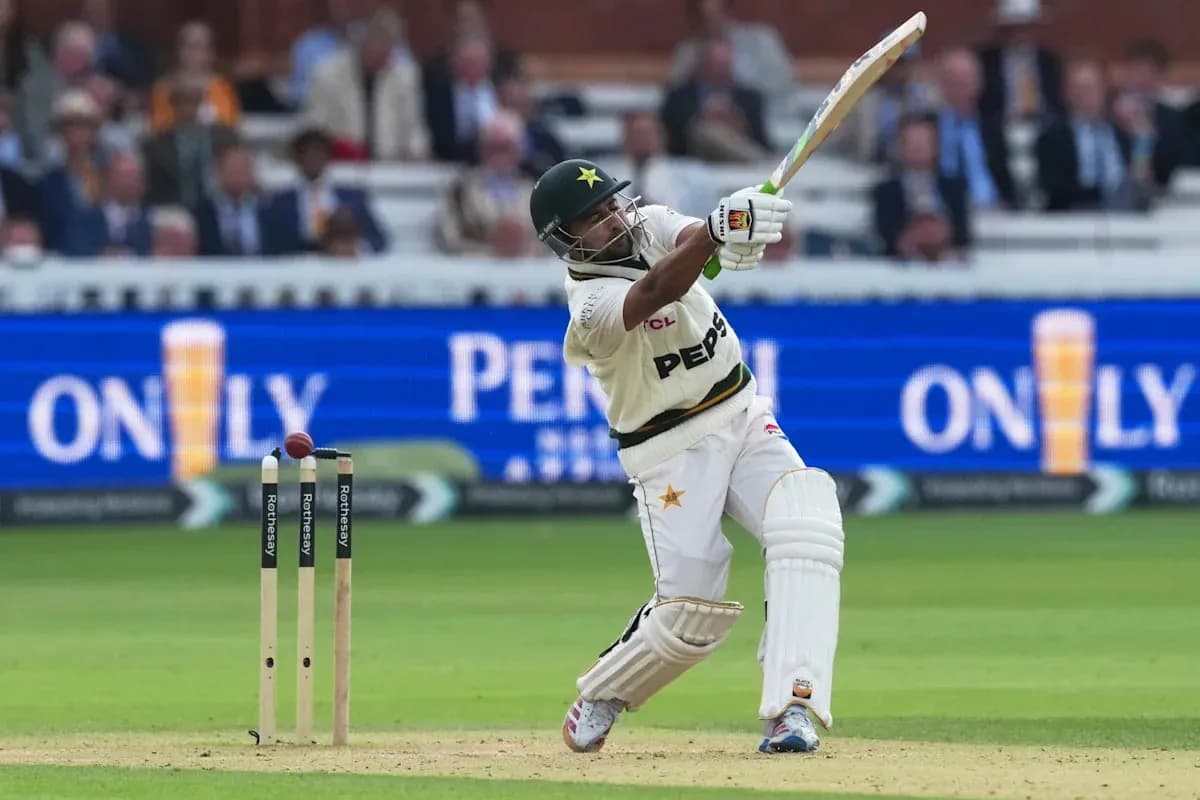
In a Birmingham hotel, Pakistan’s Test squad has turned into a revolving door. Players in. Players out. Bags packed, bags unpacked. And in the middle of it all, Mike Hesson trying to steady a ship that has already taken on plenty of water.
The interim red-ball coach, parachuted in after two bruising defeats at Lord’s and Headingley, cut an honest figure as he surveyed the fallout from a ruthless clear-out by the Pakistan Cricket Board.
“The last couple of days have been challenging for being in a hotel with some players coming, some players going and then the arrival of everyone,” he admitted on Friday. Then came the line that summed up Pakistan cricket in one word: “The guys are probably more used to a little bit of chaos than I am.”
Seven players have been axed for what is, on paper, a dead rubber against England next week. It has not felt dead at all inside this camp. The PCB’s reaction to those “brutal” defeats has been swift and severe: a near half-squad overhaul, the removal of Sarfaraz Ahmed as Test coach, and the installation of Hesson and new bowling coach Ashley Nofke in the middle of a series.
The message from the board has been backed publicly by selector Aaqib Javed and PCB chairman Mohsin Naqvi, even as criticism has poured in from former stars such as Shahid Afridi and Shoaib Malik. The noise outside has matched the churn inside.
Hesson himself was not even meant to be here in this capacity. Pakistan’s white-ball head coach had been in Japan, preparing for the Asian Games, and was only scheduled to fly to the UK for a ceremonial audience with King Charles last Wednesday. Instead, he arrived to find a team in flux and a mandate to take charge of the third Test at Edgbaston.
By the time he walked through the door, three players had already gone.
“When I took over, three players had already left the squad, Rizwan, Imam and Salman Ali Agha,” he said. Mohammad Rizwan, the experienced wicketkeeper-batter; Imam-ul-Haq, the opening batter; and Salman Ali Agha, who captained the side in the first Test, formed the first wave of departures.
They were followed by fast bowler Khurram Shahzad and left-arm spinner Ali Usman, both of whom had featured in the first two Tests, and then by allrounders Aamir Jamal and Mohammad Awais, who never got on the field at Lord’s or Headingley. Seven men out, with a coach still trying to learn names and roles.
“There’s no doubt they have been disappointed, incredibly disappointed,” Hesson said of those cut adrift. “We’ve had to park that and go ‘righto, where to from here?’ They’ve been really good over the past couple of days.”
Where to from here, indeed.
The answer, for now, is a fresh batch of faces and a deliberate attempt to rediscover Pakistan’s traditional edge with the ball. Five uncapped players have been drafted in: spin allrounder Arafat Minhas, left-arm fast bowler Mohammad Imran Jr., wicketkeeper Saad Baig, allrounder Mohammad Imran and fast bowler Razaullah.
Joining them on the flight to the UK are Saim Ayub and Abdullah Fazal, who between them have only 10 Test caps. It is a gamble on youth, on mystery, on the unknown.
From Hesson’s point of view, it is also a necessity.
“From my perspective, it’s about putting a balanced squad together, not only for this test, so we actually have some variety in our attack,” he explained. “Pakistan is known for the pace, unusual actions, mystery spin — we haven’t really been able to present any of that.”
That is the crux of his brief. Pakistan have looked flat with the ball in this series, short of the “X-Factor” that once made their attacks feared in any conditions. The new coach wants to change that quickly.
“From a bowling point of view, we have got to find some variety,” he said. “We need a little bit of an X-Factor in there as well to try and create some opportunities … to support Mohammed Abbas who’s done incredibly well.”
Abbas, the metronomic seamer, has been one of the few bright spots in a gloomy fortnight. Around him, Hesson wants pace, angles, spin that asks different questions, and the kind of “unusual actions” that have long been Pakistan’s calling card.
He knows this group only in fragments. Some he has worked with in white-ball cricket. Others he has met only briefly, a handshake here, a quick greeting there, and a few clips studied from afar.
“I know all the players that are here now,” he said. “Some I've worked with a bit, some I've said hello to a handful of times and watched them play.”
The third Test at Edgbaston will not change the series result. It will not erase what happened at Lord’s and Headingley. But for Hesson and this patched-together squad, it offers something else: a first look at a new direction, forged in the middle of the familiar Pakistan storm.