Pakistan Cricket in Crisis: A Mid-Series Shake-Up
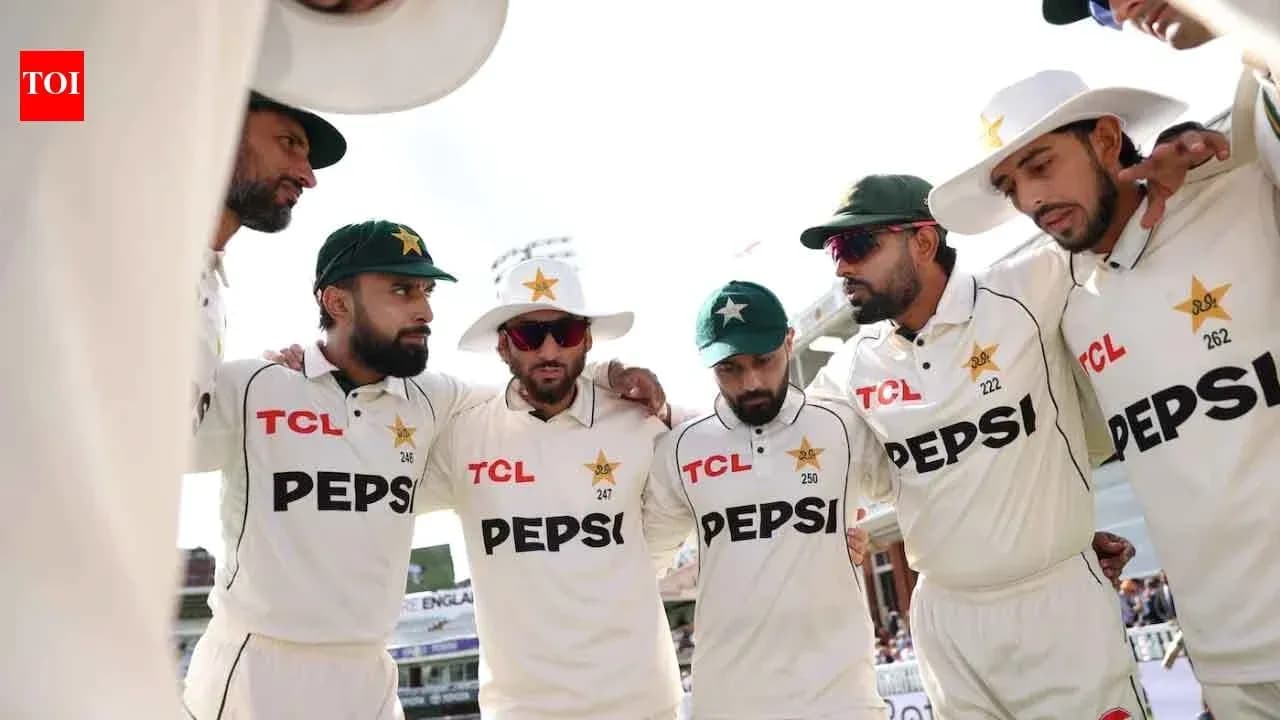
Pakistan cricket has lived through chaos before. This feels different.
Two heavy defeats to England, a 2-0 hole in a three-Test series, and a 194-run hammering at Lord’s have triggered a brutal shake-up from the Pakistan Cricket Board that has stunned former players and left the dressing room exposed. Seven players sent home. The head coach and bowling coach removed mid-tour. White-ball coaches pushed into red-ball roles. A senior selector walking away.
For Atiq-uz-Zaman, the former Pakistan wicketkeeper-batter now based in England, the word is simple: shambles.
“This team is currently at an all-time low,” he told IANS, his frustration cutting through the noise of a crisis that looks as much about leadership as it is about results.
A mid-series purge
The timing is what jars most. Pakistan were already reeling from that Lord’s defeat when the PCB swung the axe ahead of the final Test at Edgbaston, starting September 9. Seven players were told to pack their bags. Head coach Sarfaraz Ahmed and bowling coach Umar Gul were dispatched home.
In their place, white-ball coaches Mike Hesson and Ashley Noffke were asked to take over the Test side. At the same time, former captain Misbah-ul-Haq resigned from the selection panel and stepped away from his batting consultant role at the National Cricket Academy in Lahore.
The message? Change. The effect? Confusion.
Atiq could not understand the logic.
“I don't understand why Khurram Shehzad was dropped or why the spinner (Ali Usman) was sent home after taking the most wickets in the Leeds Test,” he said. “All of a sudden, now T20 bowlers are brought into the Test squad. Why? Because Mike Hesson has his personal favourites, and he brought those players into Test cricket.
“I don't understand what's going on. Pakistan cricket is in shambles at the moment.”
For a side already struggling across formats, the overhaul feels less like a reset and more like a panic button pressed in public.
Sarfaraz and Gul: from heroes to scapegoats?
If the selection churn was baffling, the treatment of Sarfaraz Ahmed and Umar Gul cut even deeper for Atiq. Both are World Cup winners for Pakistan, both revered figures. Both, he believes, have been hung out to dry.
“There is no justification for it,” he said. “The same people who selected them are the ones turning around and deselecting them. That means either you made a mistake in the first place, or you are making a mistake right now.”
Atiq never fully backed Sarfaraz’s appointment as Test head coach, pointing to his lack of coaching experience and formal qualifications. But that, he argued, is exactly why the decision-makers must own their choices.
“I didn't support that appointment. But once you make him the coach, you have to back him. Give him a fair chance before you disrespect him and send him home in the middle of a Test series. It is unacceptable.
“I feel very sorry for Sarfaraz and Umar Gul because I don't think they did anything wrong. If the players on the field can't perform, or if you haven't selected a team capable of performing, what is a coach supposed to do? Let's see what Mike Hesson does now.”
The barb is clear: if the structure is broken, swapping faces on the balcony won’t fix the view.
Imam-ul-Haq and the question of heart
The turmoil has not been limited to boardrooms and selection meetings. On the field, or rather off it, Imam-ul-Haq has found himself at the centre of a storm over commitment and culture.
The opener suffered a Grade 1 tear in his left calf and did not bat in either innings at Lord’s. He did, however, come out for some batting practice, and later appeared in front of the media, shorts on, leg bandaged, limping heavily. The optics, in Atiq’s eyes, were disastrous.
“Look, I won't speculate on the exact severity of his injury, but in our culture, we are raised to be tough,” he said. “If you have a Grade 1, 2, or even Grade 3 muscle strain, you still step out there and bat for your team. Even if you get out on the first ball, it doesn't matter – the public sees that you showed heart, and they respect you for it.”
He rattled off examples: Glenn Maxwell grinding out a double hundred with severe hamstring cramps, Chris Woakes batting with a fractured hand, Saleem Malik facing West Indies quicks with a broken arm.
“Imam-ul-Haq should have walked out to bat. Even if he got out immediately, nobody would have questioned his commitment because he was genuinely injured.
“But limping around in front of the media after taking criticism the day before just looks like a performance. It leaves a bad impression, and I have no sympathy for that behaviour. If you don't have the heart or bravery for international cricket, you shouldn't be playing Test matches. Test cricket isn't just a test of your skills – it's a test of your character.”
In a week when Pakistan’s cricketing soul has been laid bare, that line bites hardest.
Players under siege, but still a chance
For all his anger, Atiq has not abandoned this group. He knows the environment they come from. He lived it.
“To be honest, in Pakistan, players are used to this environment from domestic, U16, and U19 cricket,” he said. “We are raised in a tough system where you rarely get total freedom or backing, and you always feel like you are playing under threat just to survive.”
His message to the dressing room ahead of Edgbaston is stripped back, almost defiant.
“Enjoy your cricket, believe in your skill set, do what you can with bat and ball, and leave the rest to God.”
The third Test, then, becomes more than a dead rubber. It is a character examination for a side battered by defeat and shaken by its own administrators.
Talent without a map
Atiq’s criticism ultimately points higher than any player or coach. As a scout for England women, Lions and Young Lions, and coach of the Germany men’s team, he has seen how systems can nurture or waste talent. He is adamant Pakistan sit on a goldmine that poor leadership keeps burying.
“Hopefully, the PCB chairman changes his approach and brings in someone with genuine expertise and leadership experience to drive real structural change,” he said. “If you surround the team with quality, professional individuals, they will instill high standards.
The talent in Pakistan is undeniably there, but without the right resources and supportive structure, these players cannot reach the next level.”
Edgbaston will not decide Pakistan’s future on its own. But with the team reeling, the coaching staff reshuffled, and the public patience wearing thin, it might just reveal whether this is a temporary collapse – or the start of something far more damaging.