Pakistan Cricket Board's Dramatic Changes Amidst Disciplinary Inquiry
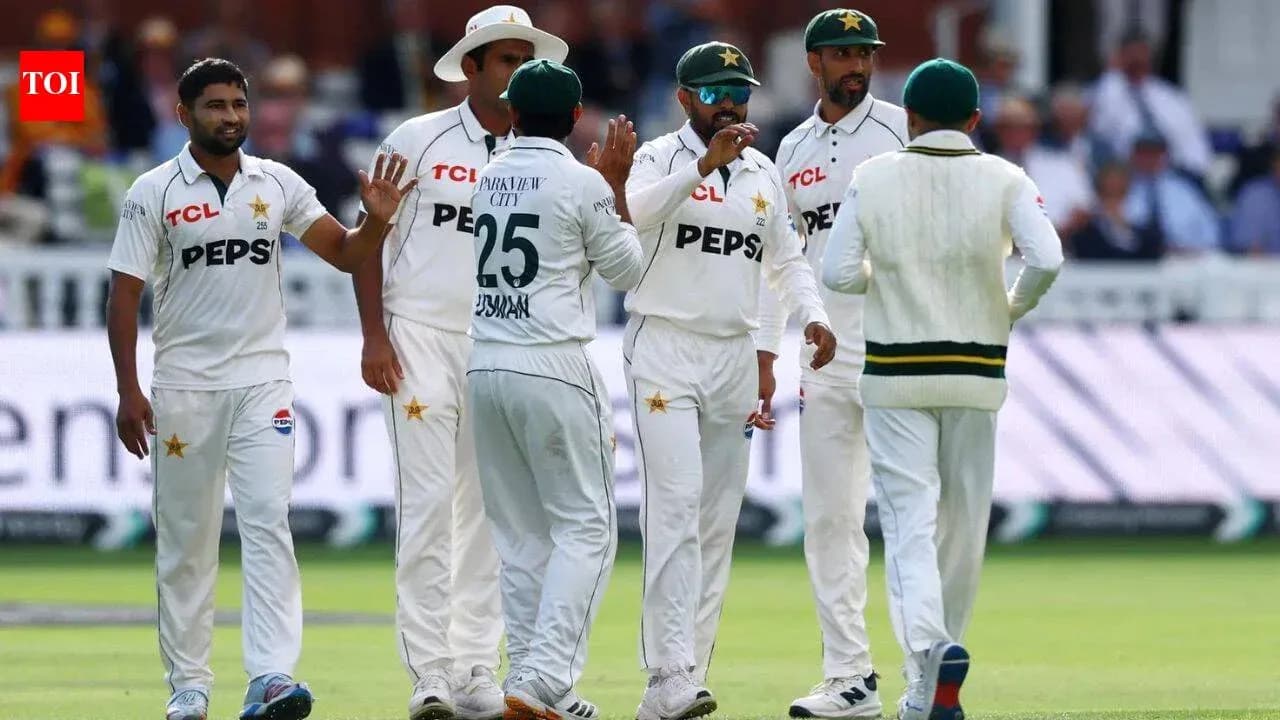
At Lord’s, where Pakistan’s past and present so often collide, the ghosts are back.
Babar Azam’s celebration after catching Ben Duckett in the second Test briefly felt like a throwback to simpler storylines: captain leads from the front, big wicket, game in the balance. By the end of the match, England had crushed Pakistan by 194 runs. The cricket, though, is no longer the only story.
In the days that followed, the Pakistan Cricket Board tore up its own script.
Seven players were abruptly jettisoned from the squad mid-series: Mohammad Rizwan, Salman Ali Agha, Imam-ul-Haq, Ali Usman, Khurram Shahzad, Aamir Jamal and Muhammad Awais Zafar. Head coach Sarfaraz Ahmed and bowling coach Umar Gul were released from their roles as well, a sweeping clear-out rarely seen in the middle of a marquee tour.
Seven new faces came in, five of them yet to play international cricket. Saim Ayub and Abdullah Fazal, both capped batters, were recalled. Around them, a clutch of rookies: pace-bowling all-rounders Razaullah Khan and Mohammad Imran, left-arm spinner Arafat Minhas, wicketkeeper Saad Baig and left-arm quick Mohammad Imran Junior.
On paper, it looked like a panicked response to a heavy defeat. Behind the scenes, the tremors run deeper.
More than cricket
The changes, multiple sources indicated, were driven by reasons “more than cricket” rather than simply poor form. Questions began to swirl, fuelled by Pakistan’s history and the venue’s own dark chapter.
Lord’s, after all, is where the 2010 spot-fixing scandal exploded, leading to prison sentences and bans for Salman Butt, Mohammad Asif and Mohammad Amir after no-balls were bowled at pre-arranged moments. That stain has never fully faded. Any sudden disciplinary move around Pakistan at this ground inevitably feels loaded.
This time, though, official answers are scarce.
Requests for comment sent to the England and Wales Cricket Board and the PCB went unanswered for more than 72 hours. Silence from the boards, noise everywhere else.
Eventually, PCB Director Media and Digital Communications Amir Mir issued a carefully worded statement, confirming an internal process but offering little detail.
“The Pakistan Cricket Board has initiated an internal disciplinary inquiry following media reports concerning discipline and conduct, which are currently being reviewed internally. The PCB handles such matters in accordance with its standard procedures. The process is being conducted under PCB regulations, ensuring that all concerned individuals are given due consideration,” the statement read.
No names. No specifics. Only the acknowledgment that something is being probed.
According to Pakistani outlet 365 News, players’ devices have been handed over to the PCB and will remain in the board’s custody until the end of the final Test. The report did not reveal whose phones were confiscated, and the PCB has not publicly explained why the devices were taken.
The shadow lingers, even without a single formal allegation of fixing being made public.
Internal firestorm
As the disciplinary inquiry ticks along behind closed doors, the fallout inside Pakistan cricket has gone very public.
Just days after the mass changes, PCB Director of High Performance Aaqib Javed launched a blistering attack on Imam-ul-Haq, who suffered a low-grade calf tear at Lord’s and did not bat in either innings.
“The Imam injury is a big question mark, and a deep disappointment,” Aaqib told Geo. He drew an unflattering comparison with previous generations, saying players in the past would play through injuries with casts on. “We’ll take action against this. How is it possible that a pulled muscle ruled you out of batting in both innings? He should have tried and fought. He’ll have to face an inquiry; I can’t say he faked it, but a muscle pull like that cannot stop you from batting altogether.”
In a dressing room already shaken by omissions and inquiries, those words land like a warning shot. Effort is now under scrutiny as much as output.
Aaqib also defended the sheer volume of changes made mid-series, insisting the message to recalled and new players was blunt: raise your game when it matters, or risk being moved on.
Naqvi backs the shake-up
PCB Chairman Mohsin Naqvi has thrown his weight behind the overhaul, rejecting the idea that Pakistan could simply ride out a poor run on a high-profile tour.
“Every match of a series is important for us and we are not left with any option if a player is not performing but to look for his replacement,” Naqvi told Geo Network. He stressed the intention was not to permanently discard those dropped, but to replace underperformers in the short term.
“The purpose behind these changes is not to axe players from contention, but just to replace them,” he said.
The distinction matters. On record, this is a reset, not a purge. In reality, for players suddenly out of the side, phones reportedly in PCB custody, and inquiries looming, the line between the two feels thin.
Old scars, new questions
The timing and setting give the entire episode an uncomfortable edge. Pakistan, under pressure in a marquee Test series, making sweeping mid-tour changes. An internal disciplinary inquiry. Reports of phones seized. No official clarity on who is under investigation or why.
At any other ground, it might simply be a story of a volatile board reacting sharply to a heavy defeat. At Lord’s, with 2010 etched into the sport’s memory, it sounds different. It feels heavier.
The PCB insists it is following its own regulations and standard procedures. Until the inquiry concludes and the board chooses to speak in full, the speculation will keep circling.
What happens in the final Test now goes beyond runs and wickets. For this Pakistan side, the battle is not just with England’s bowlers and batters, but with a familiar spectre that refuses to leave the stage.