Pakistan's Batting Crisis Exposed as Gill's Stats Haunt Edgbaston
By the close at Edgbaston, Pakistan were not just behind England. They were staring at a number that cuts far deeper than a first-innings deficit.
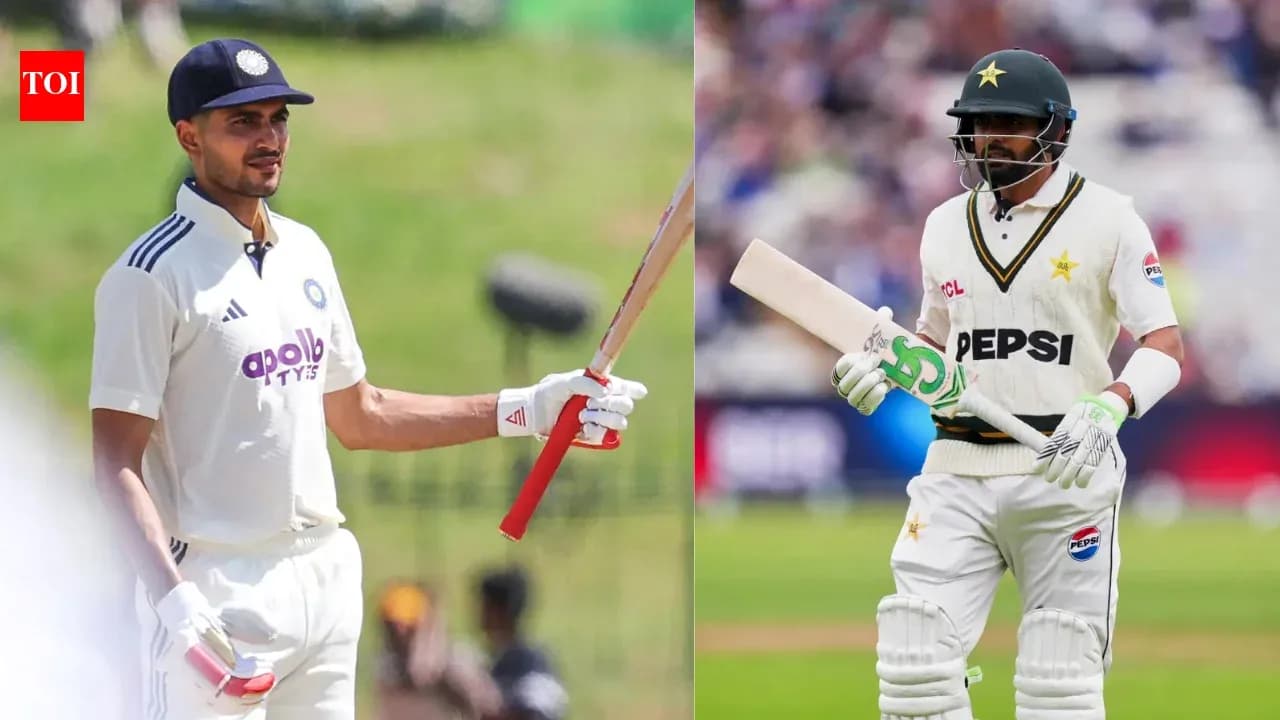
Across two and a bit Tests in this series, Pakistan’s entire batting unit has scraped together 743 runs. Shubman Gill, on his own, made 754 during India’s five-Test tour of England last year. One man outscoring an entire team over a comparable stretch: the contrast has become the most brutal shorthand for Pakistan’s unraveling in this series.
On Wednesday, the crisis hit a fresh low.
Upheaval off the field, same story in the middle
The backdrop was already chaotic. Consecutive defeats at Headingley and Lord’s had triggered a clear-out. Seven players dropped from the squad. Coaching staff sacked. A public attempt by the Pakistan Cricket Board to jolt a listing Test side back to life.
Babar Azam, fronting up at the toss, tried to project calm. He spoke of opportunity for new faces, insisted the turbulence had not weighed him down, and promised Pakistan were “trying to do our best in this match.”
Within a session, that optimism looked hollow.
Put in to bat on a helpful Birmingham surface, Pakistan folded again, this time for 133. The same technical frailties, the same nervous footwork, the same procession.
England’s quicks rip through a fragile top order
Ollie Robinson set the tone almost immediately. Saim Ayub, recalled to open, lasted just four balls before Robinson trapped him lbw for a duck, the seamer’s 100th Test wicket arriving with clinical inevitability.
Jofra Archer, back in England whites and bristling with pace, then hurried debutant Azan Awais into an edge. Abdullah Shafique followed, undone by Robinson’s nagging length. The top order had barely taken guard before half of it was gone.
Shan Masood’s dismissal summed up the muddled mindset. A loose, cross-batted swipe at Archer picked out mid-wicket, a gift-wrapped wicket at a time when Pakistan needed steel, not strokes.
Josh Tongue then took over and ripped out the heart of the innings. He removed Babar Azam, then piled on the misery by dismissing debutants Ghazi Ghori and Imran Randhawa before lunch. A side already short on confidence suddenly looked short on answers as well.
After the interval, Razaullah Khan’s departure for 11 only deepened the gloom. Once again, Saud Shakeel stood almost alone.
Shakeel fights, but collapse tells the tale
Shakeel, who had fought for 97 in the defeat at Lord’s, tried to stitch something together. He left well, picked off anything loose, and at least hinted at the kind of resistance Pakistan so badly need at the top.
He top-scored with 43, the only innings of substance, before Tongue speared in a sharp inswinger that crashed through him. With that, Pakistan’s last real hope of a competitive total vanished.
The scorecard told a stark story. Archer, hostile and accurate, finished with 3-25. Robinson, metronomic as ever, returned 3-15 from 11 overs. Tongue, relishing the occasion, led the way with 4-42. Pakistan all out for 133, and the sense of a team in freefall hardened into fact.
England tighten the screw
England, sensing a chance to put the game and the series beyond reach, were not flawless but were far more assured.
Mohammad Ali gave Pakistan a brief lift by removing Ben Duckett for 11. Mohammad Abbas then nipped out Jordan Cox for four, and for a fleeting spell there was a hint of contest.
Emilio Gay and Harry Brook snuffed that out. Both made composed fifties, absorbing what little pressure Pakistan could muster and then pushing the game away from them. By stumps, England were 156 for 4, already 23 runs ahead.
Even Joe Root’s ongoing lbw issue — out in that fashion for the 10th time in 13 innings — could not tilt the balance back. England’s middle order had done enough, and Pakistan’s threadbare total left no margin for error.
At the other end, Robinson’s day grew more impressive. His 11 overs for just 15 runs underlined why his Test bowling average, 19.1, now stands as the best among post-war bowlers with more than 100 wickets. While Pakistan cycled through batters and coaches, England’s attack looked settled, ruthless, and statistically elite.
A statistic that won’t go away
And so the Gill comparison lingers over this series like a taunt.
Gill’s 754 runs in India’s five-Test campaign in England last year were a mark of sustained excellence — a player mastering conditions that have humbled some of the game’s greats. Pakistan, across two full Tests and one innings of a third, sit on 743.
Eleven runs shy of one man’s haul.
It is not just a quirky number. It is a damning measure of how far Pakistan’s batting has fallen, and how distant real consistency now feels. The board has swung the axe. New faces have been thrown in. The captain has talked of opportunity.
But until someone, anyone, starts stringing together the kind of runs Gill did over that long English summer, Pakistan will keep chasing not just England, but a statistic that has come to define their slide.