Ollie Robinson's Dominance: A New Era in England's Seam Bowling

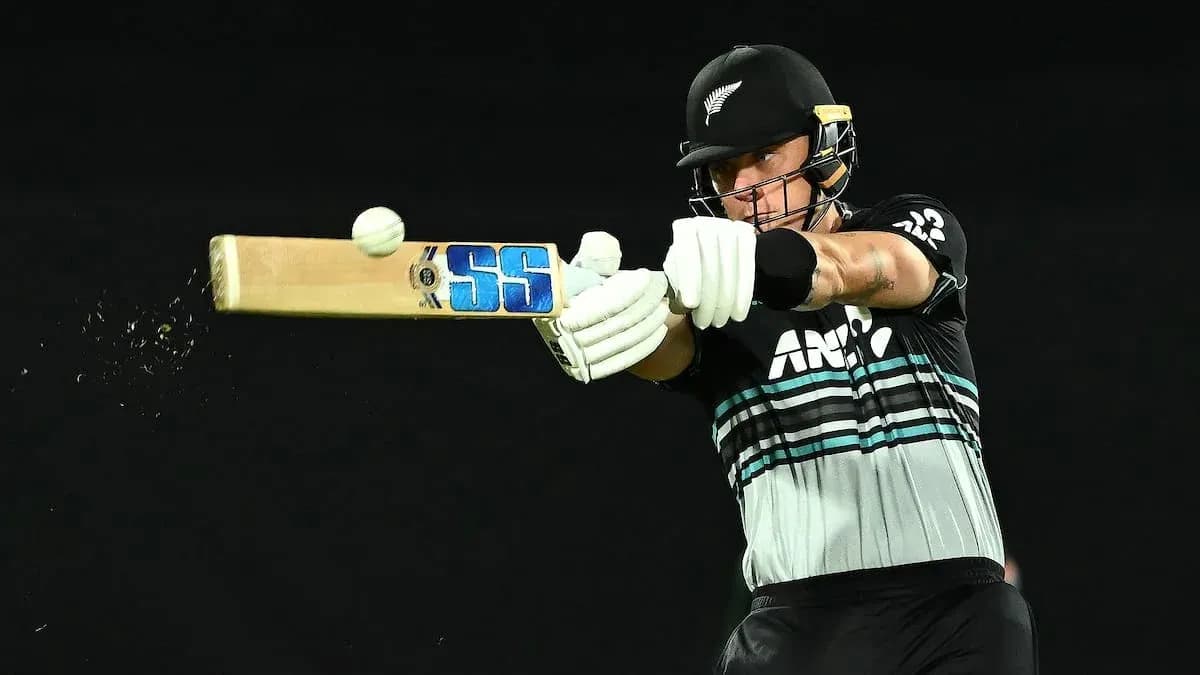
For a while, it looked like a shared story. Matt Henry had his spells, all bustling energy and hard lengths. Nathan Smith chipped away. Mohammad Abbas, at his own patient tempo, kept asking batters the same uncomfortable question: “Are you sure about that shot?”
But by the end of the 2026 English summer, the script had one clear headline. This was Ollie Robinson’s season. A comeback framed as an audition turned into a takeover.
Medium Pace, Maximum Damage
The numbers are almost absurd. Robinson has averaged 7.96 with the ball this summer. Not in a county stint, not in a handful of overs, but across four Tests with another innings still to come. Henry sits next on the list at 13.33, Abbas at 20.80. Josh Tongue and Jofra Archer have had strong summers in their own right, at very different speeds, yet neither has matched Robinson’s ruthless efficiency.
This has been a season that quietly restored the reputation of medium pace. Balls under 80mph have taken 40 wickets at 17.92, striking every 33.4 balls and going at just 3.21 an over. Faster deliveries – above 80mph – have claimed three times as many wickets, but at a higher average of 23.38. Only once in the ball-tracking era has the slower bracket done better: 2019, when sub‑80mph balls averaged 17.42, inflated by Irish seamers in that three-day dash at Lord’s.
The environment has helped. In the ball-tracking era, only one English summer has offered a lower expected average for seamers than 2026. The expected number this year is 23.6; the actual figure, 22.14, undercuts even that. Seamers haven’t had to manufacture miracles. They’ve simply had to put the ball in the right place and let the conditions, and the wobble seam, do the rest.
And that has changed where wickets fall. Traditionally in England, seamers live in the cordon: outside edge, keeper, slip, gully. This year, the stumps have been the main prize. Bowled and lbw dismissals have accounted for 45.6% of all wickets – the highest share in an English summer since the war.
That shift has opened the door for the medium pacers. With wicketkeepers often standing up, they’ve been able to attack the stumps with movement rather than chase the nick. The plan has been simple and brutal: make batters defend their stumps against a ball that refuses to behave.
No one has exploited that better than Robinson.
A Comeback With Teeth
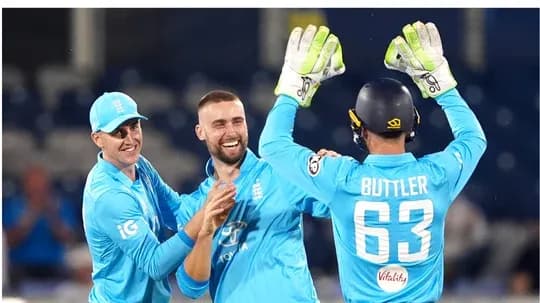
Robinson has taken 26 wickets in four Tests, with one innings still to bowl, at that ridiculous average of 7.96. He has walked away with the Player-of-the-Match award in each of his first three appearances of the summer. The last England player to do that in three consecutive Tests at home? Ian Botham in 1981. A summer that still carries his name.
The underlying numbers are just as stark. Robinson has induced a false shot with 39.7% of his deliveries – almost two in every five balls prompting the batter into a mistake. No bowler in an English season, for which this data exists, has pushed that figure higher. Abbas, second on the 2026 list, sits at 32%. Robinson is operating on a different plane.
All of this comes after a two-year exile. Despite outstanding returns in his first 20 Tests, he vanished from England’s plans early in 2024 as Brendon McCullum and Ben Stokes chased extra pace to crack Australia. By the time he reached his 24th Test this summer, Robinson had 102 wickets at 19.10. At the same stage of his career, Jasprit Bumrah had 101 at 22.79. Robinson’s strike rate of 42.5 compares with Bumrah’s 51.4.
The impact is there in the awards column too. Since his debut in 2021, Robinson has collected six Player-of-the-Match gongs in 23 Tests. Only Travis Head has more in that period, with 10 from 48. Robinson’s share – 26.1% of his matches – is the highest of the lot.
The story, though, isn’t about what has stayed the same. It’s about how he’s changed.
Less Swing, More Steel
Robinson 2.0 is not chasing the romantic English ideal of hooping swing under grey skies. He has stripped his method back and sharpened it.
Compared to his debut summer in 2021, his average swing has almost halved – from 1.06 degrees to 0.55. His average seam movement has gone the other way, up from 0.72 to 0.85 degrees. The percentage of his deliveries landing in the good-length zone has jumped from 61.2% to 69.5%.
This is the essence of the new Robinson: hit that 6‑8 metre zone, over and over, and let wobble seam turn each ball into a small interrogation. He is no longer trying primarily to beat batters in the air. He is beating them off the pitch.
The change of method has been brutal on left-handers.
Around the Wicket, Into the Problem
Between 2021 and 2024, Robinson’s record against left-handers was solid rather than spectacular: an average of 28.32. This summer, that number has crashed to 6.60. Eleven wickets, 262 balls.
The angle is the key. In his first spell with England, only 37% of his deliveries to left-handers came from around the wicket. From that angle he took seven wickets in 584 balls at 39.28. In 2026, he has gone all in. Eighty per cent of his balls to left-handers have come from around the wicket. The return: ten wickets in 210 balls at 6.20.
The pattern is clear. He now comes wider, angles the ball in, threatens the pad and the stumps, and lets the seam decide whether it holds its line or nips away. Left-handers are playing from the crease, trapped between lbw and the one that kisses the edge.
Robinson has not just adjusted to English conditions. He has distilled them.
Numbers That Belong With the Greats
His home record was already among the best of the modern era. This summer has pushed it into rare territory. He reached his 100th Test wicket on the first morning of the third Test, pinning Saim Ayub in front with a nip-backer from around the wicket – a dismissal that felt like a neat summary of everything he has become.
He got there in 4285 balls, the fifth-fastest in the post-war era, behind only Dale Steyn, Vernon Philander, Waqar Younis and Kagiso Rabada. At that moment his career average sat at 19.10, the sixth best among the 206 bowlers with 100 or more Test wickets, and the best of any bowler in the last 100 years. His home average of 16.05, with more than 50 wickets, is the fourth best of all time and again the standout figure of the last century.
Put simply: the numbers that usually belong to legends now sit next to Robinson’s name.
The Refined Expression of English Seam
The 2026 summer has dragged medium pace back into fashion. Not the gentle, floaty kind, but the hard, disciplined, relentlessly nagging version that hunts stumps rather than slips. Robinson has been its sharpest example.
He has not come back as a nostalgia act, a throwback to England’s old-school seamers. He looks instead like their most refined expression: less swing, more wobble seam, a higher percentage of good-length balls, and a ruthless plan against left-handers from around the wicket.
In a season when the stumps have mattered more than the cordon, he has turned every length ball into a question batters struggle to answer after it pitches.
If he can keep this up, the debate around England’s attack will not be about whether Robinson fits. It will be about who fits around him.