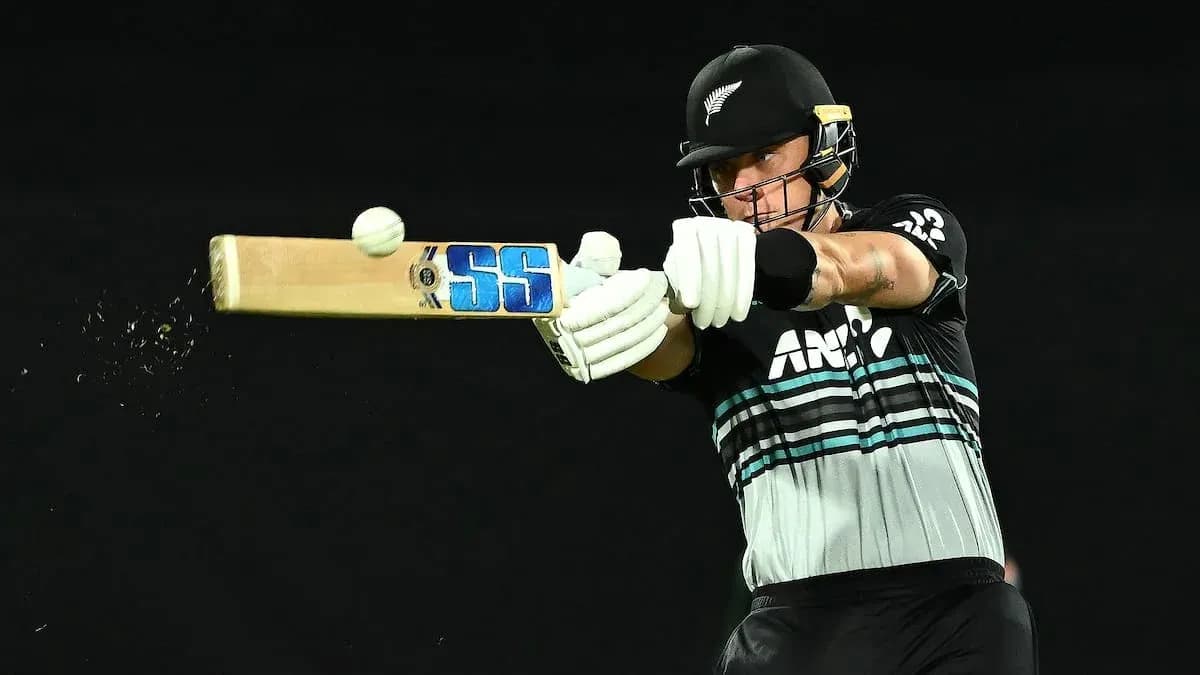
Ollie Robinson Enters Cricketing History at Lord's

On a grey Lord’s afternoon, with Pakistan digging in and England’s patience thinning, Ollie Robinson did far more than tilt a Test match. He quietly stepped into a corner of cricketing history.
With a four-wicket burst in Pakistan’s fourth innings of the second Test, Robinson not only hauled England to the brink of victory, he also moved past Jasprit Bumrah to claim the best Test bowling average of any bowler with at least 20 matches in the last century.
That is not a typo. Not a hot streak. A body of work.
A modern number that belongs in black and white
By the time tea arrived on day four, Robinson’s figures in the innings read 4 for 24. Across the match, he had eight wickets for 35 runs. Those numbers dragged his career average down to around 19.5, nudging him in front of Bumrah’s 19.79 among bowlers who debuted after 2000 and have played at least 20 Tests.
The raw ledger is stark. At this point in his career, Robinson has 99 wickets from 23 Tests, spread over 43 innings, at 19.53 apiece. His best innings return remains 5 for 39.
Only the sepia names of another era sit ahead of him on the all-time charts for bowlers with a minimum of 20 Tests. W Barnes, SF Barnes, R Peel, J Briggs – giants of the late 19th and early 20th centuries – occupy the rarefied air below an average of 18. In that company, Robinson’s 19-and-a-bit stands out as the modern outlier, the contemporary figure on an old, yellowing list.
Bumrah, the benchmark of this generation, now chases him. The India spearhead has 234 wickets in 52 Tests at 19.79, with best figures of 6 for 27. It takes an exceptional record to shade that. Robinson’s numbers currently do.
Breaking Pakistan, breaking through
The historical milestone arrived in the middle of a spell that felt far more visceral than statistical.
Pakistan, chasing 389, had staggered to 14 for 3 before Saud Shakeel and Shan Masood dug in. They batted together for almost four hours, grinding out a 97-run stand that changed the mood at Lord’s. England’s seamers, so dominant early, began to look exasperated. Appeals grew louder. Glances at the ball became more frequent. The scoreboard inched, then crept, then began to move with intent.
Shakeel led the defiance. He reached his 15th Test fifty from just 54 balls, refusing to retreat into his shell. His strokeplay carried Pakistan’s hopes, his 78 becoming the highest score of the innings and their most convincing resistance of the series. Masood did the opposite job. He made 26 but, more importantly, soaked up time and deliveries, a captain setting his jaw and refusing to budge.
For a long stretch after lunch, England looked short of answers. Jofra Archer and Robinson had earlier threatened to rip through the middle order in helpful conditions, but as the ball softened and the partnership grew, the sense of control slipped. The hosts asked the umpires to inspect the ball more than once. The crowd shifted in their seats. A chase that had looked fanciful began to feel, if not likely, then at least plausible.
Then Robinson came back.
Smith up to the stumps, Robinson into the book
Jamie Smith walked up to the stumps, a statement of intent as much as a tactical tweak. Robinson shortened his length, went fuller, hunted pads and stumps.
The pressure told almost instantly.
Masood, initially given not out after missing an inswinger, looked relieved as the umpire’s finger stayed down. England reviewed. The technology showed the ball thudding in line with leg stump. Decision overturned. Pakistan’s anchor gone, lbw, and the Lord’s murmur turned into a roar.
Robinson was in rhythm now, the familiar, repeatable action delivering ball after ball on a nagging line. Mohammad Rizwan tried to break the stranglehold with a swat across the line. He missed. The ball struck him in front. Another lbw, another key wicket, and with it the last serious thread of Pakistan’s resistance.
By tea, Pakistan were 140 for 5, still miles away from 389. Robinson, with 4 for 24 in the innings and eight for 35 in the match, had ripped the game back into England’s hands and, almost as a side note, climbed above Bumrah on the bowling-average list.
A modern craftsman in elite company
Strip away the context and Robinson’s figures already look absurd: 99 wickets, 23 Tests, 43 innings, average 19.53. But what makes this landmark resonate is who he has gone past, and where his name now sits.
The roll call of best Test bowling averages (minimum 20 Tests) has long been dominated by Englishmen from another age. W Barnes, whose last Test came in 1890, took 51 wickets in 21 matches at 15.54, with best figures of 6 for 28. SF Barnes, the legendary destroyer who finished in 1914, claimed 189 wickets in 27 Tests at 16.43, taking 9 for 103 at his peak. R Peel (101 wickets at 16.98) and J Briggs (118 at 17.75) round out the cluster of late-19th-century maestros.
Into that group walks OE Robinson, debut year 2021, updated to 2026, with an average under 20 in an era of heavier bats, flatter pitches and unrelenting schedules.
The comparison is imperfect across eras, but the scale of the achievement is not. Among bowlers who began their careers this century and have played 20 or more Tests, nobody has been more efficient than Robinson. Not even Bumrah, whose own record has rightly been hailed as generational.
One wicket from three figures, and a bigger question
For England, the immediate story is simple: Robinson’s spell at Lord’s has put them within touching distance of a series-shaping win over Pakistan. For the statisticians, it has created a new reference point in the modern game.
For Robinson himself, one more number now looms. He is a single strike away from 100 Test wickets, a milestone that tends to separate promising careers from fully formed ones.
He has already forced his way onto a list once thought closed to contemporary names. The real intrigue now is not whether he belongs there, but how long he can stay.