Nigar Sultana Steps Down as Bangladesh T20I Captain After Asian Games Loss
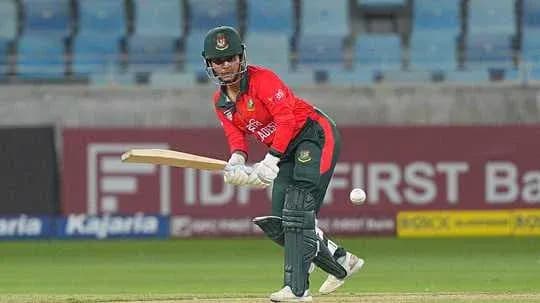
Nigar Sultana has never been one to hide. Not behind numbers, not behind excuses, and certainly not behind the captaincy.
On Sunday, after Bangladesh were dismantled by India in the Asian Games T20 semi-final, she walked into the mixed zone with the scoreboard still echoing in everyone’s mind: a 114-run defeat, a chase that never really started, a batting unit that folded for 81 in 15.4 overs.
And then she confirmed it. She is stepping down as Bangladesh’s T20I captain.
Stepping down, not walking away
The timing raised eyebrows. A heavy defeat, questions about support from the board, and a leader relinquishing the armband. It looked, from the outside, like a reaction to a bruising period.
Nigar dismissed that notion immediately.
“No, it's totally false that I left because I was hurt,” she told reporters after the game. “As a batter, as a player, I have a lot more to give to my country and my team. So I want to focus on that, and that's why I made this decision.”
This wasn’t a snap call made in the emotional wreckage of a semi-final loss. She had already informed the board, after the Asian Games, that she did not want to continue as T20I captain. The decision had been brewing; Sunday simply made it public.
She will lead the side one last time in the format in the bronze medal match against Pakistan. After that, the responsibility shifts. Her focus, she insists, will narrow to the crease.
Shafali’s storm and a gulf in class
Before the captaincy talk, there was the cricket. And the cricket was brutal.
Asked to bowl first at Korogi Sports Park in Nisshin, Bangladesh ran straight into a hurricane named Shafali Verma. India’s opener unleashed her full range, thumping an unbeaten 100 from just 49 balls — her maiden T20I hundred — and dragging India to a towering 195 for 4.
Bangladesh’s bowlers never truly found control. The fielders chased leather. The pressure mounted over by over, and by the time the innings closed, the target already felt like a statement as much as a score.
The chase confirmed it. Bangladesh looked rattled from the first over. There was no platform, no anchor, no partnership of substance. Wickets fell in clumps, the innings disintegrating long before the required rate became the real enemy.
“When you're chasing a big total, this kind of collapse is natural,” Nigar admitted, not to excuse but to explain. “With slightly better bowling, we could have restricted them to fewer runs.”
The honesty cut deeper a moment later.
“When a team collapses for so few runs, we as batters definitely took no responsibility. If even one top-order batter had stayed till the end, we could have added more runs.”
On the same pitch earlier in the day, Sri Lanka had scratched and fought their way to 107 against Pakistan. That total suddenly looked like a world away for Bangladesh.
Preparation, or the lack of it
The gulf in execution wasn’t just about skill on the day. Nigar pointed to the build-up, or what little there was of it.
Rain in Japan had ripped through their plans. Training sessions were washed out. Their scheduled warm-up match against China never materialised. Even their official game against China in the tournament was abandoned, robbing them of valuable time in the middle.
“We have virtually no training facilities here,” she said. “Had we played that first match against China, it would have been much better for the whole team. But we missed that opportunity too. Overall, I'll say the entire team played very poor cricket.”
There was no attempt to hide behind the weather alone. The conditions hurt them, but so did their own performance. Both truths sat side by side in her assessment.
One last toss, one more fight
The Asian Games gold medal is gone. India march on; Bangladesh must reset quickly.
What remains is a bronze medal match against Pakistan — a fixture that carries its own edge, its own history, and for Nigar, its own significance. It will be her final outing as T20I captain.
“We have a good record against Pakistan. There is a sense of positivity there,” she said, looking ahead rather than back.
A captain stepping down, a team licking its wounds, and a medal still on the line. For Nigar Sultana, the question now is simple: can her last act as T20I leader end not in introspection, but in a statement win that sets the tone for the next chapter of her career with the bat?