Namibia Cricket Ground Hosts Exciting T20I Tri-Series
The lavender tells you this isn’t just another cricket ground.
It runs along the outer wall of the Namibia Cricket Ground in Windhoek, soft purple against a hard country. In a sport where grass is usually the only greenery that counts, the scent and colour feel almost subversive. A reminder that this is new territory for the game – and that it’s ready for a proper spotlight.
That arrives on Friday.
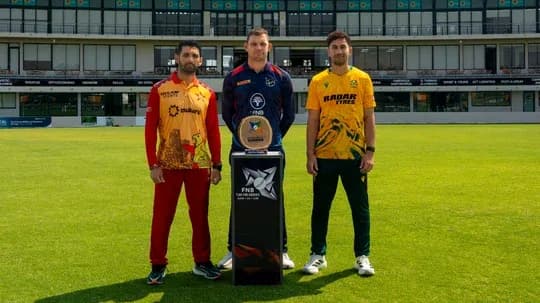
Namibia, South Africa and Zimbabwe will lock into a brisk, bruising T20I tri-series from August 28 to September 6, the most significant assignment yet for a venue that has quietly become one of the most attractive and well-appointed grounds in the world game.
Since March last year, the NCG has hosted 17 completed men’s white-ball internationals, the same number of women’s T20Is, and eight men’s under-19 ODIs. Useful work. Solid grounding. But this is different. This is the first time two ICC Full Members walk through those gates for a men’s series.
One of them already knows what it feels like to be ambushed there.
The memory that won’t fade
In October last year, South Africa arrived in Windhoek for what many thought would be a routine T20I against their neighbours. Namibia had other plans. The Eagles dragged the game to the last ball and then ripped it away, winning by four wickets in their first-ever meeting with South Africa in any format.
No one in Windhoek has stopped talking about it since. Nor have they stopped toasting it.
Namibians don’t need much of an excuse to raise a beer. Neither do South Africans or Zimbabweans. Over the next 10 days, with afternoon starts at 2pm local time (also 2pm in South Africa and Zimbabwe, 5.30pm IST), the stands and grass banks will fill with noise, colour and, inevitably, a fair amount of lager. Someone joked this could have been called the Thirsty Cup. They weren’t far off.
But the expectation is that the revelry will stay on the right side of the line. This is not Derby on a Saturday night, and no one here is looking to reprise Brydon Carse’s recent brush with the police and English cricket’s ever-thickening file of after-hours embarrassments.
David Gower, never shy of a drink in his own playing days, summed that saga up neatly on the BBC’s Radio 4 Today programme: “I don’t think the side does. I think the odd individual does, and in this case I think it’s largely a stupidity problem.”
Southern Africa, by contrast, tends to know how to enjoy itself and still go home unhandcuffed and in one piece. And it can play.
A format that levels, a region that bites
Namibia’s captain, Gerhard Erasmus, has long argued that T20 is the great leveller. He put it plainly again this week: in this format, two star performers on the day can drag an associate side up to the next rung and tip a result.
That’s exactly what happened against South Africa last October. No one in green and gold walked away thinking Namibia had stolen it. They were simply better. Bjorn Fortuin, who played that day and now captains this experimental South Africa squad, didn’t sugar-coat it at Thursday’s captains’ press conference: it “wasn’t a fun experience” and they were “beaten by the better team on the day”.
The schedule is tight and unforgiving. Across the 10 days, only three will be free of cricket, and each team must cope with back-to-back fixtures. Fatigue will be a factor. So will nerve. The compressed calendar could distil a distinctly southern African style: hostile pace, sharp, stabbing fielding, hard-nosed batting and a refusal to accept the script when defeat seems to be looming.
The conditions: not just a hitters’ paradise
Those expecting flat-track mayhem might be surprised. In 13 men’s T20Is at this ground, teams have breached 200 only three times. There have been two centuries and eight half-centuries, but the bowlers have had their say: six four-wicket hauls, four of them by seamers, underline that there’s something in it for those willing to bend their backs.
The forecast helps. Sunshine, dry air, temperatures in the mid to upper 20s Celsius. Perfect for quicks to hit the deck and spinners to grip, and for batters to trust their strokes once they’re in.
Namibia: lavender, steel, and a World Cup return
Namibia arrive with a sense of continuity and a couple of intriguing wrinkles.
Justin Kemp, the former South Africa allrounder, will sit in the home dugout as assistant coach, adding a layer of experience from the other side of the fence. Michael van Lingen, who last played a T20I at the 2024 World Cup, has come out of retirement to rejoin the cause.
Their likely XI looks settled and familiar: Jan-Nicol Loftie-Eaton and Junior Taanyanda up top, Erasmus himself anchoring and marshalling, Alex Busing-Volschenk and Zane Green in the middle, JC Balt and Jan Frylinck offering ballast and overs, with Max Heingo, Bernard Scholtz, Waldo Smith and Jack Brassell rounding out a unit that can scrap with anyone.
They know this ground. They know this crowd. They know they can beat a Full Member here because they already have.
South Africa: risk, reward, and a thin safety net
South Africa, by contrast, have leaned into experimentation.
Jason Smith has been ruled out with an inner thigh strain, trimming their options further. Eathan Bosch remains uncapped in T20Is, Duan Jansen in any international format. This is not a full-strength side; it’s a laboratory.
The probable XI tells the story: Tony de Zorzi and Lhuan-dré Pretorius at the top, Connor Esterhuizen and Dewald Brevis supplying the promise and fireworks, Rubin Hermann and Prenelan Subrayen adding heft and spin, with Jansen, Fortuin, Kwena Maphaka, Lutho Sipamla and Nqobani Mokoena forming a varied attack.
There is talent everywhere. There is also risk everywhere. Against first-choice Namibia and Zimbabwe outfits, the margin for error shrinks. But that is precisely why this tour exists: to find out who can handle pressure, travel, unfamiliar conditions and the weight of a national shirt without the comfort blanket of senior stars.
Lose the series, and South Africa will hear about it. Win it with this group, and several careers could change course.
Zimbabwe: experience back, firepower missing
Zimbabwe arrive with their own blend of reassurance and concern.
Graeme Cremer returns from an arm injury that has kept him out for more than 17 months, a welcome injection of experience and guile. But Richard Ngarava, their left-arm spearhead, misses out with a lower back problem, and Brendon Taylor has been dropped, removing a familiar middle-order presence.
Their likely XI still bristles with threat: Brian Bennett and Ben Curran at the top, Dion Myers in support, Sikandar Raza captaining and controlling the middle, with Wessly Madhevere, Tadiwanashe Marumani and Brad Evans offering depth and aggression. Newman Nyamhuri, Cremer, Wellington Masakadza and Blessing Muzarabani form a varied attack that can strangle or strike, depending on the day.
Raza’s side know they cannot afford to drift. With Ngarava absent, discipline and clarity become non-negotiable.
A series with teeth
Strip away the lavender and the laughter and this tri-series has an edge.
For Namibia, it’s a chance to prove last year’s win over South Africa wasn’t a one-off, but a marker. For Zimbabwe, it’s a test of depth and direction under a captain who demands standards. For South Africa’s fringe, it’s an audition in full view, with no hiding place.
The T20 format offers the perfect stage for all of that. One over can flip a game. One partnership can tilt a campaign. One unknown name can walk out of Windhoek as the player everyone suddenly wants to talk about.
No one will begrudge it if the trophy ends up in hands other than South Africa’s. Not here, not after what this ground has already witnessed. The only certainty is that when the last ball is bowled on September 6, the scent of lavender will still hang in the air – and someone, somewhere on that outfield, will have changed their cricketing future.