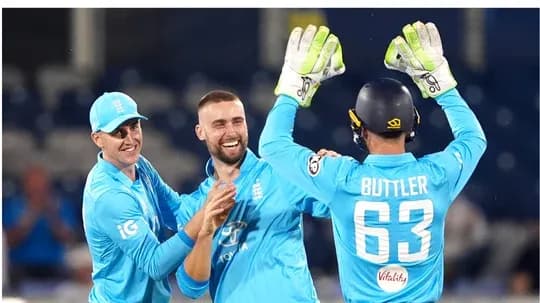
Mitchell Santner Prepares for India's ODI Challenge in New Zealand
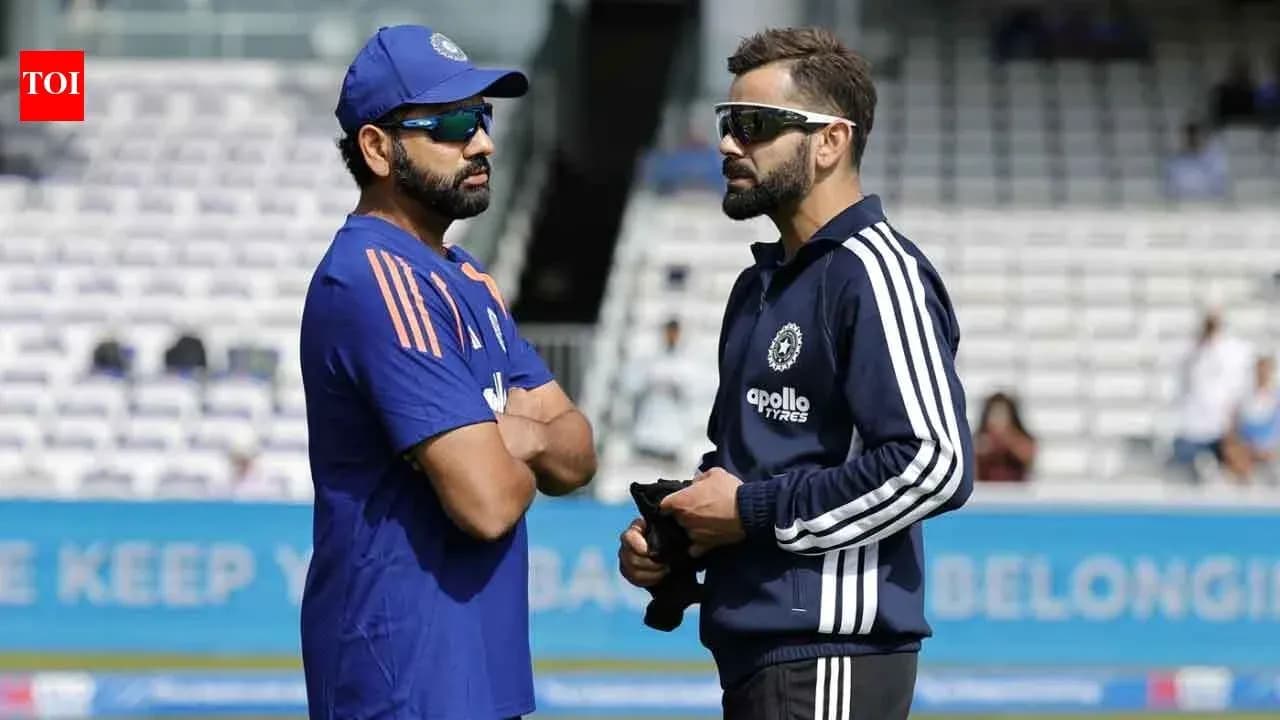
Mitchell Santner knows what’s coming. And he’s under no illusions about how hard it will be when two of ODI cricket’s most seasoned operators, Virat Kohli and Rohit Sharma, walk back into New Zealand later this year.
The pair have stepped away from Tests and T20Is, but remain India’s standard-bearers in the 50-over game. Their next assignment: a long, demanding tour of New Zealand in October-November 2026 – five T20Is, five ODIs and two Tests – that doubles as a crucial staging post before the 2027 World Cup.
“They are still very good players… masters of the ODI game,” Santner told PTI, acknowledging the obvious. Kohli and Rohit have thrived in New Zealand conditions before. Santner’s hope is blunt: not this time.
ODI focus: New Zealand target India at home
For New Zealand, the first box to tick is clear. Beat India in a home ODI series.
“We’ve got five (matches) against India, three against Sri Lanka at home and then it is World Cup prep in England (in September 2027), right before the World Cup,” Santner said. The roadmap is set, but the priority is short and sharp. “First things first, you want to win a series against India at home, which would be an awesome thing. Then it is trying to find what the make-up might look like come October next year.”
The schedule is relentless. India arrive for five T20Is across Christchurch, Wellington, Auckland and Hamilton, starting October 22. The ODIs follow from November 4, taking in Eden Park, Sky Stadium, Seddon Park and a double-header finish at Bay Oval in Mount Maunganui. The red-ball leg closes the tour: Tests at the Basin Reserve and Hagley Oval from November 19–23 and November 27–December 1.
Every game feeds into the same question for both sides: what will their best XI look like when the World Cup in England rolls around in 2027?
Memories of a 3-0 shock – and a changing India
When Santner talks about India and Test cricket, his mind drifts back to a landmark series. The last time the two teams met in Tests, in India, New Zealand stunned the hosts 3-0, snapping a home unbeaten run that had stretched over 12 years and 18 series.
Santner was at the heart of it. His match figures of 7/53 and 6/104 in the second Test in Pune sealed the series and etched his name into New Zealand’s recent red-ball history.
Now, the landscape looks different. India’s Test side is in transition. Several players could be facing red-ball cricket in New Zealand for the first time, on pitches that behave nothing like the ones back home.
“I think what we spoke about before is trying to adapt quickly,” Santner said, reflecting on what awaits a “new-look” India. For some of them, the ball will nip and swing in ways they simply don’t see in India. “The pitches will be a little bit foreign. They will probably do a bit more than they might do back home.”
A “well-rounded” India and a tricky New Zealand spring
Respect runs both ways. Santner has studied the current India squad and sees a side that can hurt teams in all conditions.
“If you look at their squad, it is a very well-rounded squad,” he said. The names roll off the tongue. Jasprit Bumrah leading the attack again. Mohammed Siraj’s relentlessness. Prasidh Krishna’s bounce. Ravindra Jadeja’s control and all-round value. Manav Suthar offering another spin option. A likely fourth seamer to round it all off.
“It is shaping up nicely. I think it is going to be a great series. Traditionally, it can do a little bit in New Zealand at that time of the year,” Santner added. Seam, swing, overhead conditions – all of it tends to tilt the early exchanges towards the bowlers.
‘Fight fire with fire’: the blueprint for Tests in New Zealand
Santner’s view of how to survive – and win – in New Zealand is refreshingly aggressive. Batters, he believes, can’t just bunker down and hope.
“It could be trying to fight fire with fire, playing your shots,” he said. At times, the best form of defence might be to counterpunch, disrupt lengths, and force bowlers off their preferred plans.
But there’s a flip side. “There might be times we need to sit back and let the bowlers go for a bit, try to get the shine off the ball.” Leave well, defend hard, drag the game deep. The challenge for both teams will be to judge those moments correctly. Misread them, and a Test in New Zealand can race away in a single session.
“There is a lot that can go on in the Test matches in New Zealand,” Santner said. “It is going to be an exciting series and one that we can't wait for.”
Why only two Tests?
One question lingers around the tour: why just two Tests between two heavyweight sides?
Santner didn’t dodge it. New Zealand, he pointed out, have long played shorter Test series. Money matters, too. “For a long time, New Zealand played two-match series. There’s obviously the money side of it as well. I know it costs a lot to play Test cricket. (It is about) timing as well; white-ball brings in the crowds in New Zealand, it brings the money. That's why I guess it is the 10-2 split.”
Five T20Is, five ODIs, two Tests. The balance reflects the modern game’s economics more than its romantic ideals.
Yet the significance of those two Tests is not diminished. “Whenever India come, even if it is only two Test matches, it is going to be exciting,” Santner said. The stakes are obvious: World Test Championship points, a chance to measure up against one of the strongest red-ball outfits, and the kind of pressure that shapes careers.
“Everyone wants to challenge themselves against the best in the world and they are up there,” he added.
By the time India land in October 2026, Kohli and Rohit will be sharpening for one more World Cup cycle, New Zealand will be hunting a statement series win at home, and the Test specialists on both sides will be bracing for conditions that rarely forgive hesitation.
The fixtures are inked in. The questions, for now, are not.