Mark Wood Retires: A Fast Bowler's Journey Ends
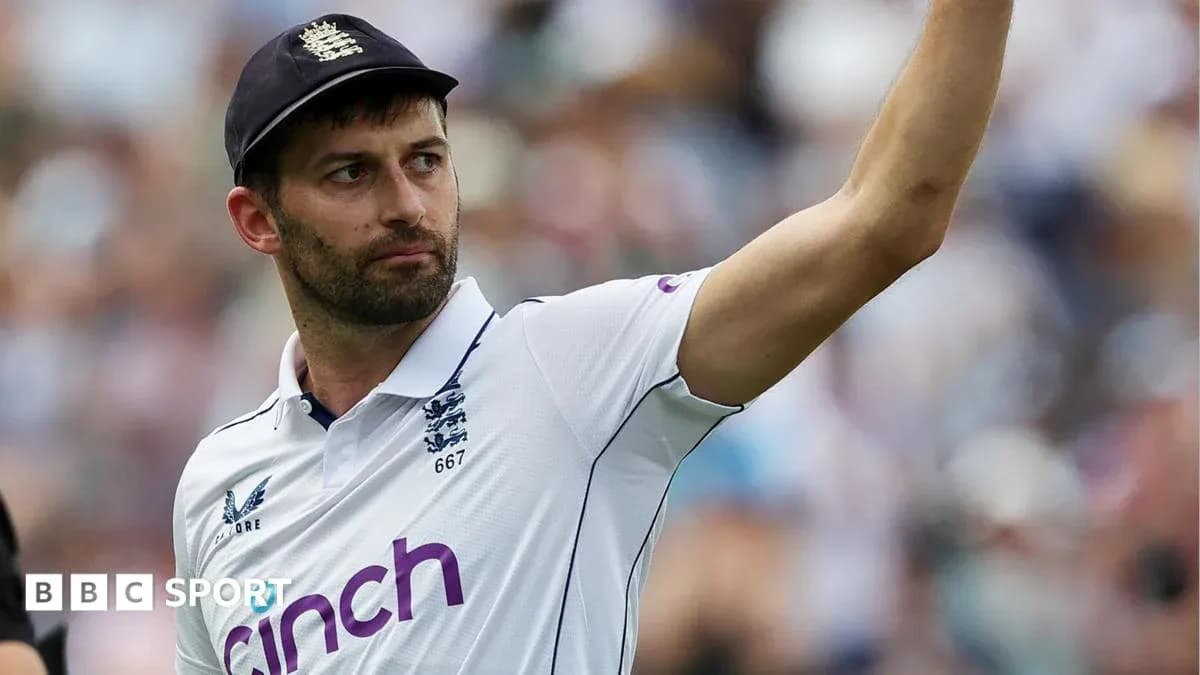
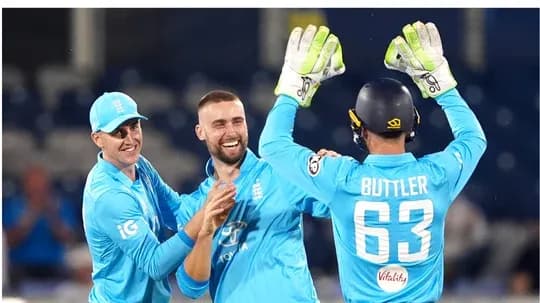
Mark Wood, one of the fastest bowlers ever to pull on an England shirt, has brought down the curtain on his international career with immediate effect – not with a roar, but with the weary honesty of a body that has finally said no.
The 36-year-old Durham quick, who spent a decade defying medical bulletins and common sense, confirmed his decision in a statement on social media, admitting the last year had slowly stripped the England dream from him.
“Although this may not come as a surprise given the past year, it just feels like a natural time at the end of my contract,” he wrote. “I’ve always tried to be resilient and come back from injury to prove people wrong and show everyone what I can do. Unfortunately, this time I lost the battle.
“On medical advice, Test cricket and 50-over cricket are not possible, so the England dream has slowly been ground out of me over the last year. Playing for England has been the greatest honour I could have ever wished for and a dream come true.”
He hopes to keep playing in some form. Internationally, though, the last ball has been bowled.
A career of speed and scars
Wood’s story has always been a race against his own body. When he finally returned to Test cricket in the first Ashes Test in Perth last November, it was after 15 months out: first an elbow injury, then knee surgery. England gambled that his pace could ignite another series.
They got just 11 overs.
Swelling in the same left knee ended his tour before it had really begun. He flew home for treatment and never played for England again.
That abrupt finish sits in stark contrast with the raw numbers and the vivid memories he leaves behind. Wood took 119 wickets in 38 Tests after his debut in 2015, the summer he helped England reclaim the Ashes on home soil. In white-ball cricket he finishes as England’s sixth-highest wicket-taker in men’s T20s, with 54 wickets in 38 matches, and 80 in 70 one-day internationals.
Those statistics only hint at the effort behind them. His career is a catalogue of ankle, knee and elbow problems, each comeback built on stubbornness and pain tolerance. The human body is not designed to bowl fast. Wood kept trying anyway.
In 2018, in an attempt to protect himself, he lengthened his run-up. It looked like a concession. It became a weapon. The new approach did nothing to dull his pace and allowed him to play central roles in England’s biggest recent triumphs.
He was part of the side that won the 2019 50-over World Cup, taking 18 wickets in the tournament and hobbling out to bat with Ben Stokes on that unforgettable day at Lord’s. He was in the squad that lifted the T20 World Cup in 2022, though a calf injury ruled him out of the closing stages.
When it clicked, it crackled
Anyone who has tried to bowl fast knows the fantasy: sprint in, unleash, watch the batter flinch and the stumps explode. Mark Wood lived that fantasy in real time.
The image of him tearing in, often bowling himself off his feet, became one of the great sights in modern cricket. It wasn’t just the speed gun numbers. It was the sense that something could happen at any moment – a glove through to the keeper, a middle stump cartwheeling, a batter beaten for pace and nerve.
He connected with crowds in a way few fast bowlers manage. The grin, the self-deprecation, the willingness to play the clown in warm-ups and interviews. He never seemed to forget that cricket is supposed to be fun, even while his body paid the price for every spell.
There will always be the question of what more he might have achieved with a kinder body. Yet when the stars aligned, he was devastating.
St Lucia in 2019 was the warning shot. With his remodelled, longer run-up, Wood ripped through West Indies in a ferocious spell that announced what this version of him could do. England had a genuine 90mph-plus strike bowler who could change a match in an hour.
He repeated the trick in harsher conditions. On the grim Ashes tour of 2021–22, when so many of his team-mates struggled, Wood emerged with credit, hammering away at high pace on unforgiving pitches.
Then came Headingley in 2023.
The Headingley roar
Held back until the third Test of that Ashes series, with England already 2-0 down, Wood arrived like a storm. The ball fizzed. The crowd rose. Australia, so assured in the first two matches, suddenly looked hurried.
In one of the great Ashes spells, he sent down a 95mph thunderbolt that uprooted Usman Khawaja. It felt like a statement: England had their enforcer back, and the series had a different edge.
He wasn’t done. In a tense run chase at the end of that Test, Wood was still there, this time with the bat, alongside his close friend Chris Woakes. Two players England had delayed picking dragged them over the line and back into the series. Without them, that summer could have been a rout.
Those days now stand as part of his farewell show, even if nobody realised it at the time.
World titles and an exclusive club
Wood’s CV carries a rare distinction. He is one of a small group of England players to have won both the 50-over and T20 World Cups and also tasted Ashes glory. He was part of the last England side to win back the urn in 2015, a marker that underlines how the landscape has shifted.
With his retirement, Joe Root is the only current England Test player left who has experienced an Ashes win.
Rob Key, managing director of England men’s cricket, paid tribute to a bowler who changed matches and atmospheres.
“It’s been a privilege to watch the latter part of a great career,” Key said. “To have been a point of difference in Ashes series wins, two World Cup wins, and to have thrilled crowds every time he got the ball in his hand is something very few players achieve. He can look back with enormous pride on a career very well spent.”
The end of an era
There was no final surge in Australia, no last spell of hostility to bookmark the end. The long recovery from elbow and knee issues did not bring back the pace England craved down under. Wood managed only that first Test in Perth and later admitted he felt “ashamed” by how it unfolded.
His announcement confirms what many inside English cricket already sensed: a generational shift in the fast-bowling stocks is complete.
Stuart Broad has gone. James Anderson has followed. Now Chris Woakes and Mark Wood have stepped away from international duty as well. Between them – and including the all-round brilliance of Ben Stokes, whose bowling days appear behind him – England have lost 1,871 Test wickets in less than three years.
The scoreboards will remember the numbers. Supporters will remember something else: the sound of Wood’s spikes pounding in, the ball thudding into the keeper’s gloves at chest height, the batter late again.
England must now find their next wave of pace. The question is simple, and brutal: where do you find another Mark Wood?