Mark Wood Retires: A Fast Bowler's Journey Ends
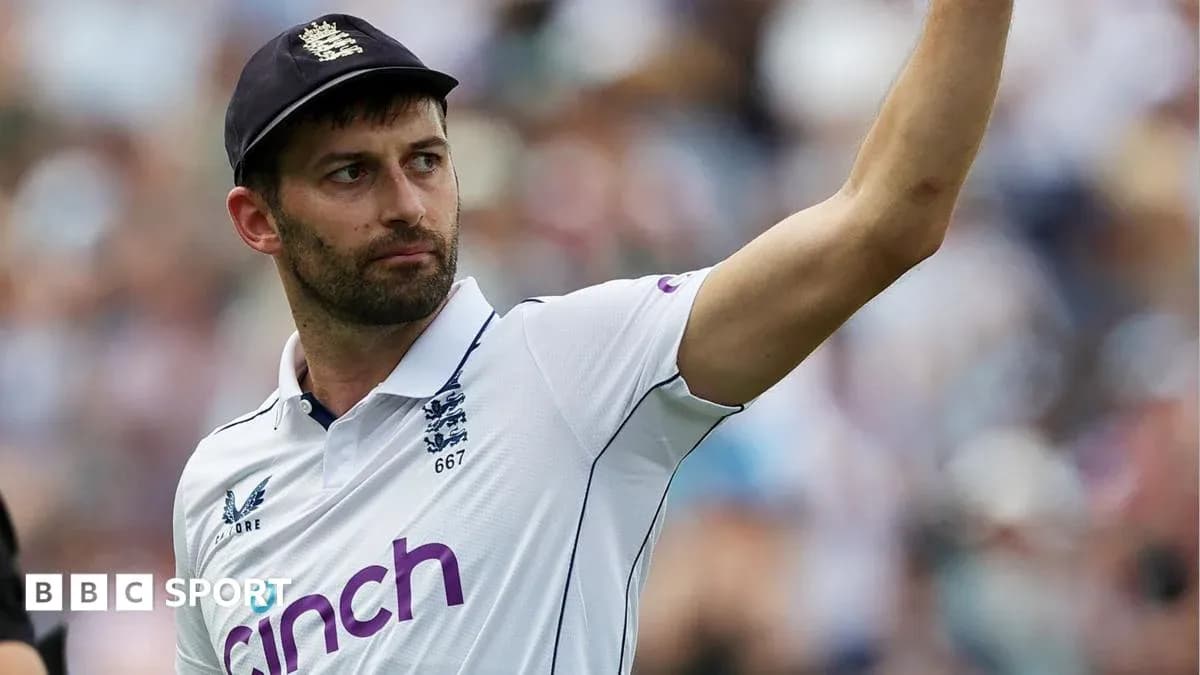
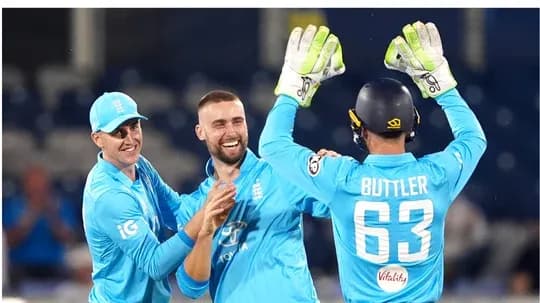
Mark Wood, one of the quickest and most wholehearted fast bowlers England has ever produced, has called time on his international career with immediate effect at the age of 36.
The Durham quick, whose run-up crackled with intent and whose spells so often changed the mood of a series, has finally been worn down by the injuries that stalked him from almost the moment he pulled on an England shirt.
Body gives in before the will
Wood’s latest comeback ended almost as soon as it began. After 15 months out with an elbow problem and subsequent knee surgery, he fought his way back into the side for the first Ashes Test in Perth in November. It was meant to be another chapter in his familiar story of recovery and resurgence.
Instead, it was the full stop.
He managed just 11 overs before swelling flared up again in his left knee. The same knee. The same doubts. Within days he was on a plane home for treatment. He has not played for England since.
“Although this may not come as a surprise given the past year, it just feels like a natural time at the end of my contract,” Wood said in a statement on social media. “I’ve always tried to be resilient and come back from injury to prove people wrong and show everyone what I can do. Unfortunately, this time I lost the battle.”
Medical advice was blunt. Test cricket and 50-over internationals were no longer realistic options. The body that had hurled the ball at 90mph and beyond for more than a decade had finally said no.
“On medical advice, Test cricket and 50-over cricket are not possible, so the England dream has slowly been ground out of me over the last year,” he wrote. “Playing for England has been the greatest honour I could have ever wished for and a dream come true.”
A career of bursts, not long runs
Wood’s numbers tell one story; the way he achieved them tells another.
He finishes with 119 wickets in 38 Tests, having debuted in 2015 and played a central part in regaining the Ashes on home soil that same summer. Those raw figures sit alongside a medical file that reads like a fast bowler’s cautionary tale: ankle, knee, elbow, and then more knee.
The pattern shaped his career. Short, explosive bursts of availability. Spells that lit up series. Then the familiar sight of him walking off, wincing, the pace that thrilled crowds exacting its price.
In 2018, in a bid to ease the strain, he lengthened his run-up. It was a gamble. The fear was obvious: would the extra steps dull the edge that made him unique?
They didn’t. The speed stayed. The rhythm improved. And for a crucial stretch, England reaped the rewards.
World champion pace
That adjusted action helped Wood carve out a central role in England’s white-ball revolution. He was part of the side that lifted the 2019 50-over World Cup, taking 18 wickets in the tournament as England finally claimed the trophy on home soil.
He was there again in 2022 as England won the T20 World Cup, though injury intruded once more as a calf problem ruled him out of the closing stages. Even in triumph, his body rarely let him enjoy the full ride.
By the time he walked away, Wood had become England’s sixth-highest wicket-taker in men’s T20 internationals, with 54 wickets in 38 games, and 80 wickets in 70 one-day internationals. Not the volume of a long-haul seamer, but the strike-rate and impact of a specialist weapon.
The Ashes spark
If one series captured what Mark Wood meant to England, it was the 2023 Ashes.
England were 2-0 down and teetering. The attack needed something different. Wood returned, ball in hand, pace undimmed, and ripped into Australia with the kind of ferocity that changes not just matches but moods.
His blistering spells were central to England clawing their way back to level the series. Every time he charged in, the crowd rose a little higher. Every time the speed gun flashed, belief seemed to climb with it.
Rob Key, managing director of England men’s cricket, summed up that impact simply: “To have been a point of difference in Ashes series wins, two World Cup wins, and to have thrilled crowds every time he got the ball in his hand is something very few players achieve. He can look back with enormous pride on a career very well spent.”
What comes next
Wood has made it clear he wants to keep playing the game in some capacity. The England chapter is closed, the dream “ground out” by medical reality, but the competitive fire that dragged him through rehab after rehab has not gone out.
He will leave the international stage as a bowler who never quite escaped injury, yet never allowed it to define him on the field. When he did play, he was pure theatre: a sprinting run-up, a whirling arm, and a ball that hurried even the best.
England will find another fast bowler. They always do. Finding another Mark Wood – with that mix of raw pace, vulnerability, and sheer defiance – will be a far harder task.