Mark Wood Retires: England's Speedster Ends International Career
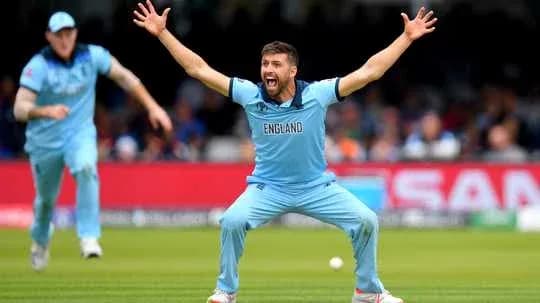
Mark Wood, England’s snarling, smiling speedster, has called time on an international career that burned white-hot for more than a decade.
At 36, and on the back of yet more medical bulletins, Wood has retired from all international cricket, ending an 11-year stint in which he won two World Cups and featured in four Ashes series. His body, not his appetite, has finally said no.
A career at full throttle
Wood arrived in international cricket like a bolt from the blue. He debuted against New Zealand at Lord’s in 2015, a tearaway quick with a whippy action and a habit of hitting 90-plus mph as if it were nothing.
Across 38 Tests he took 119 wickets, often on unforgiving pitches and frequently as England’s enforcer rather than their statistic-chaser. In white-ball cricket he finished with 80 wickets in 70 ODIs and 54 in 38 T20Is, enough to place him sixth on England’s all-time T20I wicket list.
The raw numbers don’t quite capture his value. Wood changed games with pace alone. Captains turned to him when plans had run dry, when batters were set, when the mood needed shaking. He rarely said no, even when his body was screaming it for him.
World champion, twice over
His legacy will always be tied to England’s white-ball revolution.
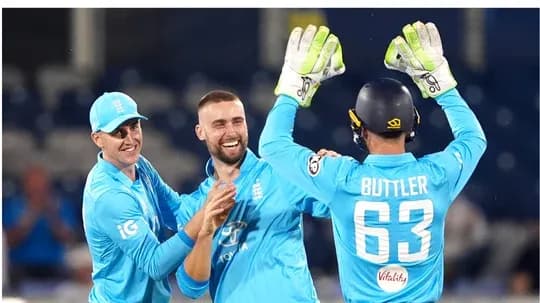
In 2019, on home soil, Wood played a central role in the ODI World Cup triumph that reshaped English cricket. He took 18 wickets in the tournament, repeatedly touching 95 mph, hammering away in the middle overs when others might have eased off. In the final at Lord’s against New Zealand, he bowled through a side strain, refusing to give in on the biggest day of his career as England edged a Super Over epic.
Three years later, on different pitches and under different skies, he helped deliver the T20 World Cup in Australia. Nine wickets in four matches, another trophy, another reminder that when England needed edge and intimidation, they knew exactly where to turn.
Ashes fire and unforgettable spells
Wood’s Test career never followed a smooth arc. It lurched between brilliance and rehab, between roaring spells and long silences.
He played in four Ashes series, leaving fingerprints on two of England’s most cherished recent moments. In 2015, at Trent Bridge, he took the wicket that sealed the series against Australia, sprinting away in celebration as England wrapped up a famous win.
Then came 2023 and Headingley. England were 2-0 down, the Ashes slipping away. Wood returned to the Test side and detonated the series. His spell there was pure theatre: thunderous pace, hostile lengths, Australia rattled. He swung the momentum back England’s way and helped drag the series to a 2-2 draw that felt, in context, like a rescue act.
The toll of pace
The price for all that speed was steep. Injuries shadowed him throughout his career, each comeback a battle against time and physiology.
His last appearance for England came in the Ashes Test in Perth last November, another outing that ended with another breakdown. This time, the medical advice was blunt. No more Test cricket. No more 50-over cricket. The formats that had defined him were now off-limits.
“I’ve made the decision to retire from international cricket,” Wood said, explaining that the end of his contract and a year of setbacks had forced his hand. He spoke of resilience, of always trying to come back and prove people wrong, then admitted that this time he had “lost the battle”.
On medical advice, he said, Test and 50-over cricket “are not possible”, and the England dream had been “slowly ground out” of him over the past year.
Pride, and a final bow
If there was sadness in his words, there was also deep satisfaction.
“Playing for England has been the greatest honour I could have ever wished for and a dream come true,” he said. He talked about the “little lad” inside him who would have been “so chuffed” to play so much for his country, about travelling the world, meeting “incredible people” and facing the best while doing something he loved.
Inside the England camp, there is no doubt about the mark he leaves. Rob Key, England men’s managing director, called it “a privilege to watch the latter part of a great career”.
Key highlighted Wood’s role as a “point of difference” in Ashes wins and World Cups, and a bowler who “thrilled crowds every time he got the ball in his hand”. Not many players, Key noted, can say that. Wood can.
He walks away with two World Cups, Ashes memories etched into folklore, and a reputation as one of the quickest, most wholehearted fast bowlers England have produced. The speed gun will fall silent now on the international stage, but the image of Mark Wood charging in, body on the line, will linger long after the bruises fade.