Mark Wood Retires: A Journey of Speed and Resilience
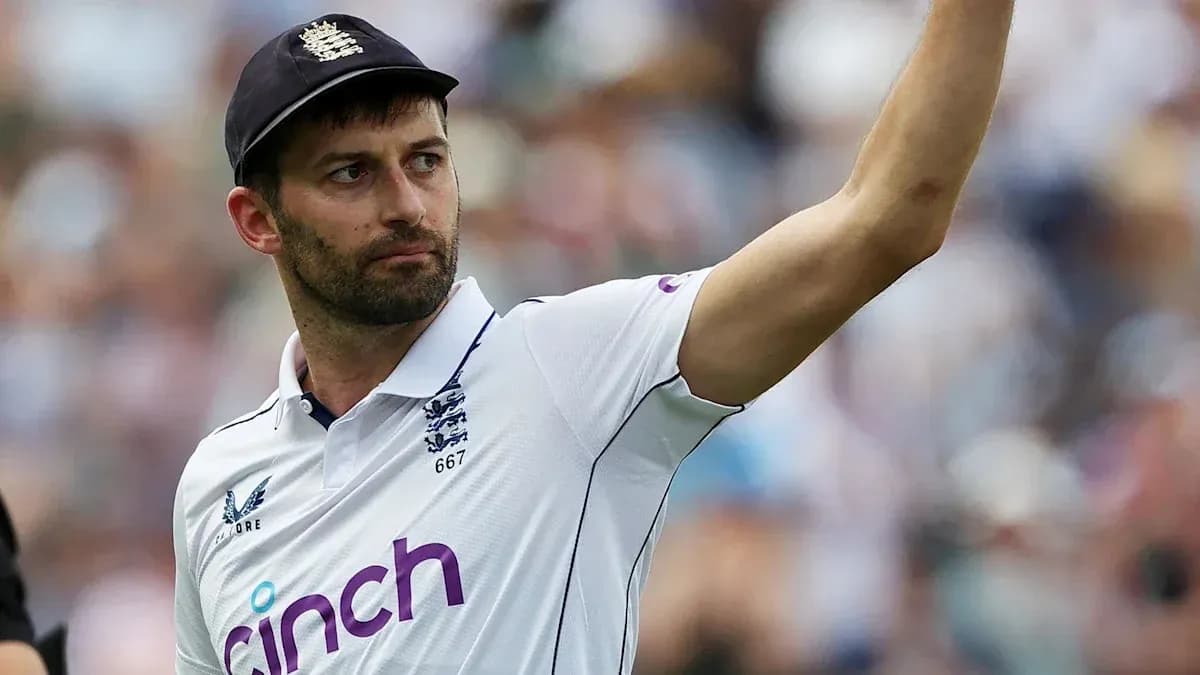
Mark Wood, England’s 95mph firebrand with a body that never quite kept pace with his heart, has walked away from international cricket.
At 36, one of the quickest bowlers ever to pull on an England shirt has called time with immediate effect, his England dream finally broken not by batters, but by his own knees, elbows and ankles.
A career that never stopped hurting
Wood’s story has always been a race against his own body. The Durham quick only resurfaced for England in the first Ashes Test in Perth last November after 15 months out, a stretch that included elbow trouble and knee surgery. He bowled 11 overs. That was it.
The same left knee swelled up again, he flew home, and he never came back.
“Although this may not come as a surprise given the past year, it just feels like a natural time at the end of my contract,” Wood said in a statement on social media. He spoke of resilience, of trying to prove people wrong, of one last comeback that never arrived. “Unfortunately, this time I lost the battle.”
Medical advice drew a hard line. No more Tests. No more 50-over cricket. The formats that had defined his England identity were suddenly off limits. “The England dream has slowly been ground out of me over the last year,” he admitted. Still, he hopes to keep playing in some capacity, somewhere, somehow.
Numbers that hint at what might have been
The raw figures only tell part of it, but they still demand a second look. Wood took 119 wickets in 38 Tests after debuting in 2015, a strike weapon in bursts rather than a metronome across months. That first summer, he helped England wrestle the Ashes back on home soil.
In white-ball cricket he was just as significant, if not more so. He finishes as England’s sixth-highest wicket-taker in men’s T20 internationals, with 54 wickets from 38 games. In one-day internationals he collected 80 scalps in 70 matches, a key piece in Eoin Morgan’s and then Jos Buttler’s pace armoury.
But the numbers also trace the damage. Ankle, knee, elbow – the catalogue of injuries reads like a medical report for a fast bowler pushed to the limits. In 2018, in an attempt to ease the strain, he lengthened his run-up. It looked like a gamble. It worked.
The pace stayed. The impact grew.
World champion, Ashes winner, crowd favourite
The remodelled Wood thundered into the 2019 World Cup and left with a medal. He took 18 wickets in that tournament, part of the XI on the surreal, unforgettable day at Lord’s when England finally lifted the trophy. Even then, he was batting through injury, limping out to join Ben Stokes in the chaos.
Three years later he was again part of history, named in the squad that won the T20 World Cup in 2022. A calf problem cut short his tournament before the final stages, a familiar sting in the tale, but his role in getting England there was clear.
He also belongs to a tiny club: players who have won both World Cups and the Ashes. He was part of the 2015 side that last regained the urn. With his exit, Joe Root stands alone as the only current England Test cricketer to have tasted Ashes victory.
Rob Key, England men’s managing director, did not hide his admiration. He called it “a privilege to watch the latter part of a great career,” pointing to Wood’s role as a “point of difference” in Ashes wins, two World Cups and countless days when he electrified a crowd simply by taking the ball.
The thrill of pure speed
Anyone who has ever tried to bowl fast knows the fantasy: sprint in, hurl the ball, watch it explode off the pitch. Wood lived that fantasy in real time.
The image is fixed now in the game’s memory. Shirt billowing, knees pumping, that elongated run-up eating the turf, then the violent snap at the crease that so often sent him skidding off his feet. He bowled himself to the ground, literally, in pursuit of pace.
Few in England colours – few anywhere – have matched that speed. But it was never just velocity. Wood connected with people. He laughed with them, played up to them, never took himself too seriously. He always seemed to remember that cricket, even at its most intense, is supposed to be fun.
Still, the nagging question will follow him: what if? What if those ankles had held, that elbow had behaved, that knee had not ballooned in Perth? The human body is not designed for this job, and Wood’s body paid more than most.
When it held together, though, it was devastating. His demolition of West Indies in St Lucia in 2019, armed with that longer run-up, felt like a statement. This is what he could be, if only the stars would keep aligning.
Ashes lightning at Headingley
They did again in 2023. England were 2-0 down in the Ashes, clinging to the series by their fingertips. Wood had been held back until the third Test. When he finally appeared at Headingley, the temperature of the contest changed instantly.
He bowled at what looked like the speed of light. One spell in particular will live with England supporters for years: Wood hurtling in, a 95mph thunderbolt, Usman Khawaja’s stumps flattened. It was one of those Ashes moments that cuts through the noise and lodges itself in folklore.
His impact wasn’t confined to the ball. In a frantic, nerve-shredding run chase at the end of that Test, Wood was at the crease with his close friend Chris Woakes, nudging and swinging England over the line. Both had been recalled for that match. Without their combined surge that summer, England’s Bazball bravado might have been buried under a 4-0 scoreline.
No last stand in Australia
There would be no encore in Australia. After elbow and knee problems, England hoped his pace would ignite another Ashes tour. It never happened. He managed only the first Test in Perth, below his best, below the speeds that had defined him. Last month he admitted he felt “ashamed” by how it unfolded.
His retirement confirms what many suspected: an era of English pace is closing. Stuart Broad has gone. James Anderson has followed. Woakes has stepped away. Now Wood joins them.
Between them – and if you throw in the all-round heft of Ben Stokes, whose bowling future remains uncertain – England have lost 1,871 Test wickets in under three years. That is not just a changing of the guard. It is a transformation of identity.
Wood, though, leaves with something that can’t be measured in columns of figures. He leaves with the memory of those days when he made batters hop, stumps cartwheel and crowds roar, when the fastest man on the field ran in as if nothing hurt and bowled as if everything did.