Lungi Ngidi Joins South Africa's Injury List Ahead of ODI Series
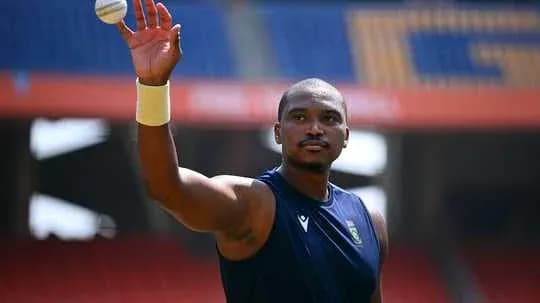
Lungi Ngidi has limped into a club no fast bowler wants to join. The roll of honour is short, grim and growing: South Africa’s injured quicks. He’s the fifth member, and four of them are there for the same reason.
Hamstrings. Again.
Cricket South Africa confirmed on Friday that Ngidi will miss the ODI series against Australia, which starts at Kingsmead on Thursday. Like Kagiso Rabada, Ottneil Baartman and Lutho Sipamla, he’s been cut down by a hamstring strain. Only Nandré Burger breaks the pattern, sidelined after aggravating a long-standing back problem.
It feels like an epidemic. It isn’t, says someone who has spent years watching this cycle repeat.
“It’s not surprising, because if you look at any sport there are two peaks in hamstring injuries — the beginning of the season and the end of the season,” Shuaib Manjra, CSA’s former chief medical officer and national men’s team doctor, told Cricbuzz.
The logic is brutal in its simplicity. At the start of a season, players ramp up too quickly after breaks. Bodies go from relative rest to high-impact overs and sprints. Muscles that aren’t yet conditioned to that spike in workload give way. At the back end, fatigue takes over. Tired muscles fail. Same result. Different route.
Ngidi’s latest setback came in Centurion last Friday, in the opening round of first-class fixtures, turning out for the Titans against the Dolphins. CSA, as with Rabada, have refused to draw a line on when he might return, staying silent on his prospects for the Test series against Australia that begins in Durban on October 9.
Those Tests matter. A lot more than a “relatively random” ODI series.
South Africa are defending their World Test Championship crown, the only senior global title they currently hold, after beating Australia in the final at Lord’s in June last year. Every ball against the same opponents this southern summer will be framed by that achievement, and by the fear of going into the rematch underpowered.
That’s why a five-second clip of Rabada, posted on his social media accounts on Wednesday, has landed like a small shaft of light. No full run-up, no snarling pace, just a gentle trundle and a ball released from a few paces. Still, for cricket-minded South Africans, it’s something tangible: he’s bowling again.
For the fast-bowling unit, the story isn’t only about being fit enough to send down a few overs in the nets. Rabada hasn’t played any form of cricket since May. Burger last bowled in a match in June. Sipamla only returned to competitive action last month after being out since July. Baartman, before last week, also hadn’t been on the park since July.
These aren’t niggles. They’re long layoffs. Coming back from that demands careful planning: gradual increases in bowling loads, spells managed over weeks, not days. Old-timers called it “getting the overs in the legs”. If the hamstring has already gone once, that process becomes even more delicate.
“The other risk for a hamstring injury is a previous injury,” Manjra said. “You’re more likely to pick up another injury if you go back too early.
“Doctors have a saying that the highest risk of an injury is a previous unrehabilitated injury. So we have to ensure that the player is fully rehabilitated, otherwise they are vulnerable.”
Ngidi’s situation carries a twist. He hasn’t been idle. From August 27 to September 6 he played six ETPL games for Glasgow Cosmic, sending down 120 of a possible 144 deliveries. It’s a solid workload, but not an absurd one. Enough to sharpen him, you’d think, without breaking him.
Yet he broke.
There’s a counter-argument, of course. Some will say he should have been managing his build-up more conservatively instead of chasing franchise opportunities, that those overs in the ETPL came at the wrong time, with a South African season looming that includes eight Test matches. But that line of thinking runs straight into the hard reality of the modern game.
Would anyone volunteering that criticism also volunteer to replace the income Ngidi would have forfeited by staying home? He is a professional. Careers are short. Windows to earn are even shorter.
For the here and now, South Africa have been forced into reshaping their ODI attack. Nqobani Mokoena has come in for Ngidi. Gerald Coetzee fills the hole left by Rabada. Duan Jansen steps up for Baartman. Sipamla and Burger were not part of the original squad, but without their injuries they would have been next in line when the dominoes started to fall.
Marco Jansen now fronts the one-day seam unit, with Corbin Bosch and teenager Kwena Maphaka also in the frame. It’s an attack with talent, promise, and a distinct lack of Test caps.
The ODIs against Australia will go ahead regardless, of course. South Africa will compete, experiment, and try to win. But every spell, every sprint to the boundary, every twinge will be viewed through a different lens.
Can this battered pace arsenal hold together long enough to be ready when the real battle with Australia begins in Durban?