Leah Poulton Appointed ECB Managing Director for England Women
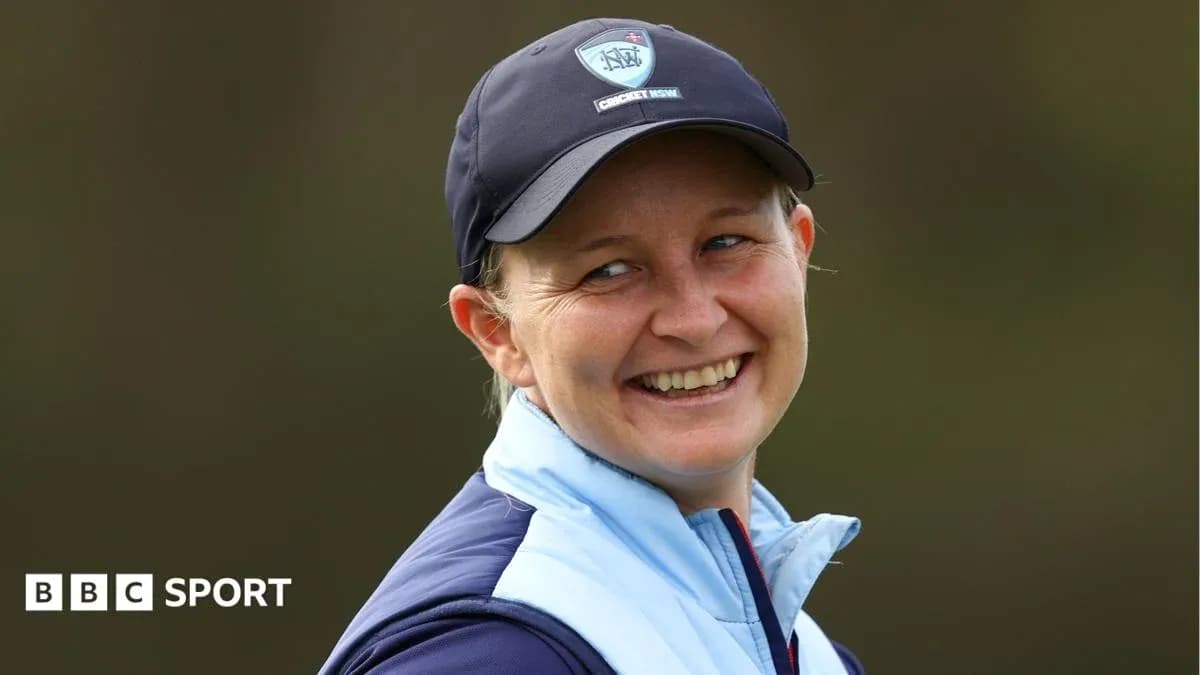
The England and Wales Cricket Board has reached across the world once more for leadership, appointing Australian Leah Poulton as managing director of England women at a pivotal moment for the game.
The 42-year-old, a former top-order batter who represented Australia 90 times, will take up the role in November, replacing Clare Connor. Unlike Connor, whose remit stretched across multiple strands of the ECB and the global game, Poulton’s brief is sharp and uncompromising: deliver a winning England women’s side and build the pathway beneath it.
A clear brief, a narrower focus
The ECB has made it plain. Poulton will be accountable for the performances of England women, England women A, England women U19s and for the effectiveness and reputation of the entire women’s high-performance system.
This is not a ceremonial title. It is a results business.
She will work side by side with England women’s head coach Charlotte Edwards and captain Nat Sciver-Brunt to shape what the board calls a “clear, unified vision” for consistent success on the world stage. That trio – an Australian administrator, an English coaching great and one of the most complete all-rounders in the game – will now define the direction of English women’s cricket.
Poulton arrives with a coaching and development résumé that carries real weight. She has served as assistant coach at Sydney Thunder and Sydney Sixers in the Women’s Big Bash League, worked as pathway manager and assistant coach with the NSW Breakers, and spent time as a high performance coach at Cricket Australia. For the past six years she has been head of elite female cricket at Cricket New South Wales, a role at the heart of Australia’s production line of talent.
“I’m incredibly excited and honoured to be joining England and to have the opportunity to help shape our programmes and, most importantly, invest in our people,” she said, setting out her priorities in her first comments after the appointment.
She spoke of “building on the strong foundations already in place and taking the programme forward”, and underlined where she believes sustained success comes from: strong pathways and a healthy domestic structure. “I’m looking forward to connecting with people across the game and helping give the next generation of English players every opportunity to thrive,” she added. “It’s a huge privilege to be part of England women and I can’t wait to get started.”
From Connor’s broad remit to Poulton’s hands-on role
Connor’s tenure at the ECB stretched far beyond the dressing room. During her time she acted as deputy chief executive, held senior roles at the International Cricket Council and served at Marylebone Cricket Club. Her influence touched governance, strategy and the global shape of the women’s game.
The new structure strips away that spread. Poulton’s job is more concentrated: everything to do with the senior women’s team and the pathways that feed it. With women’s performance manager Jonathan Finch also departing, she effectively steps into a combined space once occupied by two senior figures.
That change should make her presence felt more directly. Those who have worked with her in Australia describe a calm, clear communicator who does not shy away from difficult conversations. Her previous stints alongside Edwards and selector Lydia Greenway in the Big Bash mean existing relationships and trust are already in place.
She is understood to have beaten several prominent English candidates to the role, a detail that underlines both the competitiveness of the process and the ECB’s willingness to keep looking overseas for what it considers the best cricket minds.
England’s growing Antipodean influence
Poulton’s appointment continues a striking pattern. English cricket’s high-performance brain trust is increasingly shaped by voices from the southern hemisphere.
The men’s side already leans heavily on New Zealand and Australia, with Stephen Fleming and Brendon McCullum as head coaches and Australian Marcus North involved in selection. Now the women’s game has its own Australian leader at the top of the performance tree.
For some, that will raise familiar questions about why English structures are not producing more homegrown candidates. For the ECB, the calculation is simpler: find the person most likely to turn potential into trophies.
Calm before an Ashes storm
Poulton walks into a rare pocket of calm. The senior England women’s team do not play again until after Christmas, leaving the early winter to focus on England women A and U19 squads and the domestic pathway she values so highly.
That breathing space will not last.
Next summer, England host Australia in a women’s Ashes series, the fiercest rivalry in the sport and the ultimate test of any new regime. The urn has proved stubbornly hard to reclaim. The stage could hardly be more loaded: a home Ashes, a new structure, a fresh Australian voice at the helm of England’s women’s programme.
An English crowd. An Australian in charge. And an urn that has eluded England for too long.
If Poulton’s methods work, the irony will be delicious. If they do not, the questions about where English cricket turns next will only grow louder.