Kevin Pietersen Returns as England Mentor for White-Ball Team
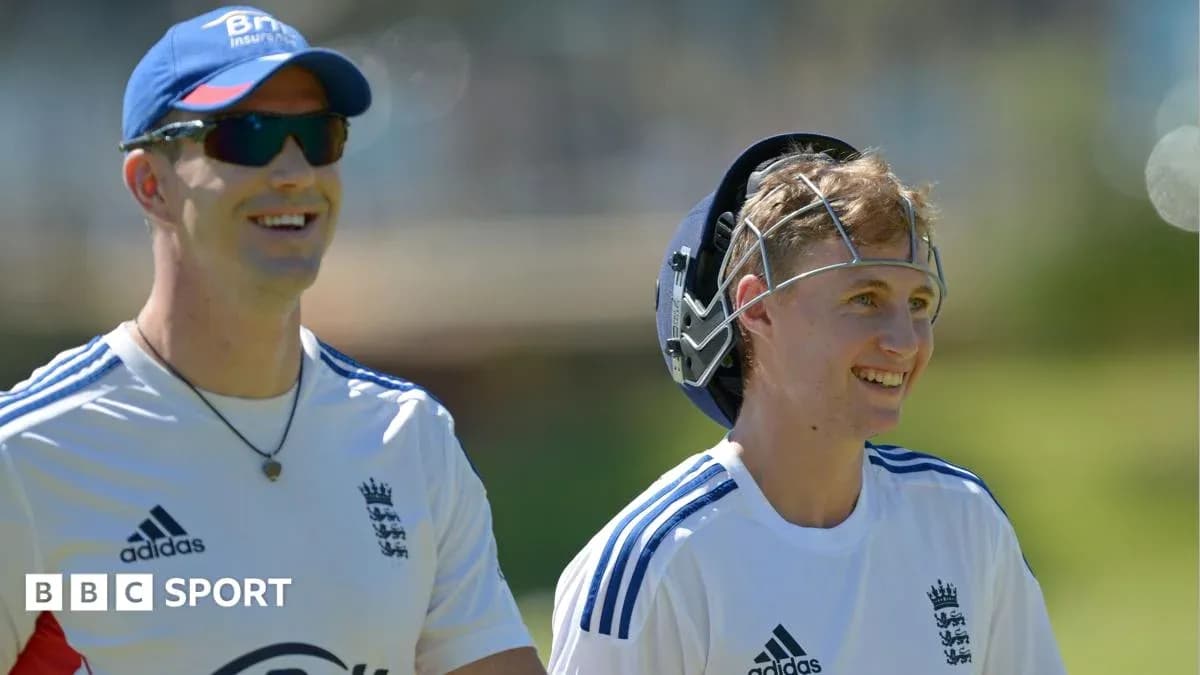
Kevin Pietersen is back in England colours. Not at the crease this time, but in the dressing room – and Joe Root insists this is a very different England to the one that cast him aside a decade ago.
The former superstar batter, whose international career ended in the wreckage of the 2013-14 Ashes whitewash, has been appointed as a mentor to England’s white-ball side in the build-up to the 2027 World Cup in South Africa. The man born in Pietermaritzburg will now help shape England’s next generation of limited-overs batters.
Root, the only player left from Pietersen’s final England days, knows exactly what that dressing room used to feel like – and how far it has moved on.
“The world is a very different place to what it was in 2014, and the England team is in a very different place to that as well,” he told BBC Sport, making it clear this is no attempt to relive the past, but to harness the best of it.
Pietersen returns, but on new terms
Pietersen’s playing legacy is not in doubt. Across a 10-year international career, he scored 13,779 runs for England in all formats, a tally surpassed only by Root and Alastair Cook. At his peak he shredded attacks, his audacious strokeplay looking like it had been lifted from a future era. Modern white-ball batting caught up with him; it did not create him.
Yet he was rarely a quiet presence. The 2012 texting scandal, when he was dropped after allegations he sent derogatory messages about then captain Andrew Strauss to the South Africa team, fractured trust at the heart of the side. He was brought back under Cook, only for that relationship to disintegrate in the 5-0 Ashes defeat in Australia. By 2015, Strauss, as England’s director of cricket, publicly ruled out a recall over a “trust issue”.
Now Strauss’ old team-mate is back in the fold, not as a player to be managed, but as a mentor to be used. Root, who shared 12 Tests and nine ODIs with Pietersen, expects the same blunt, unfiltered character – and sees that as a strength, not a problem.
“He’s not afraid to speak his mind. That’s him as a person,” Root said. “When you get someone involved you want them to be themselves and you want them to come into an environment for a reason.”
The reason, in Root’s eyes, is obvious: experience, knowledge and a batting brain that was years ahead of its time.
“You’re looking at so many hypothetical things that could go wrong, when there are so many amazing things he will bring to that environment,” Root added. For a squad of young white-ball hopefuls who grew up watching Pietersen dominate, the chance to work with him is likely to feel less like a gamble and more like a gift.
A mentor who once mentored Root
Root’s support is not theoretical. It comes from lived experience of a senior pro who, he says, went far beyond the minimum.
“He was always someone who gave me a huge amount, to be honest,” Root said of his early days in the side after debuting as a 21-year-old in 2012. Pietersen, then the established star, did not need to invest in the newcomer. Root remembers that he did.
“He didn’t need to offer as much as he did to me, but he would sit there and work tirelessly, making sure I felt comfortable with my own game. He listened to all my questions and helped as much as he could. As a senior player, he was outstanding.”
That is the version of Pietersen England are betting on now: the obsessive, technically sharp, hyper-competitive batter who can pass on hard-won lessons rather than dominate headlines.
He will link up with Brendon McCullum’s staff for the white-ball series against Sri Lanka next week, a pairing rich in attacking intent. McCullum helped redefine England’s Test batting mindset; Pietersen embodied that aggression a decade earlier. Now both sit on the same side of the dressing-room door, trying to shape the future.
Root’s England look to finish the job
While Pietersen steps into a mentoring role, Root has his own immediate task: completing a 3-0 clean sweep over Pakistan in Birmingham in his first series back as Test captain.
England have swept aside Pakistan in the first two Tests, yet an uncomfortable pattern lingers. Under Ben Stokes, the side built a reputation for flying starts to series followed by flat finishes. They have lost the final Test in each of their last six multi-match series.
Root knows only one result at Edgbaston changes that story.
He refused to name his XI ahead of the third Test, sticking to the line that has become standard in this era, but England are expected to go unchanged. The message is clear: same team, same intent, no easing off.
Root also pushed back firmly against any temptation to rewrite the recent past. If this feels like a reset under his captaincy, he insists it is one built on foundations laid by Stokes and McCullum.
“We wouldn’t have been able to play these last two games without all of the work those two did,” he said. “I think it’s undervalued the impact what those two guys had on English cricket.
“You look at where we were and how we played our cricket, you look at how we’ve been able to perform in the last two games, a lot of that is down to the hard work and the way they changed the mentality within English cricket and this team.
“I’m not going to sit here and have comparisons thrown against those two, I don’t think that’s fair whatsoever. They deserve a lot of credit for the last two performances.”
Cricket for everyone – if they can afford it
While Root handles the on-field business, a different debate swirls around the stands.
Ticket prices for next summer’s home Ashes have sparked criticism, with Edgbaston’s famous Hollies Stand a lightning rod. Seats there for the Ashes are priced at £165, up from £125 for the 2023 Australia series.
Root did not pretend to have the answers on the financial side, but he was crystal clear about what players want when they walk out.
“I don’t know what it takes to run a county or run a venue, I don’t know what goes into that,” he said. “From a playing point of view and as a captain, you want the grounds to be full, and you want them to be full of every demographic of person.
“You want the game to feel like it is for everyone, that they can come to support you and enjoy that. It would be great to see this place full and thriving, and for everyone to have the opportunity to come to watch Test cricket.”
That, in many ways, is the tension at the heart of modern English cricket: a sport chasing revenue while insisting it belongs to everyone.
Now Pietersen, once at the centre of a fractured, divided England set-up, walks back into a very different environment – one Root believes is stronger, more open, and more secure in its identity.
If the dressing room really has changed as much as he says, the question is no longer whether England can handle Pietersen.
It is what they can achieve if they fully unlock him.