Kagiso Rabada's Resilience Amidst Ball-Tampering Allegations
Kagiso Rabada has lived with enough noise in his career. On Friday in Johannesburg, he made it clear he isn’t about to inherit Australia’s.
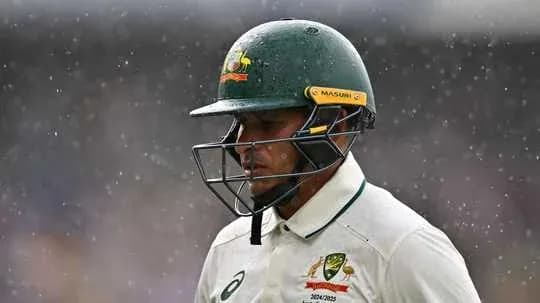
Usman Khawaja’s autobiography, “Sabr”, has dragged Sandpapergate back out of the archive and into the headlines, this time with a fresh twist: the claim that three South Africa players were also tampering with the ball during that rancorous 2018 Test series. Rabada was the destroyer-in-chief in that contest, 23 wickets at 19.26, the kind of series that defines a fast bowler’s reputation.
Does Khawaja’s allegation stain that achievement? Rabada wanted no part of the question.
“We’re not concerned about what they have to deal with,” he told reporters. “It’s not our topic to deal with. It’s obviously an Australian topic. I don’t see where we get involved in that.”
In truth, he hadn’t been asked to dissect Khawaja’s version of events, or to vouch for its credibility. The question was softer: had he seen the “blowback” in Australia, and what did he make of it? Even then, he swatted it away. The storm, as far as Rabada is concerned, belongs on the other side of the Indian Ocean.
Khawaja’s book has ensured it will rage for a while yet. The left-hander has gone far beyond the original Cricket Australia investigation, which in 2018 ring-fenced blame around Steven Smith, David Warner and Cameron Bancroft. Smith and Warner were banned for a year, Bancroft for nine months, after TV cameras caught Bancroft working sandpaper on the ball in Cape Town.
Khawaja’s contention is blunter, and far more explosive: the entire Australia team knew. “It was all of us. Not the batters, not the bowlers, not the staff. All of us,” he told Nine media.
Pat Cummins, now captain and then a member of that side, came out swinging in Sydney this week. “When [Khawaja] says we all knew, if by that he means we knew sandpaper was going out on the field, he’s 100% wrong,” Cummins said, branding the claim “complete and utter nonsense”.
The denials have not quietened the calls. Pressure is building for a fresh investigation into what really happened in that dressing room six years ago, a pressure sharpened by Australia’s current form: four defeats in their last seven Tests, including a 2-1 series loss in South Africa last month. When a champion side wobbles, old ghosts return with sharper teeth.
Not everyone has the appetite for another inquiry. “I haven’t read his book, nor am I interested in his claims or remarks,” one figure said. “I hope he has evidence for what he has said.” The implication is clear: if Khawaja is going to drag teammates and opponents into the fire, he will be expected to arrive with proof.
Beneath the uproar lies a cultural fault line that has long separated how Australia and South Africa talk about ball-tampering. In Australia, the line “we play hard but fair” has been repeated for generations, an identity as much as a slogan. That’s why, as one Australian put it over dinner in Cape Town this week, Sandpapergate “came as such a shock”.
South Africa’s relationship with the same offence has been very different. Faf du Plessis has twice been found guilty of ball-tampering, Vernon Philander once. Du Plessis used the zip of his trouser pocket against Pakistan in 2013, then the sugary saliva from a mint in his mouth in Australia in 2016. Philander used his fingernails to scratch the ball in Galle in 2014. All three incidents were textbook cases.
Yet there was no national hand-wringing, no parliamentary inquiries, no moral panic. Cricket South Africa effectively outsourced the disciplinary process to the ICC and moved on. Public outrage never really arrived.
When a former senior member of SuperSport’s production team — the broadcaster whose cameras caught Bancroft red-handed in Cape Town — was asked why South African players had never been similarly exposed at home, the reply was glib and unconvincing: “Because they don’t do it at home.”
That double standard, perceived or real, now sits in the background as Khawaja’s claims hang over a new Test season. Rabada and his teammates will be desperate for the conversation to shift from sandpaper and saliva to seam and swing when they face Bangladesh at the Wanderers on Sunday.
They have earned that right. South Africa arrive at the start of their home summer as the No. 1 Test side in the world, defending World Test Championship winners after their triumph at Lord’s last June. Rabada has become the spearhead of that rise, reaching 350 Test wickets in fewer deliveries than any bowler in history during the recent 2-1 win over Australia.
For him, the job still feels like a privilege, not a burden. Playing for South Africa, he said, is “a blessing; it’s a gift. It’s something not a lot of people get to do. Each and every day I have the opportunity to represent my teammates and myself is me continuing to live my dream.” The Bangladesh series, he hopes, will “show how healthy cricket is”.
The road to the summit has not been smooth. It certainly wasn’t against Australia. South Africa lost the first Test in Durban, looked stranded when rain washed away most of the first two days in Port Elizabeth, and still found a way to level the series. Then came Newlands, an innings victory, and a contest that many in the country still call the most gripping they have seen on home soil.
Now comes Bangladesh, and after that England, who arrive for three Tests across December and January. For a side that went 20 months without a home Test before October, it is a packed, golden stretch of red-ball cricket.
The past, with all its abrasions and accusations, will not vanish. But South Africa’s quicks, led by Rabada, have something more compelling in front of them: a chance to prove that the only thing they need to rough up this summer is the top of off stump.