Jersey Cricket Aims for World Cup Glory by 2029
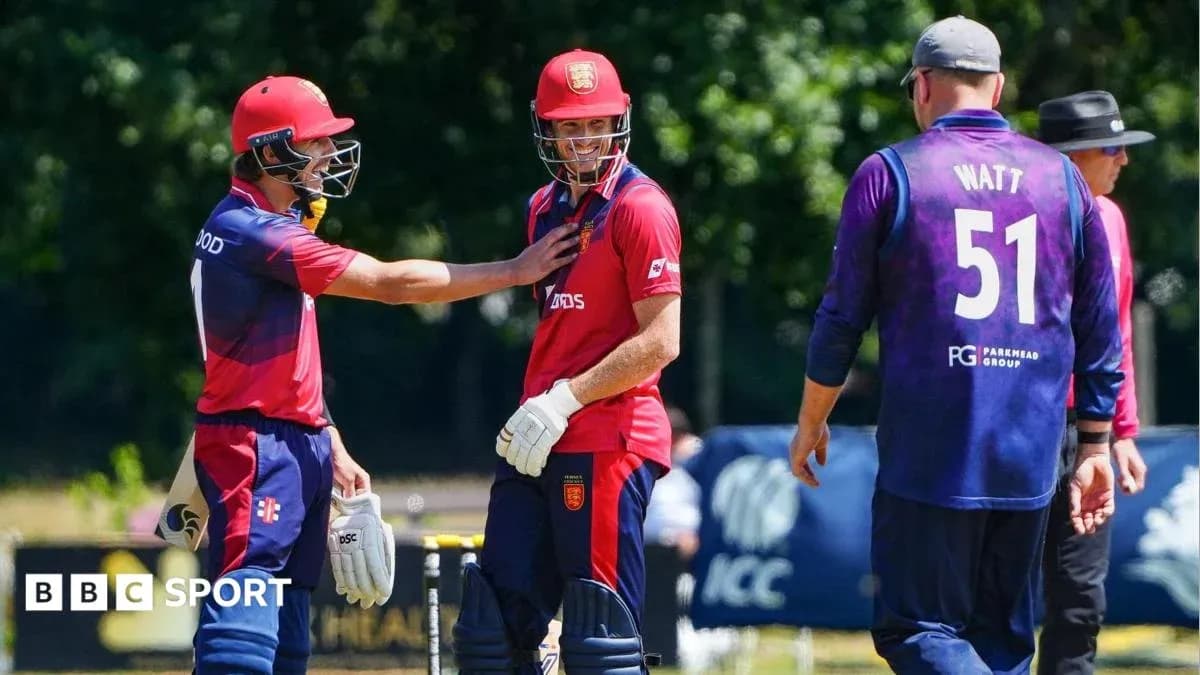
On an island where rugby and football usually steal the headlines, cricket in Jersey is thinking bigger than borders.
Not just bigger. World Cup big.
Jersey Cricket has laid out an ambitious strategic plan through to 2029, with one clear, bold marker for the men’s side: secure One-Day International status and reach a World Cup within the next three years. For a place with a population smaller than many Test grounds’ catchment areas, it is a remarkable statement of intent – and it is not built on fantasy.
They have already brushed the edge of the global stage. Jersey came agonisingly close to this year’s T20 World Cup, falling just short in qualifying. In the longer format, they are currently leading ICC Challenge League A with five matches left, a position that turns the next month into one of the most important periods in the island’s cricket history.
Next stop: Kenya. Next step: the world.
A small island with big-company ambitions
Chief executive Sarah Gomersall does not sound like someone content with plucky underdog status. She talks like an administrator who expects her teams to live in the same postcode as Europe’s elite.
“We have to dream big and we have to think we have a place at a World Cup in the T20 format,” she told BBC Jersey, and the evidence on the field backs up that conviction. Jersey have spent the past few years trading blows with Scotland, Ireland and the Netherlands, three nations that have already carved out serious reputations in the associate game.
They are not just making up the numbers in those fixtures. They are “holding their own”, as Gomersall put it, and learning with every outing. That regular exposure to higher standards has hardened belief that Jersey belong in those conversations, not as a novelty act but as a permanent fixture.
There is also talk of a new European nations competition, potentially involving Italy, Scotland, Ireland and perhaps the ECB in some form. The details remain to be confirmed, but the direction of travel is obvious: Jersey want their players regularly operating in that company, and they believe they are ready.
The Kenya campaign: a gateway to ODI status
The immediate focus is clear. Jersey’s men head to Kenya next month for the final round of ICC Challenge League A fixtures. They sit top of the table with five games to play. Finish in the top two and they move into the 2027 Cricket World Cup qualifier play-off.
From there, the stakes rise sharply.
Perform well in that play-off and ODI status comes into view, a landmark that would transform Jersey’s cricketing landscape. Secure a top-four finish at that stage and they would punch their ticket to the final round of qualifying for the 2027 Cricket World Cup, to be staged in South Africa, Zimbabwe and Namibia next autumn.
That is not a distant, misty dream. It is written into the strategy.
“Achieving ODI status is one of our goals through the next iteration of our strategic plan,” Gomersall said. She goes further, insisting that a World Cup appearance for the men is a realistic target inside three years, with the women’s side following on a longer timeline.
For a programme of Jersey’s size, that kind of progression depends on more than a golden generation. It needs a conveyor belt.
Building a pathway, not hoping for miracles
Jersey cannot rely on imports or vast player pools. Every cricketer who pulls on the island’s shirt comes from the island itself. That reality has shaped the entire plan.
Gomersall talks about process as much as performance: infrastructure, training systems, academies, facilities. It is about giving every promising junior the best chance to reach their ceiling, then raising that ceiling year by year.
“I think we have one of the best junior pathways in Europe,” she said, and the numbers support the confidence. Jersey’s men sit 29th in the ICC T20 rankings, the women 32nd. For an island of their size, those positions already represent a serious achievement. The goal now is to turn that solid base into something sharper and more threatening.
The philosophy is simple: keep the pipeline flowing. Keep youngsters playing, improving, enjoying the game, wanting more. The more cricket they play, the better they become, and the stronger the senior squads grow.
When Gomersall talks about “our next World Cup squad”, she is not thinking about some fantasy XI assembled from around the globe. She is talking about boys and girls currently hitting balls on local fields, moving through Jersey’s own system.
The women’s side: on the brink of a breakthrough
The men’s path to ODI status may grab the headlines, but the women’s story is quietly compelling.
Jersey’s women have twice finished one step away from the top tier of European qualifying for the T20 World Cup. Twice they have knocked at the door. Twice they have been told to wait.
That frustration has not dulled the ambition. The targets are clear: break into the top 25 of the ICC rankings and stay there; maintain their place in Division Two, or whatever the equivalent becomes in the ICC’s evolving pathway.
Gomersall believes the potential in the current women’s squad, and in the girls coming through beneath them, is “genuinely exciting”. The shift is cultural as much as technical. A new generation is choosing cricket as its first-choice sport on an island where options are plentiful.
That decision matters. It means more hours with bat and ball, more competition for places, more depth. It means the women’s team is not just clinging to progress but building towards something more durable.
An island ready to test its limits
Jersey’s cricket project is not powered by nostalgia or romance, even if there is something undeniably appealing about a small island chasing global tournaments. It is driven by structure, clear targets and a refusal to accept that size should dictate ceiling.
Top two in Challenge League A. ODI status on the line. World Cup qualifiers looming. Women pushing for the top 25. Junior pathways feeding both.
The margins are fine, the windows small. But if Jersey can turn this carefully laid plan into results over the next three years, the question will not be whether they belong on the world stage.
It will be how far this island can go once it finally gets there.