Japan's Near-Miracle Against India: Controversial Umpiring Decision
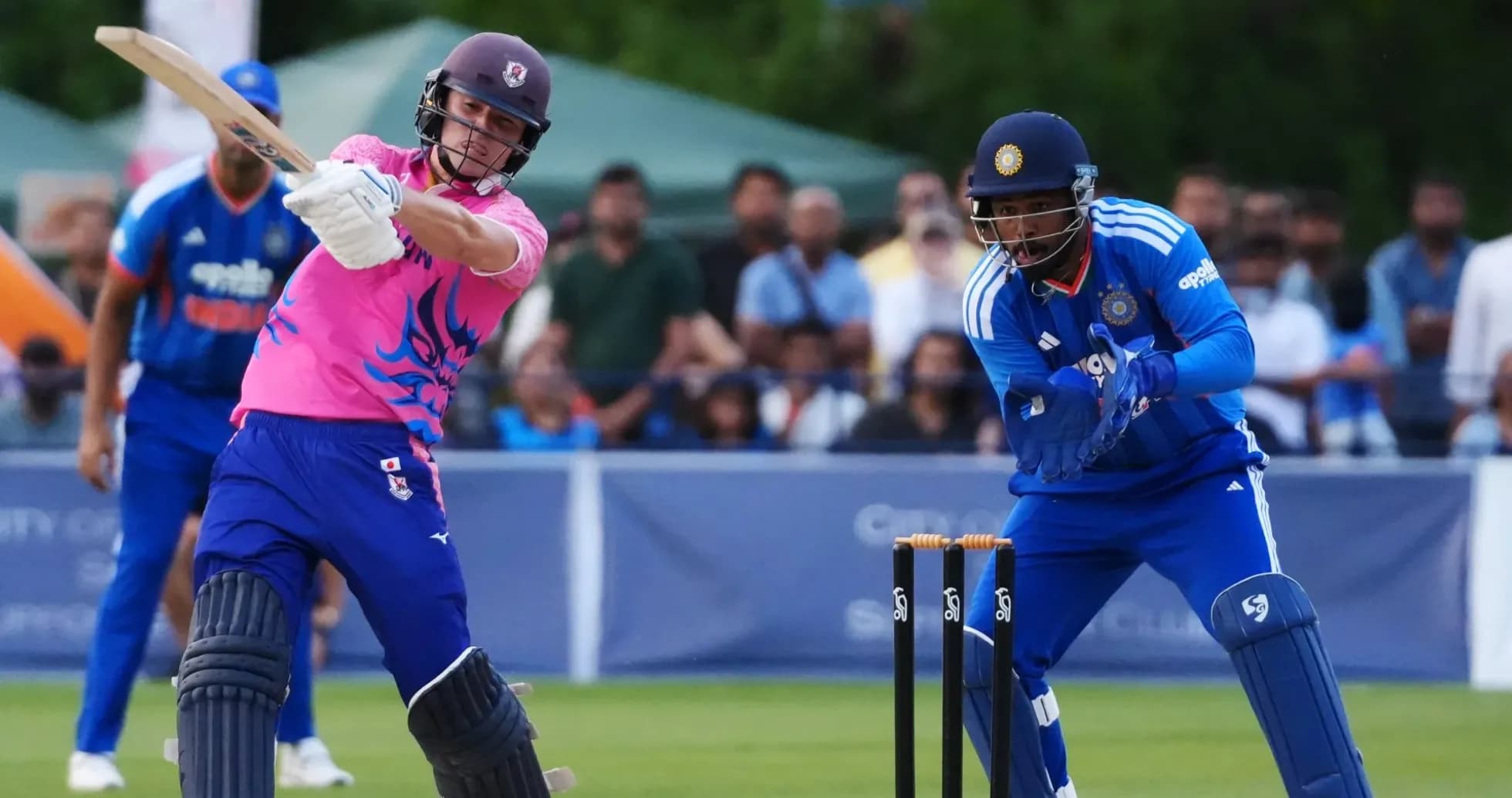
Japan’s near-miracle against India was decided not by a blazing six or a nerveless yorker, but by a single raised arm, a brief argument, and a quietly revoked signal.
Two runs. That was all that separated the world champions from one of the most embarrassing defeats in their T20 history, and Japan from the greatest upset the format has ever seen.
Instead, the night in Sano ended with accusations that India had bullied the umpires and that Japan had been “robbed”.
A five-over scrap with world champions on the ropes
Rain stripped this contest down to its bare bones: five overs a side, a lottery that can humble anyone. Shreyas Iyer won the toss and batted, but India’s supposed mismatch against Japan never materialised.
Charlie Hara-Hinze tore up the script.
He removed Abhishek Sharma in the first over, then came back to dismiss Ishan Kishan with the second ball of his next. India, three-time T20 world champions, were suddenly scrambling for a total against a team ranked 41st in the world.
Iyer’s 12-ball 16 was less an innings and more an emergency repair job. India crawled to 32-4 from their five overs, a total that looked modest, even on a slow, low pitch at the Sano International Cricket Ground.
Japan needed 33. Against India. In five overs. And they very nearly got them.
Axar Patel opened with left-arm spin and struck in his first over, removing Lachlan Yamamoto-Lake with his fourth ball. Japan’s reply was cautious, almost reluctant, but they stayed in the game.
Washington Sundar’s off-spin in the second over brought another wicket, and only six runs. Japan needed 25 from 18 balls. Then 17 came from the next two overs as Kendel Kadowaki-Fleming, the captain, led a spirited charge before falling for 12.
The equation at the start of the final over: eight needed off six, seven wickets still in hand. Against India. Against Axar. And against the weight of cricketing history.
The over that lit the fuse
Axar returned. The tension snapped into focus.
Dot ball. Single. Seven needed off four.
Then came the first wide. Patel pushed the ball past Alexander Shirai-Patmore’s reach and the umpire stretched his arms. Six off four.
The next delivery was the flashpoint.
Shirai-Patmore set up, shaped for a reverse sweep. The ball again drifted outside his hitting arc. The umpire at the bowler’s end, Chris Thurgate, signalled wide. Five off four now. Japan within touching distance.
And then India erupted.
Iyer and Patel both turned on the officials, visibly furious. They argued. Gestured. The kind of animated dissent that cricket’s laws and culture are supposed to discourage. There was no formal review. No replay on the big screen. No TV umpire’s voice cutting through the noise.
Just a brief consultation between Thurgate and his colleague Chris Brown. Then the wide was quietly revoked.
The ball was suddenly legal. The run disappeared. So did the extra delivery.
From needing five off four, Japan were back to six off four. The momentum, so carefully built over four and a half overs, had been yanked away in a single, unexplained reversal.
Japan eked out three singles from the last three balls. They finished on 30-3. Two runs short.
The scoreboard showed a narrow India win. The mood told a very different story.
Why the decision has sparked outrage
In the age of the Decision Review System, contentious calls usually come with a process: the “TV umpire” phrase, slow-motion replays, audio of the third umpire talking through the decision. Transparency, or at least the appearance of it.
None of that happened here.
There was no DRS intervention. No replay-driven correction. Just an on-field umpire changing his own call after being confronted by the bowling side.
That is the heart of the anger.
Under Law 22.3 of the Marylebone Cricket Club’s Laws of Cricket, an umpire can revoke a wide only in two situations:
- if the ball makes contact with the striker’s bat or body before a fielder touches it, or
- if the delivery is called a no ball.
Neither applied. The ball did not hit Shirai-Patmore. It was not a no ball. By the book, there was no obvious reason to change the decision.
Cricket writer Ben Gardner of Wisden called it a “disgraceful decision” and accused India of having “bullied the umpires into overturning a wide call against Japan” with five needed off four for what he described as “the biggest upset in cricket history”.
On social media, the language was even sharper. “Japan were robbed here,” wrote Abu Zaid Sarooji, echoing a sentiment that spread quickly across platforms.
Even many Indian supporters bristled. They pointed out that Shirai-Patmore had not changed his stance before the ball was delivered, so he was not attempting to trick Patel into bowling to a different line. To them, it was a straightforward wide in a critical moment that simply vanished under pressure from the favourites.
Silence from the captains, pride from Japan
When the game ended, there were no fireworks from India. Just relief, and perhaps a hint of escape.
Japan’s players trudged off, shoulders heavy, faces drawn. They had gone toe to toe with the best in the world and lost by the slimmest of margins, in circumstances that will sting for a long time.
Neither captain directly addressed the controversy.
“Honestly speaking, it was a very difficult wicket to bat on,” Iyer said. “A five-over game, it can go anywhere. It doesn’t matter how good a team you are.”
He made a point of praising Japan.
“The attitude and approach the Japanese team showed today was impeccable, and kudos to them. Their approach was outstanding. I’m sure that they are on the right track.”
Kadowaki-Fleming, for his part, focused on what the performance meant.
“Emotions are running pretty high in our group. But the fact that we’re able to run the best team in the world, in my opinion, to the last ball of a game is pretty special,” he said. “I think today was a really momentous occasion in that it was the first time we were able to face a full member.”
A diplomatic coup, a sporting fault line
This was no ordinary warm-up fixture. It was the product of years of quiet lobbying by the Japan Cricket Association, backed by corporate sponsors and nudged along by the Japanese government.
The JCA had worked for more than a year to convince the BCCI to bring India to Sano. When they finally did, it was hailed as a breakthrough moment for the sport in a country where baseball and football dominate, and where cricket is still fighting for attention.
Japan, an associate member of the ICC, had never faced a full member in men’s T20 cricket before this match. Their men’s team sits 41st in the ICC rankings, the women’s side 39th. There are just 7,300 registered players in the country and only 16 cricket grounds.
For Naoki Alex Miyaji, the JCA chief executive, this game was never going to transform the sporting landscape overnight.
“One match or competition itself won’t change anything, and we are certainly not going to think that suddenly it’s going to be as popular as baseball or football in Japan,” he told Reuters. “But the match against India is the first page of a new era.”
That first page now carries a jagged underline.
Japan did not just host India. They pushed them to the last ball, on a sluggish surface, under the glare of the world’s cameras. They matched the champions in nerve and discipline, and they forced them into a scrap that few expected.
What lingers is the sense that, when the moment of truth arrived, the balance of power in the sport showed itself in the most brutal way: in a decision that never should have been changed, in a call that bent under pressure, in an upset that slipped away not off the bat, but off the umpire’s outstretched arms.