Japan vs India One-Off Match Sparks Broadcast Scramble
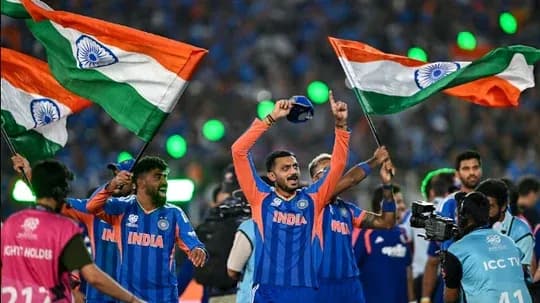
The Japan Cricket Association is racing the clock to make sure its biggest men’s home fixture yet doesn’t unfold in relative silence.
With India due in Sano for a one-off match on September 22, the JCA is deep in negotiations with ITW Universe to stitch together a broadcast plan that can carry the game beyond the modest confines of Sano International Stadium in Tochigi Prefecture.
On paper, it’s just a single fixture between a Full Member powerhouse and an emerging side. In reality, it drops into one of the most congested windows on the Asian sporting calendar.
Broadcast puzzle in a crowded window
The match in Sano starts at 9.30am IST (1pm local time), right as the Asian Games schedule heats up in Aichi-Nagoya. That overlap is at the heart of the headache.
ITW Universe is working with the JCA on a memorandum of understanding that would give it control of the rights. From there, ITW has opened conversations with Star, Sony and Zee for linear television in India, while digital platform FanCode is in the mix for streaming.
FanCode already has a track record with the JCA through pathway competitions, which makes it a natural candidate to pick up at least part of the digital load. But the complications don’t end there.
Sony holds the rights for the Asian Games. The women’s gold-medal match in Aichi is scheduled to begin just an hour after the first ball in Sano, at Korogi Athletic Park in Nisshin City. With the Indian women’s team among the favourites to reach that final, broadcasters face a very real clash between two India fixtures on the same morning.
That’s the tightrope: a historic game for Japan’s men, potentially going head-to-head with a gold-medal contest involving India’s women.
From YouTube plan to full broadcast push
When the idea of the fixture first took shape, expectations were modest. The JCA initially prepared for a bare-bones live stream on YouTube, using minimal production kit, mindful that a one-off game between such unevenly matched sides would be a tough sell for major networks.
That plan is still on the table for the global audience. A straightforward YouTube stream would ensure fans outside India can watch without the complexities of territorial rights.
Inside India, though, the tone has shifted. With ITW driving the rights discussions and major broadcasters at least listening, the match is now being positioned for regular television coverage, not just a niche online feed. For a developing cricket nation like Japan, that kind of visibility – beamed into one of the sport’s biggest markets – carries obvious weight.
Schedule strain and a 400km gap
Organisers did consider a simple solution: move the game. September 23 was explored as an alternative to avoid the clash with the women’s final.
The calendar shut that door.
Japan’s men are due in Aichi on September 23 to prepare for their Asian Games opener against Afghanistan on September 24. The logistics are not trivial. Sano and Aichi sit roughly 400km apart, and with tournament cricket ahead, there was little appetite for a late-night transfer or compressed turnaround.
So the date stays. September 22 in Sano, followed almost immediately by a shift to Aichi and a group-stage test against Afghanistan.
India’s own schedule offers slightly more breathing space. The team will arrive in Sano on September 20, train on September 21, and play the one-off the following day. They are expected to remain in Sano for a short period before heading to Aichi for their Asian Games campaign, which begins with a quarter-final on September 28.
Sano prepares for its biggest day
While the broadcast puzzle plays out in boardrooms, Sano International Cricket Ground is bracing for a rare surge of attention.
The venue, usually configured for around 500 spectators, is being reworked for the India game. The JCA plans to scale up facilities to handle as many as 2,000 fans, quadrupling its usual capacity for what local officials are already calling a historic occasion.
Temporary infrastructure, expanded seating, and upgraded match-day operations are all on the agenda. For Japanese cricket, often played in front of sparse crowds and limited coverage, the visit of India offers a glimpse of what a bigger future might look like.
Whether that vision reaches living rooms across India now depends on how quickly ITW and the broadcasters can turn negotiations into signatures – and how they juggle a morning where Japan’s men and India’s women could both be centre stage.